
Montana
Montana is the fourth-largest state in the United States, occupying the northwestern interior of the country. It borders Idaho to the west, Wyoming to the south, and North Dakota and South Dakota to the east, while sharing an international boundary with the Canadian provinces of British Columbia, Alberta, and Saskatchewan to the north. The state divides naturally into two broad landscapes: the rugged Rocky Mountain ranges of the west and the sweeping Great Plains that roll across the eastern two-thirds of the state, separated by the Continental Divide.
The western Montana highlands are among the most dramatic landscapes in North America. Glacier National Park anchors the northwest corner of the state, protecting over one million acres of alpine meadows, ancient glaciers, turquoise lakes, and jagged peaks. The iconic Going-to-the-Sun Road crosses the Continental Divide through the park and is widely considered one of the most scenic drives in the country. Farther south, Yellowstone Country draws visitors to the north entrance of Yellowstone National Park at Gardiner, as well as to the world-class ski and outdoor resort community centered around Big Sky.
Eastern Montana transitions into a vast, sky-dominated prairie of cattle ranches, badlands, and river breaks. This region is home to the Little Bighorn Battlefield National Monument, the Missouri River breaks, and some of the best undisturbed short-grass prairie remaining in the Lower 48. Flathead Lake, located in the northwest, is the largest natural freshwater lake west of the Mississippi River and anchors a thriving recreation corridor near Glacier Country.
Montana offers six distinct tourism regions, each with its own character and signature attractions. Glacier Country in the west is the most visited, anchored by Glacier National Park and the resort town of Whitefish. Yellowstone Country in the south-central part of the state connects travelers to one of the world’s most famous geothermal landscapes. Gold West Country in the southwest preserves mining-era history alongside hot springs and wilderness rivers, while Russell Country in the center and Missouri River Country in the northeast offer remote, off-the-beaten-path adventure.
The best time to visit Montana depends heavily on the activity. Summer, from late June through early September, is ideal for hiking, wildlife viewing, and road trips on high-elevation routes such as Going-to-the-Sun Road and the Beartooth Highway. Autumn brings spectacular larch and aspen color to the mountain valleys with noticeably thinner crowds. Winter transforms the state into a snow sports destination, with Big Sky Resort and Whitefish Mountain Resort drawing skiers from across the country. Spring offers rewarding wildlife watching as bears, wolves, and elk move through lower valleys, though mountain access remains limited until late spring snowmelt.
Featured State Parks in Montana
-
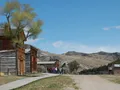
Bannack State Park
Montana's best-preserved gold rush ghost town, a National Historic Landmark near Dillon with trails and camping.
-
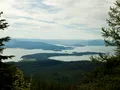
Flathead Lake State Park
Six-unit Montana state park on a vast alpine lake, ideal for camping, boating, hiking, and wildlife watching.
-
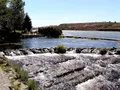
Giant Springs State Park
Day-use park near Great Falls featuring one of the largest freshwater springs in the U.S. and 30 miles of trails.
-
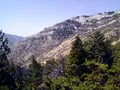
Lewis and Clark Caverns State Park
Montana's oldest state park features stunning limestone caverns, guided tours, and Jefferson River valley camping.
-
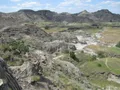
Makoshika State Park
Montana's largest state park, featuring dramatic badlands, dinosaur fossils, hoodoos, and miles of scenic trails near Glendive.