
Idaho
Idaho straddles the Pacific Northwest and the Rockies, bordered by Washington and Oregon to the west, Nevada and Utah to the south, Wyoming and Montana to the east, and Canada’s British Columbia to the north. The state covers seven travel regions: Northern Idaho anchored by Lake Coeur d’Alene and the panhandle, North Central Idaho around Lewiston, Moscow, Grangeville, and Riggins, Southwest Idaho around Boise and the Treasure Valley, South Central Idaho along the Snake River Plain around Twin Falls, Hagerman, and Burley, Southeast Idaho around Pocatello, Lava Hot Springs, and Bear Lake, Eastern Idaho serving as the western gateway to Yellowstone, and Central Idaho encompassing Sun Valley and the Sawtooth Mountains.
Idaho has no ocean coastline, but water is central to its identity. The Snake River cuts a dramatic arc across the south of the state, Hells Canyon, the deepest river gorge in North America, forms the border with Oregon, and Lake Coeur d’Alene in the north is one of Idaho’s best-known scenic recreation lakes. The Sawtooths, Bruneau Dunes, Shoshone Falls, and Craters of the Moon are among the state’s most remarkable natural features. Major draws include Sun Valley’s ski terrain, the lake recreation of Coeur d’Alene, the volcanic landscape at Craters of the Moon, and the wilderness rivers of the central mountains.
The best time to visit is late May through September for hiking, lakes, and high desert scenery, and December through March for skiing in the central ranges.
Featured State Parks in Idaho
-
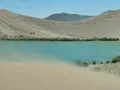
Bruneau Dunes State Park
Home to North America's tallest single-structured sand dune at 470 feet, with an observatory for dark-sky stargazing in southern Idaho.
-
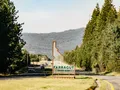
Farragut State Park
Northern Idaho lakeside park on Lake Pend Oreille built on a WWII naval training base, with 4,000 acres of forest and waterfront trails.
-
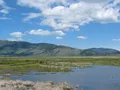
Henry's Lake State Park
Premier trout fishing and lakeside camping near Yellowstone in Idaho's scenic Island Park region.
-
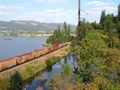
Heyburn State Park
Idaho's oldest state park, featuring lake camping, paddling, and forested trails near Coeur d'Alene.
-
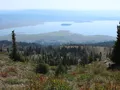
Lake Cascade State Park
A sprawling reservoir park in Valley County offering boating, fishing, camping, and mountain biking.
-
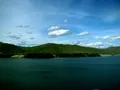
Lucky Peak State Park
Three-unit reservoir park just east of Boise with beaches, boat launches, and easy water recreation within reach of Idaho's largest city.
-
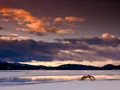
Ponderosa State Park
Forested peninsula on Payette Lake in McCall with old-growth pines, multi-use trails, and year-round access including winter cross-country skiing.
-
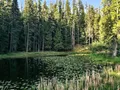
Round Lake State Park
A peaceful glacial lake near Sandpoint with swimming, kayaking, camping, and scenic forest trails.
-
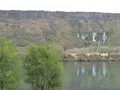
Thousand Springs State Park
Six riverside units along the Snake River where aquifer-fed springs and waterfalls pour from canyon walls in south-central Idaho.
-

Three Island Crossing State Park
Historic Oregon Trail river crossing on the Snake River with camping, hiking, and an interpretive education center.