
Giant Springs State Park
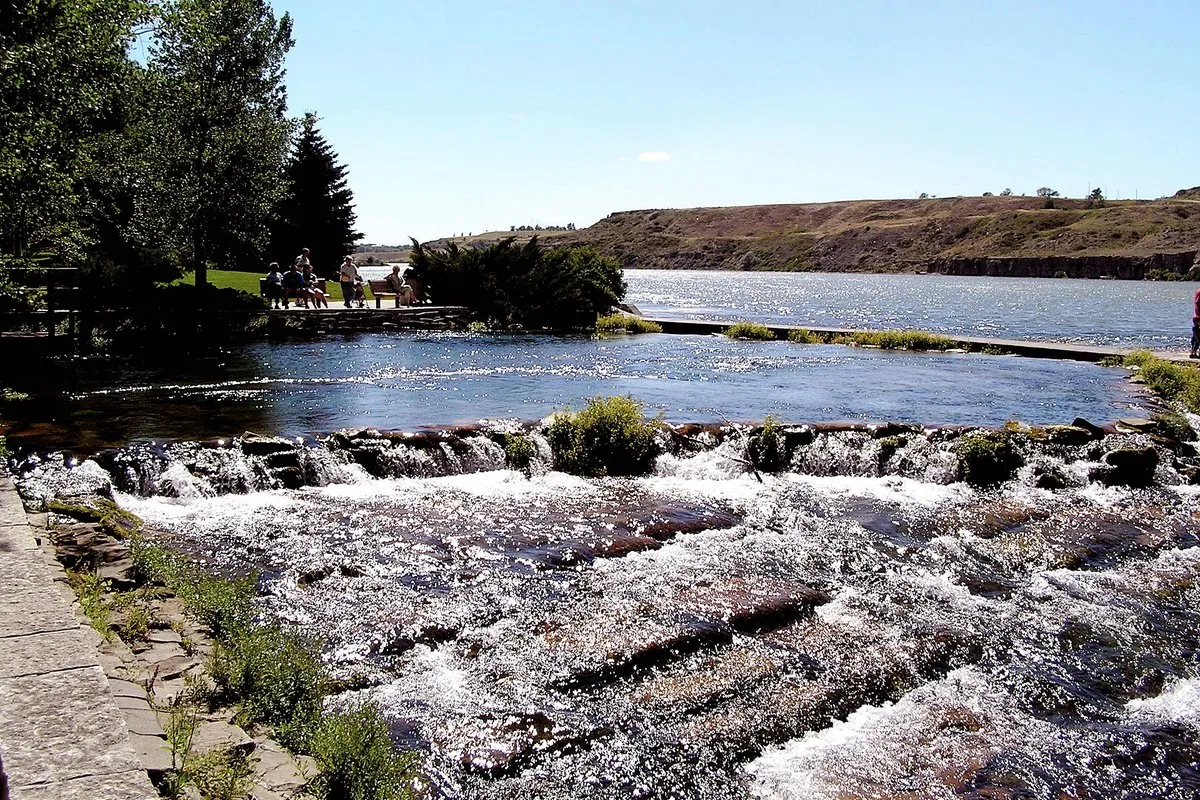
Giant Springs State Park sits along the Missouri River just north of Great Falls, Montana, protecting one of the largest freshwater springs in the United States. The springs discharge more than 150,000 gallons of water per minute at a constant temperature of around 54 degrees Fahrenheit, and they feed directly into the Roe River, which at roughly 200 feet holds the record for the world’s shortest river. The park draws visitors for its geology, its riverfront trails, its fish hatchery, and simply the unusual spectacle of watching that volume of crystal-clear water emerge from the earth.
Giant Springs and the Roe River
The springs themselves are the reason this park exists. Water that fell as precipitation in the Little Belt Mountains to the south filters underground through Madison limestone for an estimated 3,000 years before surfacing here at the Missouri River. The pools are large, clear, and deep blue-green, and the constant temperature keeps them ice-free through winter. The Roe River runs from the spring pools to the Missouri and is short enough that visitors can walk its entire length in a minute. An interpretive area near the spring pools explains the hydrology and the history of the site, which Meriwether Lewis documented in his journals during the Corps of Discovery expedition in 1805.
The Missouri River Trails
The park anchors a trail system that extends roughly 30 miles along the Missouri River as part of the River’s Edge Trail. This paved and natural-surface multi-use trail connects the park to downtown Great Falls and beyond, running through riverside terrain that shifts between open grassland, cottonwood groves, and rocky bluffs. The flat sections near the park are accessible for walkers, cyclists, and families with strollers, while portions farther from the main park area become more rugged. Interpretive signs along the route reference the Lewis and Clark expedition, which passed this stretch of the Missouri during one of its more grueling portages around the Great Falls of the Missouri. The trail system makes the park a practical starting point for longer outings by bike or on foot into the surrounding river corridor.
Giant Springs State Fish Hatchery
Adjacent to the springs, the Montana Fish, Wildlife and Parks hatchery uses the spring water to raise rainbow trout. The hatchery is open to visitors and offers a close look at fish rearing operations across multiple stages of development. The consistent water temperature and high volume of the spring discharge make this location unusually well-suited to aquaculture. Visitors can observe the rearing ponds, learn about fish production cycles, and in some cases feed the fish. It is a low-key but genuinely interesting stop, particularly for families with children.
Pet Policy
Pets are welcome at Giant Springs State Park but must be on a leash no longer than 10 feet at all times. Owners are required to clean up after their animals. Pets are allowed on the trails and in picnic areas. They are not permitted inside the hatchery facilities.
Wildlife to Be Aware Of
Rattlesnakes are present in the park, particularly in rocky and brushy areas along the trails. They are most active during warm months from late spring through early fall. Stay on marked trails, watch where you step and place your hands, and give any snake you encounter plenty of space. Most rattlesnake encounters end without incident if people do not try to handle or provoke the animal.
White-tailed and mule deer are common throughout the park and are frequently seen near trails and picnic areas. They may appear calm and approachable but are wild animals and can behave unpredictably, particularly during the rut in fall. Exercise extra caution at dawn and dusk when deer are most active and visibility is lower.
The Missouri River shoreline supports a notable population of raptors, including bald eagles, golden eagles, and several hawk species. These birds are often visible perched in cottonwoods or soaring along the river corridor. Observe them from a respectful distance and avoid approaching nesting or roosting areas, especially during breeding season in spring and early summer.
Practical Information
Giant Springs State Park is located at 4600 Giant Springs Road in Great Falls, Montana. Great Falls is the nearest city and provides full services including fuel, lodging, and dining. From downtown Great Falls, follow River Drive north and then east to Giant Springs Road. The park is clearly signed and easy to reach from US Highway 87/89.
The park is day-use only with no camping available. Montana residents pay no daily fee but must have a valid state parks and recreation area decal, included with the $9 annual vehicle registration fee. Nonresidents pay $8 per vehicle or $4 per person for those arriving on foot, by bicycle, or by bus. No reservations are required for general day use. The park is open year-round, and the River’s Edge Trail is accessible in all seasons, though snow and ice can affect trail conditions in winter.
Frequently Asked Questions
How much does it cost to enter Giant Springs State Park?
Montana residents pay no daily entry fee but must have a valid $9 annual vehicle registration, while nonresidents pay $8 per vehicle or $4 per person for walk-ins, bicyclists, and bus passengers.
Are dogs allowed at Giant Springs State Park?
Dogs are welcome on the trails and in picnic areas as long as they are kept on a leash no longer than 10 feet, though pets are not permitted inside the hatchery facilities.
Can you visit the fish hatchery at Giant Springs?
The Giant Springs State Fish Hatchery is open to visitors and offers a look at rainbow trout rearing operations at multiple stages of development, including opportunities to observe the ponds and feed the fish.
Are there rattlesnakes at Giant Springs State Park?
Rattlesnakes are present in the park, especially in rocky and brushy areas along the trails during warm months from late spring through early fall, so visitors should stay on marked trails and watch where they step and place their hands.