
Makoshika State Park
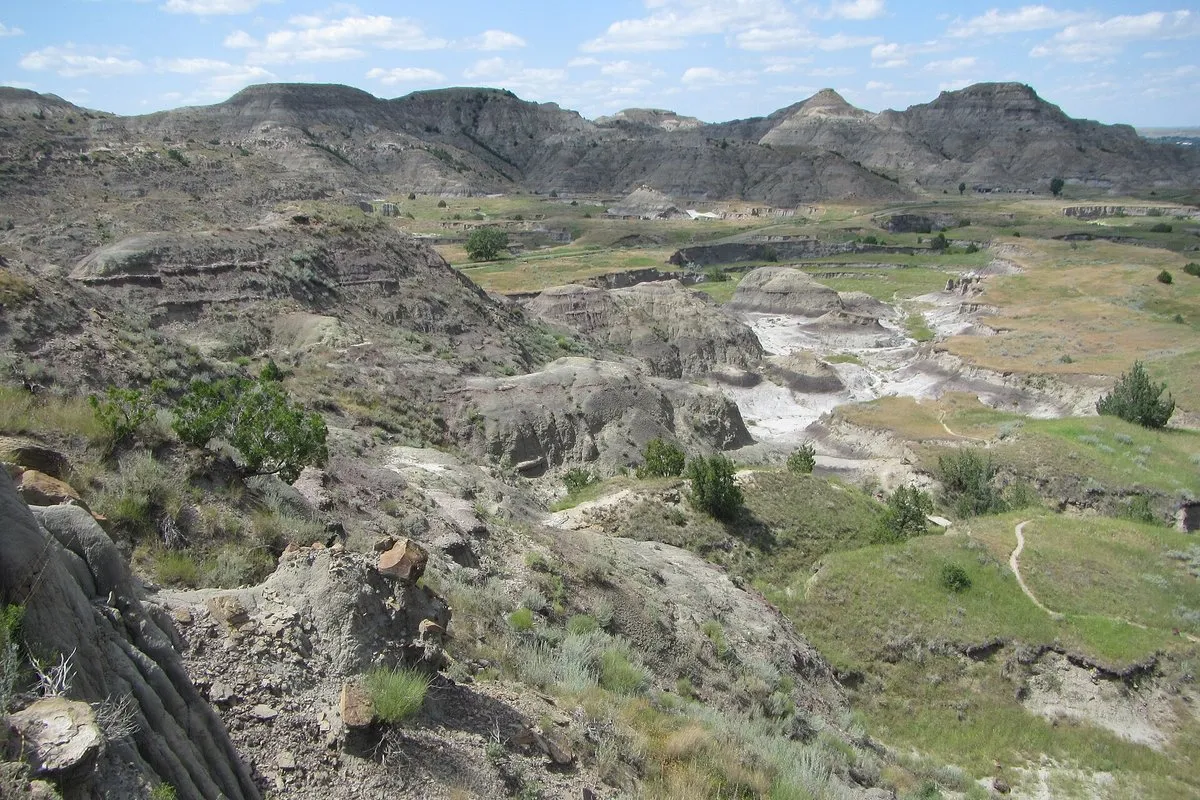
Makoshika State Park stretches across more than 11,000 acres of eroded badlands east of Glendive, making it the largest state park in Montana. The park takes its name from a Lakota phrase meaning “bad land” or “bad spirits,” a fitting description for the stark, otherworldly terrain carved by millions of years of erosion. Sharp ridgelines, towering hoodoos, and wide amphitheaters of layered sediment define the landscape, and beneath it all lies one of the richest dinosaur fossil records in the American West. For visitors drawn to geology, paleontology, or simply landscape unlike anything else in the region, Makoshika delivers something genuinely rare.
Fossils, Geology, and the Badlands Landscape
The primary reason people travel to Makoshika is the geology, and the fossils embedded within it. The park sits within the Hell Creek Formation, a geological layer that has yielded remains of Triceratops, Edmontosaurus, and Tyrannosaurus rex. Several significant finds have come from within park boundaries, and interpretive displays at the visitor center explain the fossil record in detail, including casts and specimens recovered from the area. Visitors are not permitted to collect or disturb fossils, but the landscape itself tells the story clearly: exposed cliff faces show the banded sedimentary layers that mark the end of the Cretaceous period.
The hoodoos scattered throughout the park are among its most recognizable features. These tall, narrow columns of soft sedimentary rock capped by harder stone form over centuries as wind and rain erode the surrounding material. Juniper Flats and the areas visible from the main park road offer some of the best hoodoo formations without requiring a long hike.
Trails Through the Canyon Country
Makoshika has approximately 10 miles of marked trails ranging from short, accessible walks to longer routes that descend into the canyon interior. The Cap Rock Nature Trail is a moderate 1.5-mile loop that passes through some of the most dramatic badlands terrain in the park and introduces visitors to the major geological features. The Kinney Coulee Trail is a longer option that takes hikers deeper into the drainage systems, with fewer visitors and a stronger sense of remoteness.
Several trails are also open to mountain biking, and the varied terrain draws riders looking for technical unpaved routes through canyon scenery. Trail conditions can shift significantly after rain, as the clay-rich soil becomes extremely slick when wet and may require temporary closures.
Camping and Overnight Stays
The park has a developed campground with both tent and RV sites, including some sites with electrical hookups. Facilities include restrooms and a covered pavilion available for group reservations. The campground is open seasonally, generally from spring through fall, though some limited facilities may remain accessible in shoulder months. Camping at Makoshika puts visitors close to the trails and offers the chance to experience the badlands at dusk and dawn, when the light across the rock layers is especially dramatic. Reservations are recommended during summer weekends and holiday periods.
Pet Policy
Pets are welcome at Makoshika State Park and are allowed on trails, in the campground, and in most outdoor areas of the park. Pets must be on a leash no longer than 10 feet at all times. Owners are responsible for cleaning up after their animals. Pets are not permitted inside park buildings.
Wildlife to Be Aware Of
Prairie rattlesnakes are present throughout the park and are most active from late spring through early fall when temperatures are warm. They are commonly found near rocky outcrops, along trail edges, and in areas with low brush. When hiking, stay on marked trails, watch where you place your hands and feet, and be cautious around rock ledges or crevices. If you encounter a rattlesnake, give it space and allow it to move off on its own. Most bites occur when people attempt to handle or approach the snake too closely.
Mountain lions inhabit the more remote canyon areas and backcountry sections of the park. Sightings are uncommon but the population is present. Hikers traveling alone in remote areas should remain aware of their surroundings. If you encounter a mountain lion, do not run. Face the animal, make yourself appear large, make noise, and back away slowly. Keep children close on the trail at all times.
Mule deer are frequently seen throughout the park, particularly near the road corridors and at dawn and dusk. Drive carefully within the park, especially on the winding roads through the canyon sections, where deer may step onto the road with little warning.
Practical Information
Makoshika State Park is located on the southeast edge of Glendive, Montana, with the main entrance accessible from Snyder Avenue. Glendive is approximately 35 miles west of the North Dakota border along Interstate 94. The visitor center near the park entrance provides maps, interpretive exhibits, and staff assistance during regular operating hours.
Entry fees are $6 per vehicle per day for Montana residents and $10 per vehicle per day for non-residents. Annual passes are available and cover day-use entry. Camping fees are charged separately and vary by site type.
The park is open year-round, though services and facilities are reduced in winter months. Snow and ice can make roads and trails hazardous from late fall through early spring. Summer temperatures in the badlands can be extreme, often exceeding 100 degrees Fahrenheit, so visitors should carry ample water, wear sun protection, and plan strenuous hikes for early morning hours.
Frequently Asked Questions
What is the entry fee for Makoshika State Park?
Montana residents pay $6 per vehicle per day and non-residents pay $10 per vehicle per day, with annual passes also available and camping fees charged separately.
Are dogs allowed at Makoshika State Park?
Pets are welcome on trails, in the campground, and in most outdoor areas as long as they are kept on a leash no longer than 10 feet, though they are not permitted inside park buildings.
Can you pick up fossils or collect rocks at Makoshika State Park?
Visitors are not permitted to collect or disturb fossils anywhere within the park, though the exposed cliff faces and interpretive displays at the visitor center give a detailed look at the fossil record.
What dinosaur fossils have been found at Makoshika State Park?
The park sits within the Hell Creek Formation, which has yielded remains of Triceratops, Edmontosaurus, and Tyrannosaurus rex, and the visitor center houses fossil casts and specimens recovered from the area.