
Minneopa State Park
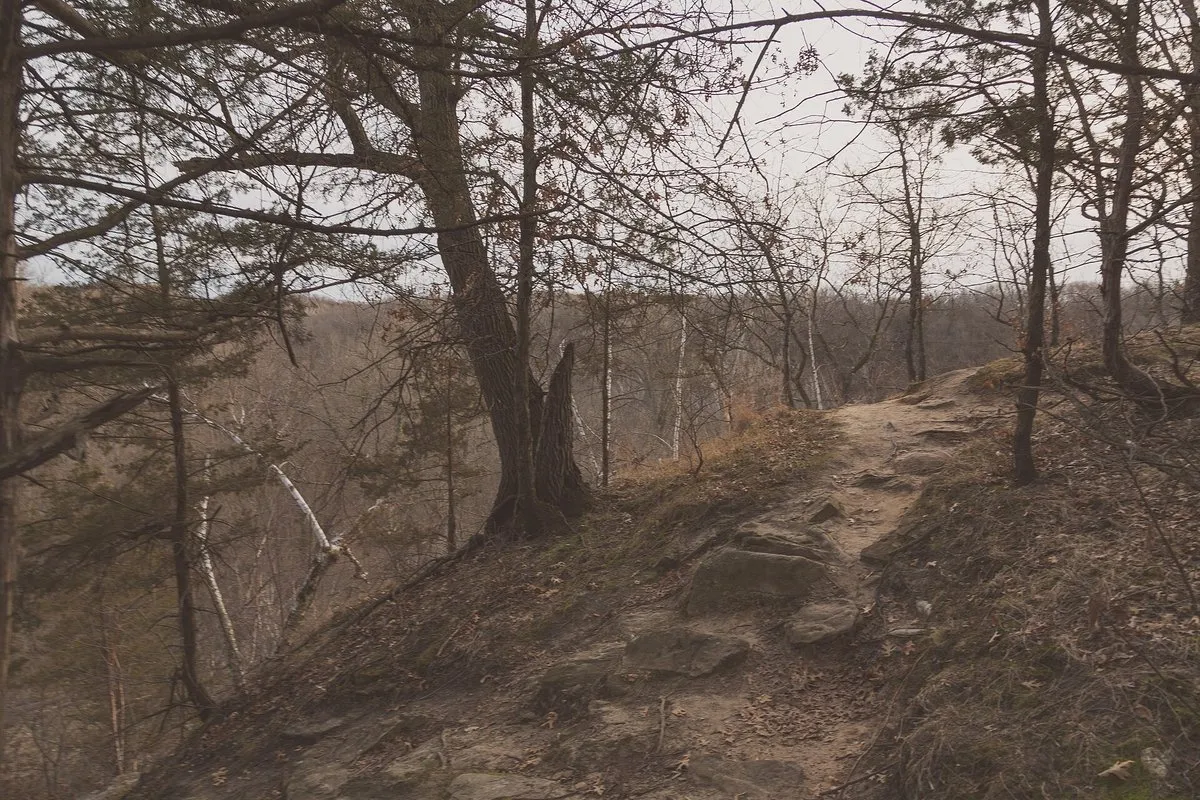
Minneopa State Park protects one of Minnesota’s most varied landscapes along the Minnesota River valley southwest of Mankato. Within its roughly 1,653 owned and managed acres, visitors find a double waterfall, a free-roaming bison herd, a nineteenth-century stone mill, wooded ravines, and open bluffs with long views across the river valley. The combination of geological drama, working wildlife management, and genuine history makes this one of the more layered parks in the state system.
Minneopa Falls
The park takes its name from a Dakota word meaning “water falling twice,” and the falls justify that origin. Minneopa Creek drops over two distinct sandstone ledges in quick succession, creating a stacked waterfall that is accessible year-round via a short trail from the main parking area. The lower falls stand roughly 39 feet tall and are the showpiece, but the upper falls, just steps upstream, are worth the extra minute. The surrounding gorge is carved from ancient sedimentary rock, and the walls expose clear geological layering. Spring runoff produces the strongest flow, though the falls run in every season, and winter ice formations draw visitors even in cold weather. The waterfalls area is short, with the lower falls visible from the sidewalk, but the DNR map describes the trail as 0.18 miles one-way with cement, dirt, and steep stairs.
Seppmann Mill and Historic Grounds
Seppmann Mill stands in the park’s Highway 68 section, separate from the waterfall area. It is a stone windmill begun in 1862 by Louis Seppmann and completed in 1864 to grind grain for the surrounding farming community. The mill operated until 1890, after storms and earlier damage from lightning and a tornado left the structure beyond repair. The stone tower remains largely intact and is one of the few windmill ruins in Minnesota. Interpretive signs around the structure explain its construction, operation, and the German immigrant community that built it. The mill and falls can be paired in one visit, but they are in separate park sections, each requiring a bit of planning for visitors with limited time.
Bison Drive and Prairie Loop
The park manages a herd of American bison on a dedicated drive-through loop road that winds through restored tallgrass prairie on the park’s western section. This is a separate area from the waterfall, reached by a different park entrance; the Seppmann Mill is also on the Highway 68 side of the park. Visitors drive the loop at low speed and often encounter bison grazing at close range, sometimes directly beside or crossing the road. The experience is unlike anything else available in southern Minnesota. The loop also passes through open prairie habitat where wildflowers bloom across the warmer months and grassland birds are common in spring and summer. A short hiking trail runs along the bluff edge above the Minnesota River valley, offering wide views of the river corridor and the agricultural landscape beyond.
Camping
Minneopa offers a campground with electric hookups, a tent camping area, a group camp, and one camper cabin. The campground is in the Highway 68 section near the stone windmill and bison area, separate from the waterfall and office section off County Highway 69. Reservations are available through the Minnesota Department of Natural Resources reservation system and are recommended during summer weekends and fall color season. Basic facilities include restrooms and a dump station for RVs.
Pet Policy
Pets are welcome at Minneopa State Park but must be kept on a leash no longer than six feet at all times. Pets are allowed on trails, in the campground, and in most day-use areas. They are not permitted inside camper cabins. Within the bison range, visitors must remain inside their vehicles at all times. Hiking is not allowed inside the range; pets on trails around the outside of the range must be kept on a leash at all times. Owners are responsible for cleaning up after their animals.
Wildlife to Be Aware Of
The bison herd is the most significant wildlife consideration at Minneopa. These are wild animals, not domesticated, and they are fully capable of moving quickly and unpredictably. The park requires visitors to remain in their vehicles at all times while on the drive-through loop road and to maintain a minimum distance of 75 feet from any bison. Do not exit your vehicle for photographs, even briefly. Bison that appear calm can react suddenly if approached or startled.
White-tailed deer are common throughout the park, particularly near the campground, the falls trail, and wooded areas along the ravine. They are most active at dawn and dusk. Deer are generally not aggressive but should not be fed or closely approached, and drivers should be alert for deer crossing roads during low-light hours.
Ticks are present across the park wherever there is tall grass, brush, or woodland, which covers most of the trail system. The risk is highest from early spring through midsummer but extends into fall. Wear long pants and closed shoes when hiking, treat clothing with permethrin if possible, and do a thorough check of skin and clothing after any time on the trails. Removing a tick promptly reduces the risk of disease transmission.
Practical Information
Minneopa State Park is located at 54497 Gadwall Road in Mankato, Minnesota, approximately six miles west of downtown. The park has two distinct entrances. The office and waterfall are off County Highway 69; camping, the stone windmill, and bison are off Minnesota Highway 68. The nearest services including fuel, groceries, and lodging are in Mankato.
Entry requires a Minnesota State Parks vehicle permit. A daily permit costs $7, and an annual pass costs $35 and covers entrance to all Minnesota state parks for the full year. Visitors arriving on foot or by bicycle enter at no charge.
The park is open year-round. The park is open year-round, but Bison Drive Road is closed every Wednesday for maintenance, and visitors should check the park’s current posted bison viewing hours before going. Campground reservations can be made at the Minnesota DNR website. The park office can be reached by phone for questions about current conditions or herd activity.
Frequently Asked Questions
How much does it cost to enter Minneopa State Park?
Entry requires a Minnesota State Parks vehicle permit, which costs $7 for a daily pass or $35 for an annual pass that covers entrance to all Minnesota state parks for the full year. Visitors arriving on foot or by bicycle enter at no charge.
Are dogs allowed at Minneopa State Park?
Pets are welcome at Minneopa State Park on a leash no longer than six feet at all times, and they are allowed on trails, in the campground, and in most day-use areas. Pets are not permitted inside camper cabins and are not allowed on the bison loop road, as the presence of animals in vehicles could disturb the herd.
Can you see bison at Minneopa State Park and how close can you get?
The park manages a free-roaming bison herd on a dedicated drive-through loop road where visitors often encounter bison grazing at close range, sometimes directly beside or crossing the road. Visitors must remain in their vehicles at all times on the loop and maintain a minimum distance of 75 feet from any bison.
How tall are the falls at Minneopa State Park and how long is the trail?
The lower falls stand roughly 39 feet tall and are the showpiece of the double waterfall, with the upper falls just steps upstream. The paved loop trail from the main parking area is under a mile and relatively flat, making it accessible to most visitors.