
Minnesota
Minnesota occupies the north-central United States, stretching from the glacially carved prairies and farmlands of the Great Plains in the west to the dense boreal forests and rugged Canadian Shield terrain of the northeast. The state spans two major geographic regions: the Midwest and the eastern edge of the Great Plains. It borders Wisconsin and Lake Superior to the east, Iowa to the south, South Dakota and North Dakota to the west, and Canada (Manitoba and Ontario) to the north.
Minnesota is famously known as the Land of 10,000 Lakes, though the actual count exceeds 11,000 bodies of water larger than ten acres. The state’s northeastern corner, known as the Arrowhead region, hugs the southwestern shore of Lake Superior, giving Minnesota a freshwater coastline of remarkable scenic beauty. This corridor, called the North Shore, is one of the most celebrated drives in the Midwest, lined with waterfalls, sea caves, and state parks like Gooseberry Falls, Tettegouche, and Cascade River.
The state’s major travel regions range from the Twin Cities Metro anchored by Minneapolis and Saint Paul, to the Northwoods and Boundary Waters Canoe Area Wilderness in the northeast, the Central Lakes region popular for resorts and fishing, the bluff-lined Mississippi River valley in the southeast, and the sweeping southwestern prairies dotted with bison herds and tallgrass remnants. Voyageurs National Park in the far north protects a landscape of interconnected lakes and boreal forest accessible largely by water.
Minnesota’s most iconic attraction is Itasca State Park, established in 1891, where visitors can wade across the headwaters of the mighty Mississippi River. The state also draws visitors to the Boundary Waters Canoe Area Wilderness, one of the most visited wilderness areas in the United States, offering over one million acres of pristine paddling routes. Cultural highlights include the Mayo Clinic in Rochester, the vibrant arts scene of Minneapolis, and the Iron Range mining heritage of the Mesabi Range.
The best times to visit Minnesota are late spring through early fall for outdoor recreation, with summer offering warm lakes ideal for swimming, boating, and fishing. Fall is spectacular, particularly along the North Shore where hardwood and boreal forests ignite in brilliant color in late September and early October. Winter transforms the state into a destination for cross-country skiing, snowshoeing, dog sledding, and ice fishing, with many state parks maintaining groomed trails through the cold months.
Featured State Parks in Minnesota
-

Fort Snelling State Park
Historic Twin Cities park at the confluence of two great rivers, offering trails, fishing, and rich cultural heritage.
-
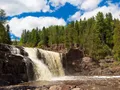
Gooseberry Falls State Park
Five breathtaking waterfalls, Lake Superior shoreline, and 20 miles of trails on Minnesota's scenic North Shore.
-
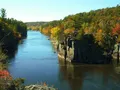
Interstate State Park
Ancient glacial potholes, towering river bluffs, and world-class rock climbing along the wild St. Croix River.
-
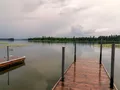
Itasca State Park
Walk across the humble headwaters of the Mississippi River amid old-growth pines at Minnesota's oldest state park.
-
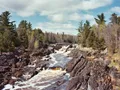
Jay Cooke State Park
Dramatic river gorges, tilted slate formations, and 50+ miles of trails near Duluth, Minnesota.
-
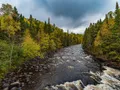
Judge C.R. Magney State Park
Famous for the mysterious Devil's Kettle waterfall, this North Shore gem offers rugged Brule River hiking and serene forest camping.
-

Minneopa State Park
Twin waterfalls, roaming bison, historic mill ruins, and bluff-top Minnesota River views near Mankato.
-
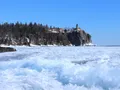
Split Rock Lighthouse State Park
Iconic 1910 lighthouse on Lake Superior's North Shore with dramatic cliffs, cart-in camping, and scenic Superior Hiking Trail access.
-
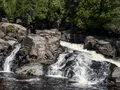
Tettegouche State Park
North Shore gem with stunning waterfalls, rugged Lake Superior cliffs, inland lakes, and miles of scenic hiking trails.
-

William O'Brien State Park
A beloved St. Croix River park offering hiking, camping, canoeing, and restored oak savanna near Marine on St. Croix.