
Jay Cooke State Park
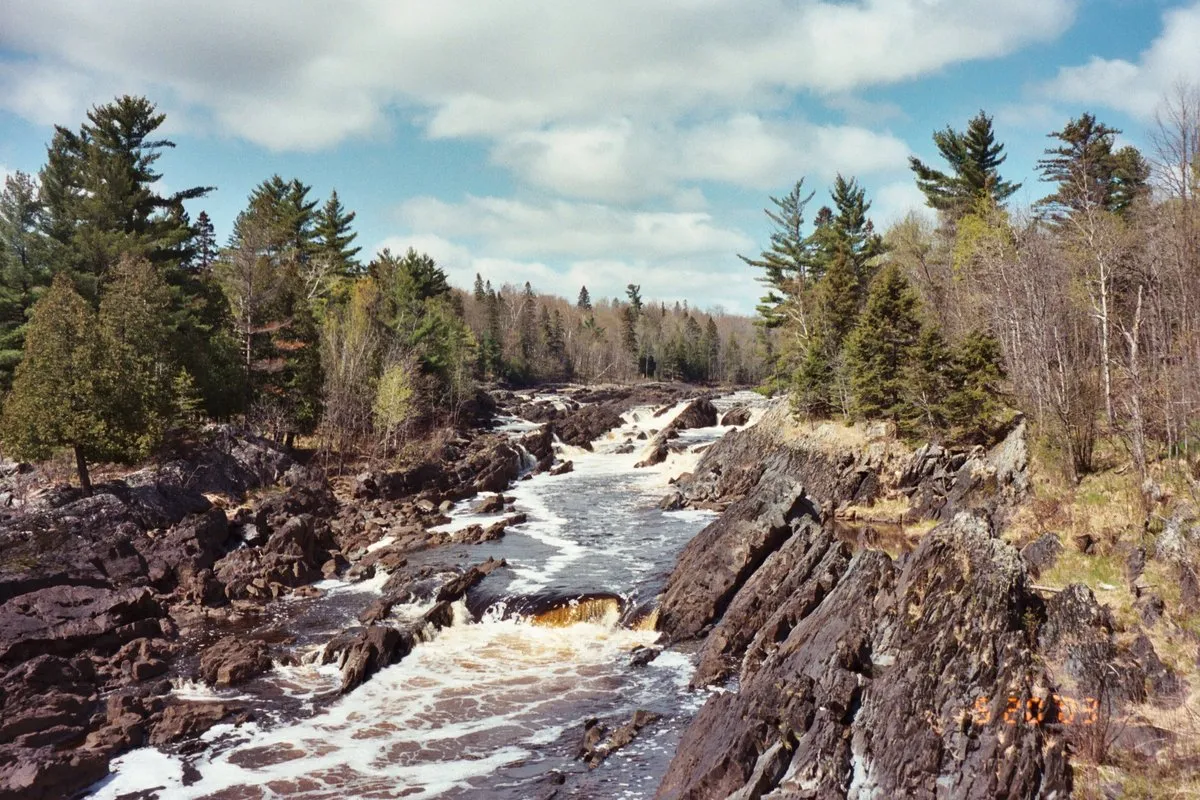
Jay Cooke State Park occupies a dramatic stretch of the St. Louis River gorge about 15 miles southwest of Duluth, Minnesota. The park is defined by something you don’t often see in the Upper Midwest: sharply angled rock. Ancient slate and greywacke formations tilt at steep angles throughout the gorge, fractured and stacked in ways that look almost deliberate. Combined with the rushing brown water of the St. Louis River and dense boreal forest, the park has a character that feels more rugged than most Minnesota state parks, and it draws visitors year-round for that reason.
The St. Louis River Gorge and Its Tilted Rock
The geological centerpiece of Jay Cooke is the river gorge itself. The St. Louis River cuts through Precambrian slate that has been folded and tilted over hundreds of millions of years, producing the steep, angular rock formations visible from the suspension bridge near the visitor center. This swinging bridge is one of the most-visited spots in the park and offers an immediate, close-up view of the river churning through broken rock below. During spring snowmelt, the water runs high and loud. In late summer it calms considerably, and you can see the rock formations more clearly from the bridge and from several overlooks along the gorge trails.
The geology is worth taking time to understand, and the visitor center near the park entrance has exhibits that explain the rock history and the glacial forces that shaped the river’s current path.
50 Miles of Trails Through Forest and Gorge
Trails are the primary way most people experience Jay Cooke, and the park has enough of them to reward multiple visits. The trail system covers more than 50 miles and ranges from short riverside walks to long backcountry routes through the upland forest. The Oldenburg Point Trail gives an elevated view of the gorge that many visitors consider the best in the park. The Grand Portage Trail follows a historic route used by fur traders and connects the main developed area to the backcountry campsite zones.
Winter trail use is significant here. The park has 32 miles of cross-country ski trails in winter, making it one of the larger Nordic skiing destinations in the state. Snowshoers can also use most ungroomed trail corridors. In spring and fall, the trails through the river corridor are particularly striking when the hardwood canopy changes color or opens up.
Mountain bikers and hikers share certain trails in the upland sections, though not all routes are open to bikes. Check current trail status at the visitor center, on the Minnesota DNR current conditions/individual park page, or by contacting the DNR Information Center before planning a longer outing, as seasonal conditions can close some corridors.
Camping and Camper Cabins
Jay Cooke has a full campground with electric and non-electric sites, plus several camper cabins that provide a more sheltered option in shoulder seasons. The campground is popular on summer weekends. All campsites and lodging require reservations before occupancy year-round, and advance reservations are especially recommended before leaving home and for popular summer weekends. Sites run $20 to $35 per night depending on hookups, and camper cabins are $80 to $90 per night. The cabins sleep small groups and include basic furnishings, but guests should bring bedding and cooking gear.
There are also backpack campsites accessible only by trail in the park’s interior, which offer a quieter overnight experience. Permits for those sites are available through the DNR reservation system.
Pet Policy
Pets are welcome at Jay Cooke State Park, but must be kept on a leash six feet or shorter or effectively restrained by a portable enclosure, personally attended at all times, and cleaned up after. Only service animals are allowed in park buildings, lodging, camper cabins, yurts, tipis, tours, or beach areas. Owners are responsible for cleaning up after their animals throughout the park.
Wildlife to Be Aware Of
Black bears are active throughout the park and should be taken seriously, particularly around the campground and in areas with berry-producing shrubs. Store all food, coolers, and scented items in a hard-sided vehicle or bear-resistant container when not in use. Do not leave food unattended at a picnic table or camp kitchen. Bears in Minnesota are generally not aggressive, but a food-conditioned bear is a problem for everyone who uses the park after you.
Timber wolves are present in the park and the surrounding forest. Wolves are wild animals and should never be approached or fed. Keep pets close on trail, especially at dawn and dusk, and secure any food scraps that could attract predators to your campsite.
White-tailed deer are common throughout the park and frequently cross the entry roads, particularly at low light. Drive slowly on the park road, especially in early morning and evening, and watch for deer that may bolt across the road without warning.
Ticks are present in wooded and brushy areas from spring through fall. Do a full body check after any trail outing, paying attention to the scalp, behind the ears, and behind the knees. Long sleeves and pants tucked into socks reduce exposure. Deer ticks in this region can carry Lyme disease and other tick-borne illness, so prompt removal and monitoring for symptoms matters.
Practical Information
Jay Cooke State Park is located at 780 Highway 210, Carlton, Minnesota. The nearest town is Carlton, and the park is roughly 15 miles from downtown Duluth via Interstate 35 south to Highway 210 west. The park entrance is well-marked.
Entry requires a Minnesota State Park vehicle permit: $7 for a one-day pass or $35 for an annual pass that covers all Minnesota state parks. Camping and cabin reservations are made through the Minnesota DNR reservation system at mndnr.gov/reservations or Reserve MN. The visitor center is staffed seasonally and can provide current trail conditions and maps. The park is open year-round, though some facilities and trails have limited access in winter months.
Frequently Asked Questions
Are dogs allowed at Jay Cooke State Park?
Pets are welcome at Jay Cooke State Park and must be kept on a leash no longer than six feet at all times, including on all trails, in the campground, and in day-use areas. Pets are not permitted inside park buildings, including camper cabins.
How much does it cost to enter Jay Cooke State Park?
Entry requires a Minnesota State Park vehicle permit, which costs $7 for a one-day pass or $35 for an annual pass that covers all Minnesota state parks.
Do I need reservations for camping at Jay Cooke State Park?
Reservations are strongly recommended from late May through Labor Day, as the campground is popular on summer weekends. Reservations for campsites and camper cabins can be made through the Minnesota DNR at mndeparks.reserveamerica.com.
How much does camping cost at Jay Cooke State Park?
Campsites run $20 to $35 per night depending on hookups, and camper cabins are $80 to $90 per night. Backpack campsites in the park's interior are also available through the DNR reservation system for a quieter overnight option.