
Interstate State Park
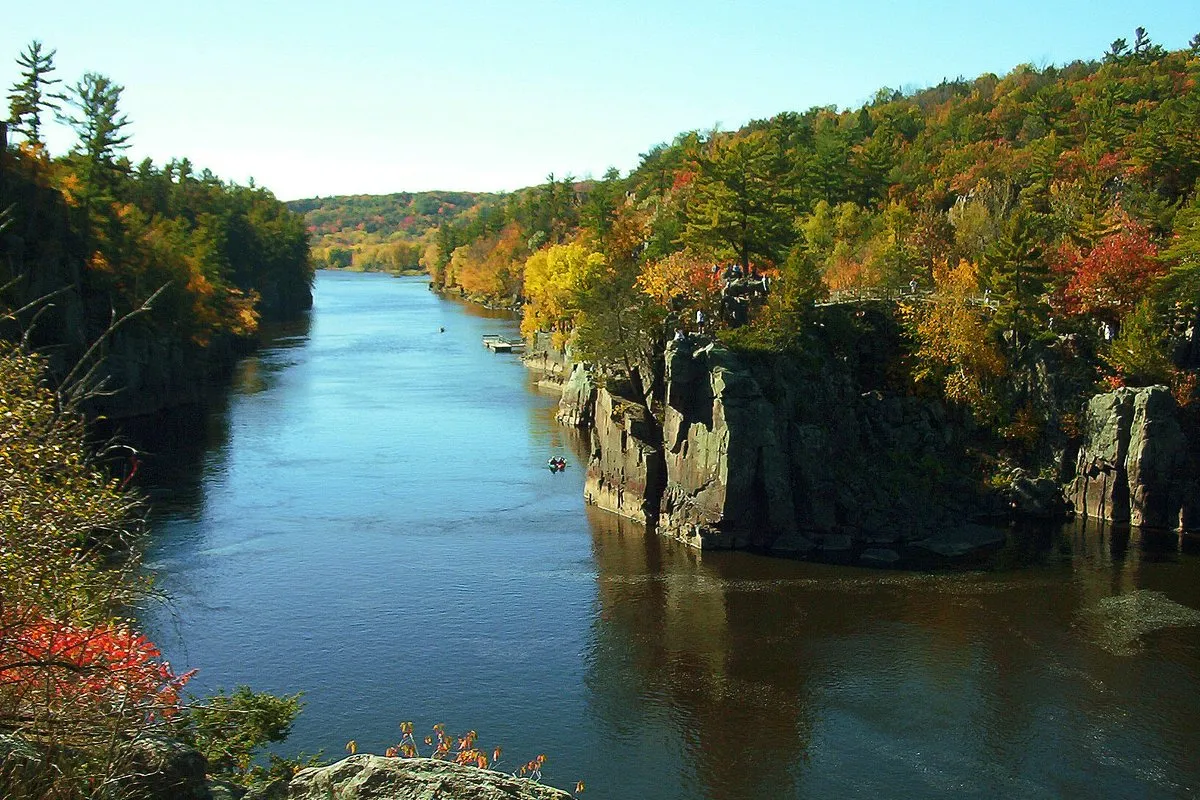
Carved by glacial meltwater and shaped by thousands of years of erosion, Interstate State Park preserves one of the most geologically remarkable landscapes in the Upper Midwest. The park sits along the Minnesota side of the St. Croix River in Taylors Falls, where ancient lava flows, dramatic river bluffs, and the greatest concentration of glacial potholes in the world, along with the world’s deepest explored pothole, combine to create a destination unlike anything else in the state park system. Climbers, hikers, geology enthusiasts, and paddlers all find reason to make the trip here.
The Glacial Potholes
The potholes are why most people come to Interstate State Park, and they earn every bit of the attention. During the last ice age, catastrophic glacial floods funneled enormous volumes of water through this narrow river gorge. Trapped boulders spun in the current for thousands of years, drilling cylindrical holes into the basalt bedrock. The result is a field of perfectly formed potholes, including the 60-foot-deep Bottomless Pit, the deepest fully explored pothole in the world. The deepest fully explored pothole in the world is here. The Pothole Trail loops through this geology up close, and interpretive signs throughout the area explain how these formations developed. The visitor center also houses exhibits on the park’s geological history and is worth a stop before heading out on the trails.
Rock Climbing on Basalt Cliffs
Interstate State Park is one of Minnesota’s premier rock climbing destinations. The exposed basalt columns along the river gorge offer routes ranging from beginner-friendly to technically demanding, drawing climbers from the Twin Cities and beyond. Routes are commonly top-roped, with opportunities for short lead climbs; no permanent protection is affixed, and permanent anchors are prohibited. The cliff faces along the gorge provide excellent handholds in the columnar jointed rock, and the river views from the top add to the appeal. Climbers should review current access rules and any seasonal closures through the Minnesota DNR before visiting, as some cliff areas may be closed; climbers should watch park kiosks and DNR notices for current closures, and signed routes must be avoided.
Trails and River Views
The park has a compact trail system with about four miles of hiking trails. The Glacial Potholes Area and Walter F. Mondale River Trail are among the main Minnesota-side trail experiences, offering close access to the potholes and elevated views across the St. Croix River into Wisconsin. The River Trail runs closer to the water and provides a quieter alternative for those who want to walk along the gorge at river level. Trails range from paved accessible paths near the visitor center to rugged rocky terrain on the bluffs. Hikers should expect some steep and uneven surfaces, especially near the cliff edges.
Paddling and River Access
The St. Croix River along this stretch is a National Scenic Riverway, and paddling is a popular way to experience the park from the water. A small boat launch is available in the park, and a private concessionaire offers seasonal canoe and kayak rentals and shuttle services. The river here is calmer than sections further upstream, making it accessible to paddlers of moderate skill. Boat-based views of the basalt cliffs and potholes from below offer a completely different perspective than the trails above.
Camping
Interstate State Park offers drive-in campsites, with electric hookups available at 22 of the 37 drive-in sites, plus group camping. The campground is relatively small compared to larger state parks, which helps preserve a quieter atmosphere. Reservations are required for all Minnesota state park campsites before they may be occupied, as the park’s proximity to the Twin Cities means it fills quickly. Campers should be diligent about food storage. Campers should still store food, trash, and scented items securely and never leave food unattended.
Pet Policy
Leashed pets are welcome on most trails and in the campground. The leash must be no longer than six feet at all times. Pets are not permitted in the swimming areas or inside the visitor center. Owners are responsible for cleaning up after their animals on all park grounds.
Wildlife to Be Aware Of
Black bears occasionally move through the region, and it is good practice to store food and scented items carefully at any campsite. Campers should store all food, trash, and toiletries securely in a hard-sided vehicle and follow current DNR campground guidance, and never leave food unattended at a campsite.
Poison ivy can occur along trail edges, wooded areas, and rocky areas; hikers should learn to identify and avoid it. It is easy to brush against without noticing, especially on narrower trails. Wearing long pants is a practical way to reduce exposure, and hikers should learn to identify the plant’s three-leaflet pattern before exploring off-trail areas.
Practical Information
Interstate State Park is located at the edge of Taylors Falls, Minnesota, approximately 50 miles northeast of the Twin Cities. From the Twin Cities, take US-8 east through Chisago City to Taylors Falls. The park entrance is clearly marked on the south side of town along the river. The nearest services, including gas, food, and lodging, are available in Taylors Falls and the adjacent Wisconsin town of St. Croix Falls just across the river.
Entry requires a Minnesota state park vehicle permit. A daily permit costs $7 and an annual permit costs $35. Camping fees are additional. See the Minnesota DNR fees page for current rates. Campsite reservations are required for all Minnesota state park campsites before they may be occupied and can be made through the MN DNR reservation system. The visitor center is open seasonally; hours vary, so checking the DNR website before your visit is advisable. The park is open year-round, with winter offering a quieter experience and opportunities for snowshoeing and cross-country skiing on select trails.
Frequently Asked Questions
How much does it cost to enter Interstate State Park?
Entry requires a Minnesota state park vehicle permit, which costs $7 for a daily permit or $35 for an annual permit, with camping fees charged separately.
Are dogs allowed at Interstate State Park?
Leashed pets are welcome on most trails and in the campground, but the leash must be no longer than six feet at all times, and pets are not permitted in the swimming areas or inside the visitor center.
What are the glacial potholes at Interstate State Park?
The potholes were formed during the last ice age when catastrophic glacial floods trapped boulders that spun in the current for thousands of years, drilling cylindrical holes into the basalt bedrock, with some reaching depths of more than 60 feet and the deepest verified pothole in the world located here.
Are there any dangerous animals or plants to watch out for at Interstate State Park?
Timber rattlesnakes are present around the rocky cliff faces and pothole areas, black bears occasionally move through the park especially near the campground, and poison ivy is extremely common along trail edges, rocky outcrops, and at the base of cliff areas throughout the park.