
Totem Bight Historical State Park
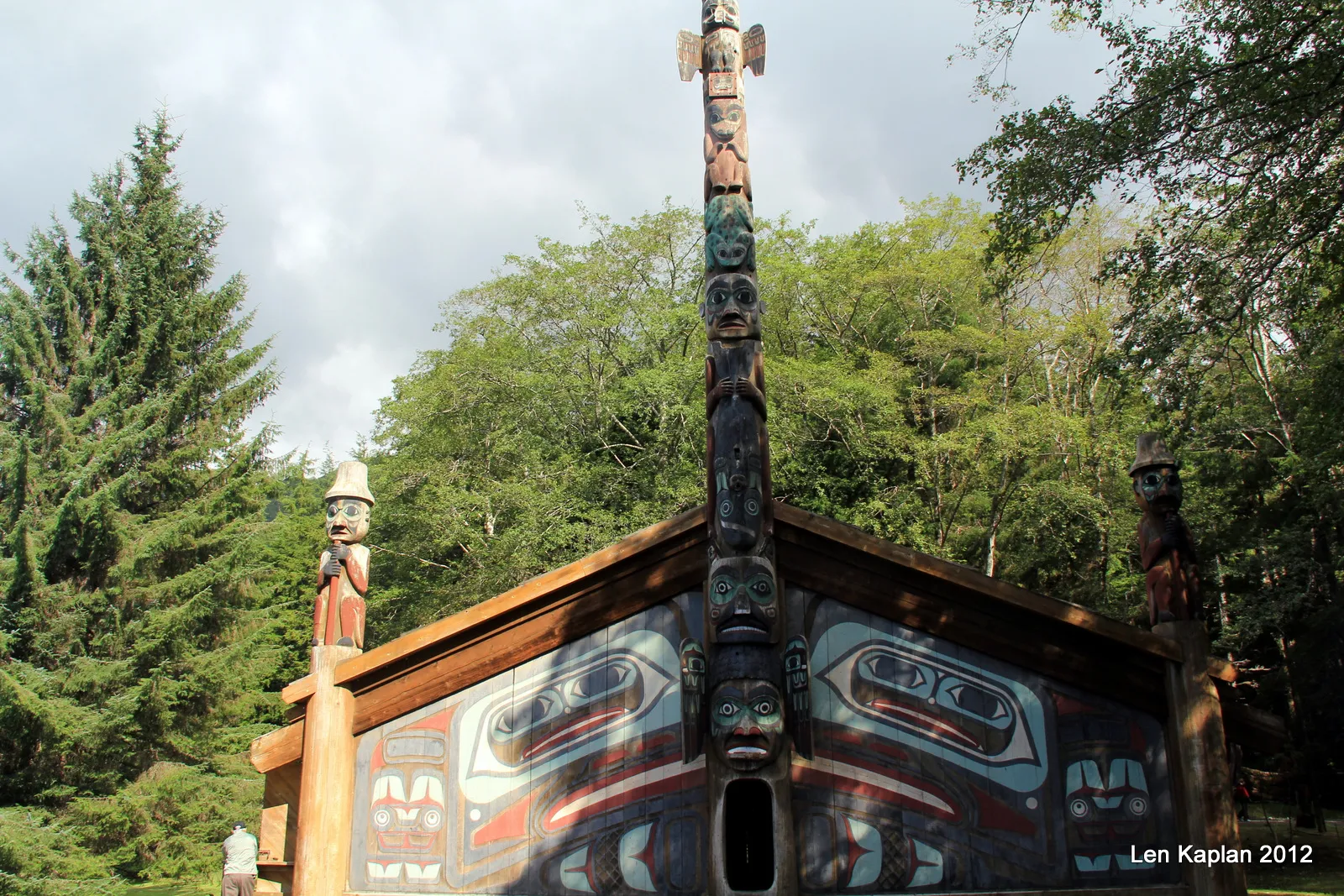
Totem Bight State Historical Park, ten miles north of Ketchikan, preserves a collection of restored Tlingit and Haida totem poles alongside a traditional clan house. The park is a key cultural site for understanding Southeast Alaska’s indigenous heritage, with most poles representing carvings copied or restored from villages along the coast.
The Totem Poles
Totem Bight State Historical Park preserves one of Southeast Alaska’s best-known collections of Tlingit and Haida totem poles. The poles here are not random decorations; they are carved story markers, clan emblems, memorials, and visual records tied to family histories, legends, and social identity. Many represent animals and figures such as Raven, Eagle, Beaver, Wolf, Bear, and Killer Whale, each with its own meaning within Northwest Coast art traditions.
The park’s collection grew out of a 1938 U.S. Forest Service restoration program funded through the Civilian Conservation Corps. As many Alaska Native families moved from older village sites to communities with wage work in the early 1900s, abandoned cedar poles were left exposed to rot, weather, and forest growth. The CCC project hired skilled Native carvers to repair deteriorating poles or carefully duplicate them from surviving fragments.
That restoration work also helped younger artists learn carving methods from older masters. Fresh cedar logs were placed beside original fragments, and carvers tried to copy the older poles as closely as possible. Traditional hand tools inspired the work, and paint colors were recreated from natural pigments such as clam shells, lichen, graphite, copper pebbles, and salmon eggs before being matched with modern paints.
By the time World War II slowed the project, the community house and 15 poles had been placed at the site. Today, visitors can walk among the poles and read interpretive information that explains some of the figures and stories. The park includes both Tlingit and Haida traditions, even though the Ketchikan area is generally considered Tlingit country.
The Clan House
The clan house is the central structure at Totem Bight and one of the most memorable parts of the park. It is a model of a traditional early-19th-century Native community house, sometimes called a clan house or chieftain’s house. Although the site itself was originally a seasonal fish camp rather than a permanent village with a large house, the building represents the type of structure that would have stood in many coastal villages.
Inside, the house has one large room arranged around a central fire pit. A broad wooden platform surrounds the fire area, creating space where several related families of the same lineage could live together. A house of this size could have held 30 to 50 people, with each family using its own portion of the shared interior. Storage was built into the structure, with prized items, blankets, and household goods kept beneath removable floorboards and food hung from beams and rafters.
The low entrance is one of the building’s most distinctive features. Visitors have to stoop to enter, a design often explained as both practical and defensive. Inside, carved house posts support the beams and represent figures from Tlingit stories. The large painted design on the front of the house was created by Tlingit artist Charles Brown and features a stylized Raven, a powerful figure in many Tlingit and Haida traditions.
The clan house helps visitors understand that Totem Bight is not only about individual poles. It presents a fuller picture of Northwest Coast village life, where art, ancestry, storytelling, social structure, and daily living were closely connected.
Walking the Park
Totem Bight is easy to explore on foot. A short, accessible loop trail leads through rainforest to the totem poles, clan house, interpretive signs, and coastal viewpoints. The walk is not long, but it is worth taking slowly. The setting is part of the experience: tall spruce and hemlock, mossy forest, carved cedar, and the rocky edge of Tongass Narrows all help place the poles in the coastal environment that shaped them.
The main trail connects the parking area with the clan house and the totem pole collection. Interpretive panels explain the history of the site and introduce common figures in Northwest Coast art, including Raven, Eagle, Beaver, Wolf, Bear, and Killer Whale. The trail is suitable for most visitors and is one of the more accessible cultural walks near Ketchikan.
The shoreline is another reason to linger. The park sits beside the water north of Ketchikan, with views across Tongass Narrows and opportunities to watch for eagles, seabirds, and marine traffic. At lower tides, the beach area can be interesting for tidepooling, but visitors should step carefully and avoid disturbing marine life.
Visitors should note that trail access can occasionally be limited by maintenance or rehabilitation work. In spring 2026, Alaska State Parks announced limited trail access through May and into June because of ongoing trail rehabilitation, with some overflow parking and trail sections periodically affected.
Pet Policy
Pets are allowed in Alaska state parks, including Totem Bight State Historical Park, but they must be managed carefully. In developed areas such as parking lots, trails, picnic areas, visitor facilities, and historic sites, dogs and other pets must be leashed on a leash no longer than 9 feet and under control at all times. Owners are responsible for cleaning up after their pets.
At Totem Bight, keeping pets leashed is especially important because the park protects cultural resources as well as natural habitat. Dogs should not be allowed to approach, scratch, climb on, or mark the totem poles, clan house, signs, benches, or other historic features. Pet owners should also keep animals away from wildlife, tidepools, and other visitors.
Because this is a small, popular park with narrow walking areas and frequent cruise-season visitors, leashing pets throughout the visit is the simplest and most respectful approach.
Practical Information
Totem Bight State Historical Park is located at 9883 North Tongass Highway, about 10 miles north of downtown Ketchikan. From Ketchikan, visitors can reach the park by driving north on North Tongass Highway, taking a taxi or tour transfer, or using the local bus system when schedules allow. Travelers arriving through Ketchikan International Airport must first take the airport ferry across Tongass Narrows, then continue by road.
The park is open year-round, though the visitor information center is generally a summer facility. Summer is the busiest season, especially when cruise ships are in port, so mornings, later afternoons, and rainy days can feel quieter. Ketchikan receives heavy rainfall throughout the year, so visitors should bring a rain jacket and wear shoes that can handle wet paths.
Totem Bight currently charges a historic site access fee of $5 per person. The picnic shelter can also be reserved for a separate fee. There is no camping at the park, but visitor facilities include toilets, accessible trails, historical features, a picnic shelter, and seasonal visitor information.
Wildlife to Be Aware Of
Black bears are the primary bear species in Southeast Alaska and are present in the forested areas around Ketchikan, including near Totem Bight; make noise when walking the forest trail and be aware of your surroundings. Brown bears are also found in the broader Ketchikan area. Bald eagles are common overhead and along the shoreline; do not disturb nesting birds or approach them closely. The park’s rainforest setting means trails can be very slippery after rain, which is frequent throughout the year; wear shoes with good grip and take care on wet boardwalk sections and rooted paths.
Plan at least 45 minutes to an hour for a basic visit, or longer if you want to read the interpretive signs, photograph the poles, spend time inside the clan house, and walk down toward the shoreline. The park is often paired with other north-end Ketchikan stops, but it deserves more than a quick photo stop because the stories, craftsmanship, and setting are the main reasons to visit.
Frequently Asked Questions
Is there an entry fee for Totem Bight State Historical Park?
Totem Bight State Historical Park charges a $5 per person historic site access fee.
Are dogs allowed at Totem Bight State Historical Park?
Dogs are allowed at Totem Bight and must be leashed on a leash no longer than 9 feet and under control at all times in developed areas including the trail, parking lot, and grounds. Owners must clean up after their pets, and dogs should not be allowed to approach or mark the totem poles or clan house.
Can you camp at Totem Bight State Historical Park?
Totem Bight State Historical Park does not offer camping, though the park does have visitor facilities including interpretive displays, a bookshop, and a viewing deck.
Are the totem poles at Totem Bight originals or replicas?
Most of the poles at Totem Bight are careful duplicates or restorations made during a 1938 Civilian Conservation Corps program, where skilled Native carvers copied deteriorating poles from abandoned village sites along the Southeast Alaska coast.