
Denali State Park
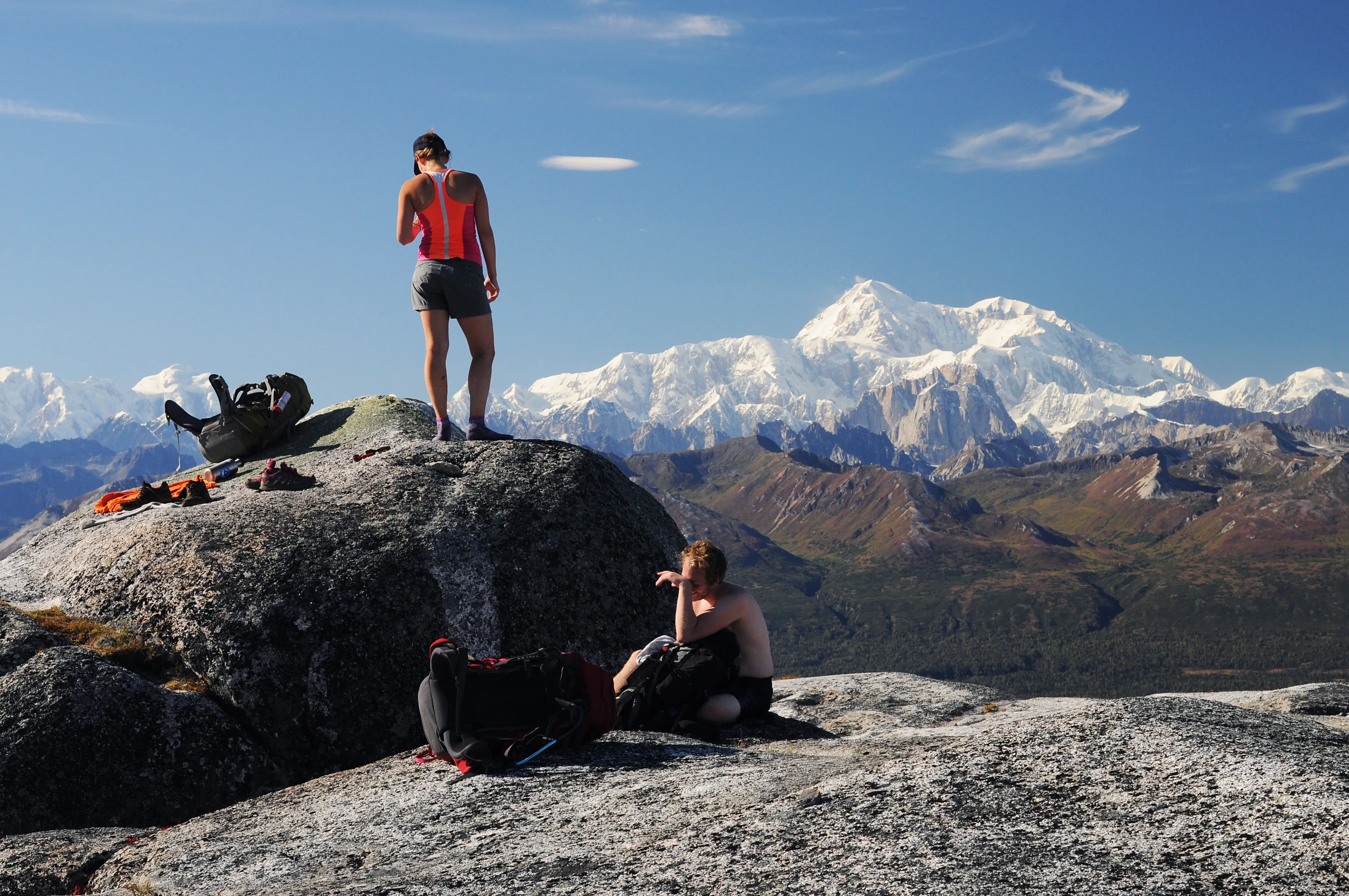
Denali State Park spans 325,000 acres along the Parks Highway in south-central Alaska, sitting roughly halfway between Anchorage and Fairbanks. Where Denali National Park requires long drives on unpaved roads or expensive flightseeing to catch a glimpse of North America’s tallest mountain, the state park puts the Alaska Range directly in front of you from the highway shoulder. On clear days, Denali rises more than 20,000 feet above sea level and dominates the western skyline in a way that stops people mid-sentence. The park is a working wilderness, not a curated visitor experience, and that quality is exactly what draws backcountry travelers, photographers, and families looking for genuine Alaska without the logistical weight of the national park.
Views of Denali and the Alaska Range
The clearest and most accessible Denali viewpoints in existence are found along the Parks Highway corridor through the park, particularly near Milepost 135. Byers Lake, in the southern section, frames the mountain across open water on calm mornings. The viewpoint pullouts along the highway require nothing more than stopping the car, and on a clear day the sight of Denali filling the upper third of the western sky is difficult to process at first glance. Because the mountain generates its own weather and remains hidden in clouds for the majority of summer days, patience and multiple visits increase your odds. Early mornings and evenings in late spring or late summer tend to offer the best visibility.
Hiking and Backcountry Travel
The park has roughly 35 miles of maintained trail, with routes ranging from short lakeside walks to serious ridge climbs. The Curry Ridge and Little Coal Creek trails gain significant elevation and reach alpine terrain with panoramic views of the Alaska Range. The Byers Lake Loop is the most accessible option, circling the lake through spruce and birch forest in about five miles. There are no maintained trails in most of the park’s interior, and experienced backcountry travelers routinely cross unmarked terrain to reach remote drainages and high ridges. Navigation skills, topographic maps, and bear-aware camping practices are essential for any trip beyond the established trail network. River crossings can be dangerous during snowmelt and after heavy rain.
Camping at Byers Lake and Beyond
Byers Lake Campground is the park’s main developed camping area, with tent sites, cabin rentals, and walk-in sites spread through the forest near the lakeshore. The campground has vault toilets and water available in season. Reservations are strongly recommended in summer and can be made through the Alaska State Parks reservation system. Backcountry camping is permitted throughout most of the park without a permit, though campers should follow Leave No Trace practices and store food properly given active bear populations. Several public-use cabins are also available for reservation, offering basic shelter for hikers and hunters accessing more remote areas of the park.
Water Access and Non-Motorized Recreation
Byers Lake allows non-motorized watercraft, making it a pleasant destination for kayakers and canoeists. Rental boats are sometimes available at the campground. Fishing in the lake and surrounding streams produces rainbow trout and Dolly Varden for anglers with a valid Alaska fishing license. The lake is quiet enough in the shoulder seasons that early morning paddlers often have the water to themselves, with the Alaska Range visible to the west when conditions cooperate.
Pet Policy
Leashed pets are welcome throughout Denali State Park, including on trails and in campgrounds. Leashes must be six feet or shorter and under control at all times. Given the active wildlife in the park, keeping pets leashed is both a rule and a practical safety measure. Dogs off-leash can provoke moose and attract bear attention in ways that create serious risk for both the animal and its owner.
Wildlife to Be Aware Of
Brown bears and black bears are common throughout the park, and any hike into the backcountry should be treated as bear country from the moment you leave your vehicle. Carry bear spray and know how to use it. Make noise on the trail, especially in dense vegetation or near streams where visibility is low. Store all food, garbage, and scented items in bear-resistant containers or hang them properly when camping.
Moose are responsible for more injuries to people in Alaska each year than bears are. A cow moose with a calf is especially unpredictable and should be given a wide berth of at least 75 feet. If a moose lowers its head, pins its ears back, or raises the hair on its neck, treat that as a charge warning and put a solid object between yourself and the animal.
Wolves move through the park and are occasionally spotted near trails and open areas. Keep a respectful distance and do not approach. They pose little direct danger when given space.
Mosquitoes and biting insects reach intense levels from late May through July. Long sleeves, head nets, and a quality insect repellent with DEET are not optional luxuries in summer. The insects are particularly aggressive near standing water and in calm, low-wind conditions.
Practical Information
Denali State Park is located along the Parks Highway (Alaska Route 3) between mileposts 132 and 169, approximately 100 miles north of Wasilla and 130 miles south of Fairbanks. The park is accessible year-round by road, though some facilities close after Labor Day. Day-use parking fees range from $5 to $10 per vehicle. An annual Alaska State Parks pass costs $60 and covers day-use fees at all state parks. Camping fees vary by site type and are charged separately. Reservations for campground sites and public-use cabins are available through the Alaska State Parks online reservation system and are recommended well in advance for peak summer weekends.
Frequently Asked Questions
What does it cost to enter Denali State Park?
Day-use parking at Denali State Park costs $5 to $10 per vehicle, an annual pass is available for $60, and camping fees are charged separately depending on the site type you choose.
Can I see Denali (the mountain) from the state park?
Denali State Park offers some of the clearest and most accessible views of the mountain anywhere, particularly from pullouts near Milepost 135 along the Parks Highway and from Byers Lake, though the mountain generates its own weather and is hidden in clouds on the majority of summer days, so early mornings in late spring or late summer give you the best odds.
What wildlife should I watch out for in Denali State Park?
The park is home to brown and black bears, moose, and wolves, and visitors should carry bear spray on all hikes, keep at least 25 yards from moose (which cause more injuries annually than bears do), and maintain a safe distance from wolves at all times.
Are dogs allowed in Denali State Park?
Leashed dogs are welcome on trails and in campgrounds throughout Denali State Park, with leashes required to be six feet or shorter at all times.