
Alaska
Alaska occupies the far northwest corner of North America and spans both the Pacific Northwest and reaches into the broader Pacific Rim. It borders no contiguous U.S. states, sharing land borders only with Canada’s Yukon and British Columbia. The state stretches across five distinct travel regions: Southcentral anchored by Anchorage and the Kenai Peninsula, the Interior centered on Fairbanks and the Denali corridor, the Inside Passage threading southeast through Juneau, Sitka, and Ketchikan, the remote Southwest reaching toward Katmai and the Aleutian Chain, and the Arctic extending into wilderness beyond the Brooks Range.
Alaska’s coastline is extraordinary, with more than 33,000 miles of tidal shoreline, the longest of any U.S. state, along with glacially carved fjords, volcanic island chains, and some of the most productive marine ecosystems on earth.
Inland, lakes and rivers are central to access and survival across the state, from the lake systems of Wood-Tikchik State Park to the Kenai River’s world-class salmon runs. Major draws include Denali National Park and Preserve, home to Mount McKinley and the Alaska Range, glacier viewing at Kenai Fjords and Glacier Bay, brown bear and salmon watching at Katmai, the Iditarod Trail, and the northern lights over Fairbanks each winter.
The best time to visit for most travelers is mid-May through mid-September, when parks are accessible and daylight stretches long into the evening, particularly around midsummer. Winter from December through March draws aurora chasers and Iditarod fans to the Interior, Anchorage, Willow, Nome, and communities along the race route.
Featured State Parks in Alaska
-
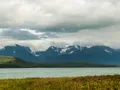
Chilkat State Park
A quiet Southeast Alaska coastal park near Haines, known for glacier views across the Chilkat and Chilkoot inlets.
-
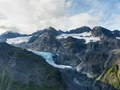
Chugach State Park
Nearly 500,000 acres of wilderness immediately east of Anchorage, with trailheads minutes from downtown and exceptional accessible mountain hiking.
-

Denali State Park
A 325,000-acre park along the Parks Highway with the finest roadside views of Denali and simpler access than the national park.
-

Totem Bight Historical State Park
Cultural park near Ketchikan preserving restored Tlingit and Haida totem poles and a traditional clan house from Southeast Alaska.
-

Wood-Tikchik State Park
America's largest state park at 1.6 million acres, protecting remote lake systems, tundra, and world-class wild salmon runs in southwest Alaska.