
Silver Falls State Park
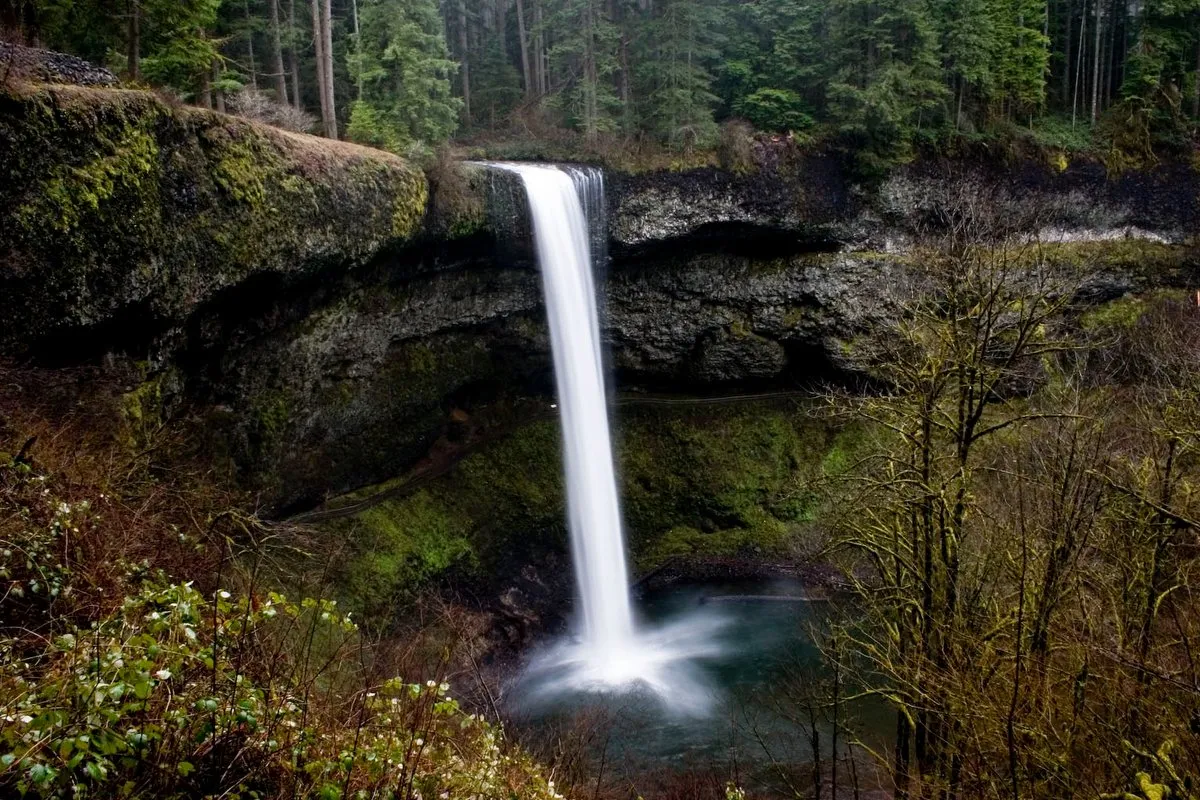
Silver Falls State Park covers more than 9,000 acres in the foothills of the Oregon Cascades, roughly 26 miles by road east-southeast of Salem. It is the largest state park in Oregon, and its reputation rests almost entirely on a single remarkable feature: a canyon carved by Silver Creek, where ten distinct waterfalls drop through basalt cliffs draped in moss and old-growth Douglas fir. Visitors can walk behind several of the falls, stepping into shallow alcoves in the volcanic rock while water crashes just feet away. Few parks in the Pacific Northwest offer that combination of accessibility and drama.
The Trail of Ten Falls
The park’s centerpiece is the Trail of Ten Falls, a roughly 7.2-mile loop connecting all ten waterfalls in a single continuous hike. A section of Canyon Trail near North Falls is currently closed because of storm damage, and hikers must use the North Rim Trail and Twin Falls Trail detour to complete the loop. The trail descends into the canyon early on and follows Silver Creek through dense forest, crossing wooden bridges and passing through natural basalt alcoves behind several waterfalls. Double Falls, at 178 feet, is the tallest of the ten, while South Falls, at 177 feet, is the most photographed. The trail passes directly behind South Falls’ curtain of water. North Falls, at 136 feet, offers a similar walk-behind experience. The full loop involves around 800 feet of elevation change and is rated moderate, with paved and packed-dirt surfaces that make much of it manageable for older children and reasonably fit adults. Shorter out-and-back options are available for those who want to see South Falls, North Falls, or other highlights without completing the full circuit.
Old-Growth Forest and Geology
The canyon walls expose layers of Columbia River Basalt, volcanic rock laid down roughly 15 million years ago. Over time, Silver Creek carved through this rock, leaving behind the horseshoe-shaped alcoves that allow visitors to walk behind the falls. The forest surrounding the canyon includes old-growth Douglas fir, western red cedar, and bigleaf maple, with a dense understory of sword fern and oxalis. The combination of volcanic geology and consistent moisture from the falls creates a microclimate that supports mosses and liverworts across nearly every surface. Interpretive signs along the trail explain both the geological history and the ecology of the old-growth system.
Camping and Facilities
Silver Falls has a full-service campground with tent sites, RV hookups, and several cabins available for reservation. The park also includes a historic conference center, horse camp with corrals, and a network of equestrian and mountain bike trails separate from the main hiking routes. Picnic areas are spread throughout the park, and the South Falls day-use area has restrooms, a large parking lot, and a cafe with hours that may vary by season. The park sees high visitation on summer weekends, and the parking lots can fill before mid-morning.
Pet Policy
Leashed pets are welcome in most areas of the park, but they are not permitted on the Canyon Trail or the connecting Winter, Maple Ridge, and Twin Falls trails. Pets are allowed on leash on other trails, including the short Upper North Falls trail, and there is an off-leash exercise area in the South Falls day-use area. The leash length must not exceed six feet. Pets are allowed only in designated pet-friendly cabins or buildings; seven of the campground’s fourteen cabins are pet friendly.
Wildlife to Be Aware Of
Black-tailed deer are common throughout the park and are frequently seen near the campground and trailheads. Black bears are present in the area, particularly in late summer when berry crops are available. Hikers should store food properly and make noise on the trail. Pacific tree frogs and rough-skinned newts are common along the creek corridor. Rough-skinned newts carry a potent toxin and should not be handled. Coyotes are occasionally spotted in open areas of the park, especially at dawn and dusk.
Practical Information
Silver Falls State Park is located at 20024 Silver Falls Highway SE, Sublimity, Oregon. The nearest town with full services is Silverton, about 14 miles to the northwest via OR-214. The day-use parking permit costs $10 for Oregon residents and $12 for out-of-state residents. Camping reservations are strongly recommended from May through September and can be made through the Oregon State Parks reservation system. The park is open year-round, though trail conditions in winter can be muddy and some facilities close seasonally.
Frequently Asked Questions
Can I bring my dog on the Trail of Ten Falls?
Dogs are not permitted on the Canyon Trail or the connecting Winter, Maple Ridge, and Twin Falls trails, though leashed pets are welcome on other trails in the park, including the short Upper North Falls trail, and an off-leash exercise area is available in the South Falls day-use area.
How much does it cost to visit Silver Falls State Park?
A daily parking permit costs $5 per vehicle, or visitors can purchase a $30 annual Oregon State Parks pass that covers entry to Silver Falls and other Oregon state parks throughout the year.
Is the Trail of Ten Falls open right now?
A section of Canyon Trail near North Falls is currently closed due to storm damage, and hikers completing the full 7.2-mile loop must use the North Rim Trail and Twin Falls Trail detour in place of that segment.
Are there any wildlife safety concerns on the trails?
Black bears are present in forested areas and are more frequently encountered near berry patches in late summer, mountain lions have been spotted in backcountry and remote sections, and wet trail surfaces and slippery rocks near waterfall bases pose a hazard year-round.