
City of Rocks State Park
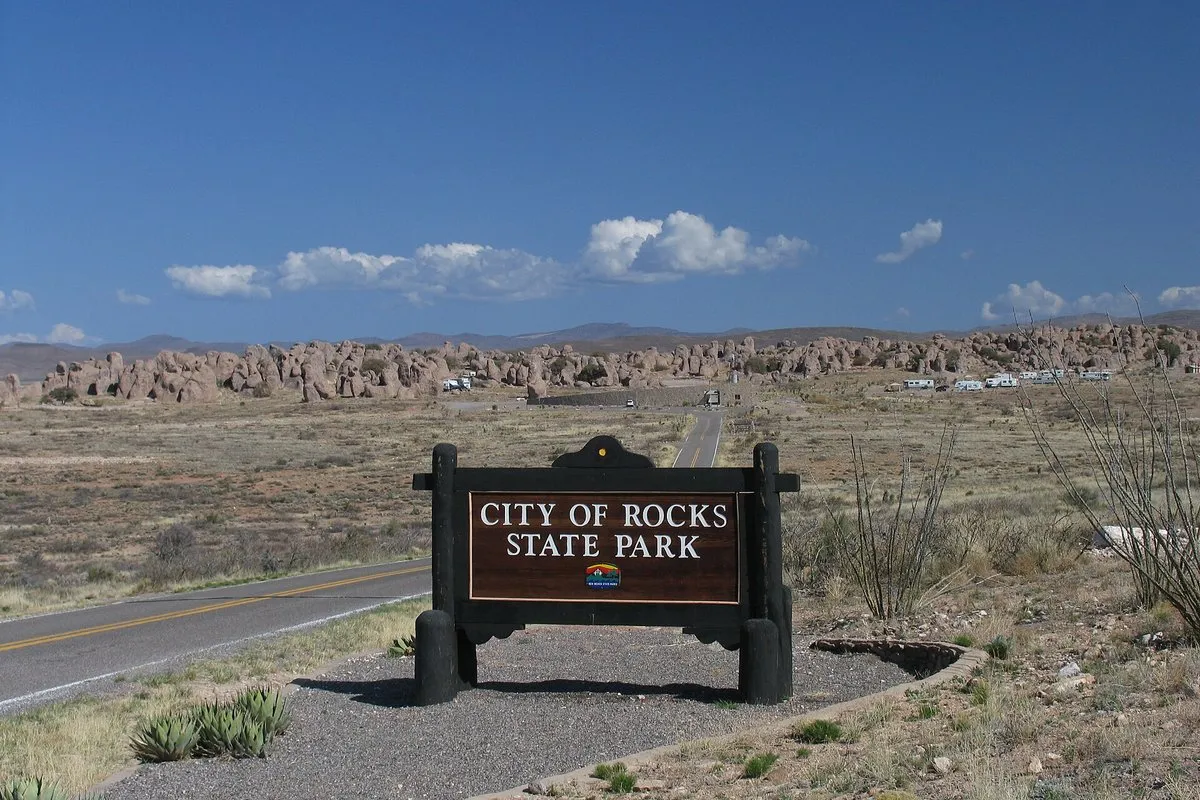
City of Rocks State Park sits in the high Chihuahuan Desert of southwestern New Mexico, about 30 miles northwest of Deming. The park takes its name from its most striking feature: a dense cluster of volcanic rock columns, some rising as high as 40 feet, formed from an ancient ash flow that cooled and fractured over millions of years. The result is a labyrinth of narrow passages, open chambers, and boulder formations that genuinely resembles a city when viewed from above. Few parks in the Southwest offer this particular combination of geological spectacle, dark-sky stargazing, and desert solitude.
The Volcanic Boulder Maze
The rock formations are the reason most people come, and they reward unhurried exploration. Visitors can wander freely through the columns without following a designated route, which gives the experience an open, exploratory quality rare in managed parks. Informal trails wind between the rocks, opening into sheltered clearings that feel almost like outdoor rooms. Children and adults alike tend to lose track of time here. The geology reflects a rhyolitic ash flow from the nearby Emory Caldera, and the columns show distinctive weathering patterns including rounded tops and deeply pitted surfaces. Early morning and late afternoon light are especially good for photography, when the low sun throws the texture of the rock into sharp relief.
Stargazing and the Dark Sky Experience
City of Rocks is known for dark-sky viewing and maintains a star observatory on-site, making the night sky here a genuine draw. The park sits far from major city light pollution, and on clear nights the Milky Way is visible to the naked eye for much of the year. The observatory telescope is available during scheduled star parties or astronomy programs, and visitors should check the park event calendar or contact the park for current observatory access. The combination of the rocky terrain and a dark, open sky makes this one of the more atmospheric stargazing destinations in the region. Visitors planning a night here should bring warm layers even in summer, as desert temperatures drop sharply after sunset.
Camping Among the Rocks
The campground places sites directly within and around the rock formations, which makes it one of the more unusual camping experiences in New Mexico. Many sites back against boulder walls or tuck into alcoves, offering natural wind shelter and a strong sense of place. The park offers water-and-electric sites and developed sites; current official information lists no primitive camping. Restrooms with showers are available on-site. Because the campground sits within the formations rather than beside them, the experience of waking up among the rocks is built into almost every site. Reservations are strongly recommended during spring and fall weekends and around holidays.
Desert Plant Life and the Cactus Garden
The park maintains a formal cactus garden near the main entrance that displays a variety of native Chihuahuan Desert species, including cholla, prickly pear, hedgehog cactus, and ocotillo. The garden serves as a useful orientation to the plant life visitors will encounter throughout the park. Beyond the garden, the surrounding desert scrub supports a full range of high-desert vegetation, with spring blooms bringing color to the rocky terrain between March and May depending on winter rainfall.
Pet Policy
Leashed pets are welcome throughout the park, including on trails and in the campground. The leash must be no longer than 10 feet. Pets may not be left unattended at campsites. Given the number of rocks and crevices in the formation area, keep an eye on dogs that like to investigate tight spaces, as scorpions and snakes use the same sheltered spots.
Wildlife to Be Aware Of
Rattlesnakes are present in the park, especially in warm weather, particularly around the boulder formations and on rocky trails during warm months from spring through fall. Watch where you place your hands and feet, and never reach into a rock crevice or under a ledge without looking first. If you encounter a rattlesnake, give it space and wait for it to move on.
Scorpions are present throughout the campground and formation areas. They shelter under rocks, inside shoes, and in gear left on the ground overnight. Before putting on footwear in the morning, shake it out and check inside. Do the same with clothing, towels, and sleeping bag edges if they have been on or near the ground.
Black bears are occasionally sighted in and around the park. Store all food, coolers, and scented items in a vehicle or bear box when not in use, and pack out all trash. Do not leave food unattended at a picnic table or campsite.
Javelinas, also called collared peccaries, roam the desert scrub and may move through campsites. They are not domesticated animals, and feeding them creates habituation problems and potential safety risks. Keep a respectful distance and secure food just as you would for bears.
Practical Information
City of Rocks State Park is located at 327 NM-61, Faywood, NM 88034, approximately 28 miles northwest of Deming and approximately 33 miles south or southeast of Silver City. From Deming, take US-180 northwest and turn north on NM-61. From Silver City, take US-180 southeast to NM-61. GPS coordinates are 32.5897, -107.9739.
Day-use fees are $5 for New Mexico resident vehicles and $10 for non-resident vehicles; New Mexico residents are exempt October 1 through April 30, and walk-in/bicycle entry is free. Camping fees vary depending on site type and hookup level. An annual New Mexico State Parks Day-Use Pass covers standard day-use fees at most state parks, with exceptions such as Living Desert Zoo and Gardens State Park, and is available for purchase online or at the park entrance. Reservations for camping can be made through the New Mexico State Parks reservation system and are recommended for spring and fall visits. The park is open year-round. Summer temperatures can exceed 100 degrees Fahrenheit midday, so plan outdoor activity for morning or evening hours during July and August.
Frequently Asked Questions
Are dogs allowed at City of Rocks State Park?
Leashed pets are welcome throughout the park, including on trails and in the campground, as long as the leash is no longer than 10 feet and pets are not left unattended at campsites.
How much does it cost to visit City of Rocks State Park?
Day use is $5 per vehicle, camping fees range from $8 to $18 per night depending on site type and hookup level, and an annual New Mexico State Parks pass covering day use at all state parks is available for $40.
Are there rattlesnakes at City of Rocks State Park?
Western diamondback rattlesnakes are common in the park, especially around the boulder formations and on rocky trails during warm months from spring through fall, so visitors should watch where they place their hands and feet and never reach into a rock crevice without looking first.
Can you camp inside the rock formations at City of Rocks?
The campground places sites directly within and around the volcanic rock formations, with many sites tucking into alcoves or backing against boulder walls, and reservations are strongly recommended for spring and fall weekends and holidays.