
Bottomless Lakes State Park
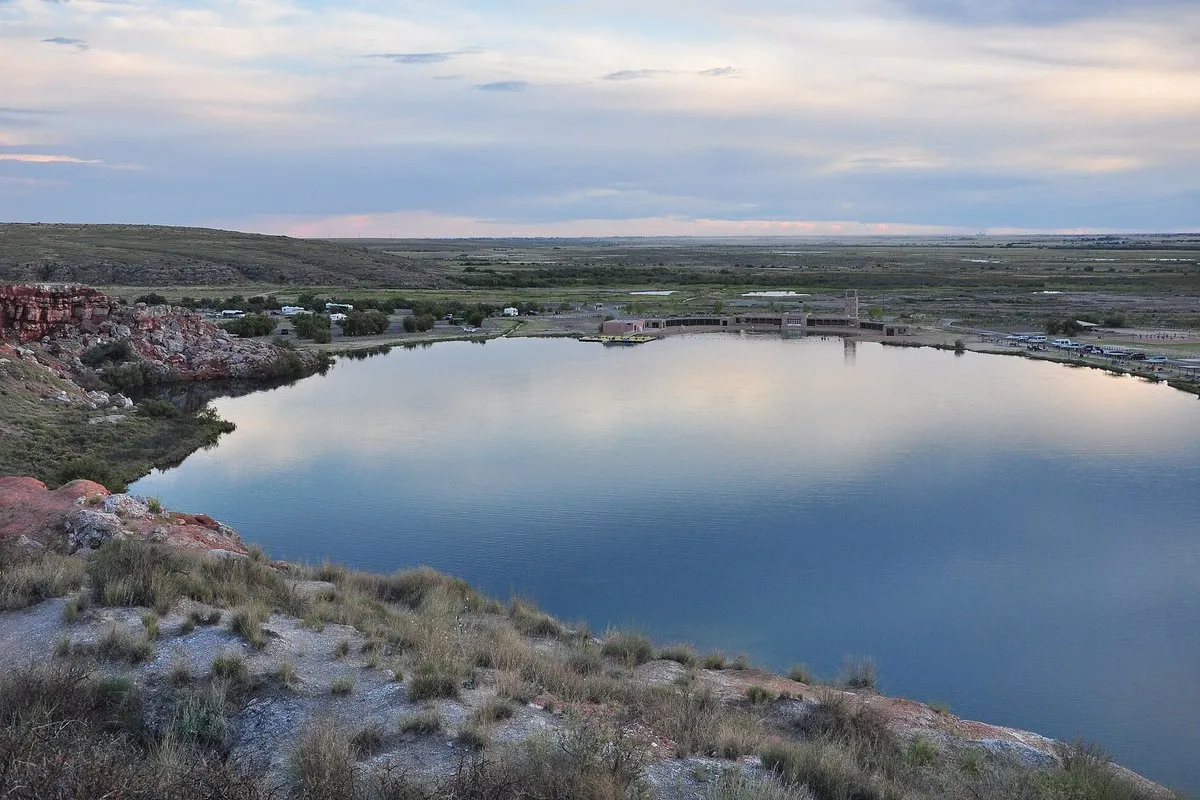
Bottomless Lakes State Park holds the distinction of being New Mexico’s oldest state park, established in 1933. It lies about 15 miles southeast of Roswell in the Pecos River valley, where a chain of small, vivid lakes fills a series of sinkholes cut into red bluff terrain. The lakes get their name from early cowboys who dropped weighted ropes into the water and, finding the lines too short, concluded the lakes had no bottom. They do have bottoms, but the deep blue-green color of the water, caused by algae and dissolved minerals, still gives the surface an otherworldly quality that sets this park apart from anything else in the region.
The Sinkhole Lakes
The park’s defining feature is its eight sinkhole lakes; the broader Bottomless Lakes area includes a ninth lake outside the park. Each lake has a distinct character. Lea Lake is the largest and the only one open to swimming, drawing most of the summer crowds with its warm water, sandy beach, and pedal boat and paddleboard rentals. Mirror Lake and Devil’s Inkwell are smaller, darker, and surrounded more closely by the red bluffs, making them better suited for quiet observation than recreation. Cottonwood Lake and several others along the main road provide scenic pull-off points where visitors can get close to the water without entering it. Walking from one lake to another along the road gives a clear sense of how much variation exists across just a few miles of park.
Birding and the Surrounding Landscape
The park draws serious birders because of the contrast between the arid surrounding terrain and the lush vegetation that grows along the lake edges. Cottonwoods and other riparian plants line the shores, creating habitat that attracts migrating species not commonly seen elsewhere in this part of New Mexico. Herons, egrets, ducks, and shorebirds are regularly observed depending on the season, and the bluffs provide nesting habitat for raptors including red-tailed hawks. Early morning visits in spring and fall offer the best variety. The open flats beyond the park support a different set of species, and visitors who arrive before the summer heat builds often have the lakeshores largely to themselves.
Camping
The park has developed campgrounds with sites ranging from primitive tent camping to sites with electrical hookups. The campground near Lea Lake is the most popular, with access to restrooms and showers. Sites closer to the bluffs are more exposed but offer better views of the red rock formations. Reservations are recommended in summer, particularly on weekends, when the beach draws large day-use crowds alongside overnight campers. Campfires are subject to seasonal restrictions, and visitors should check current conditions before arrival.
Pet Policy
Pets are welcome throughout the park but must be kept on a leash no longer than 10 feet at all times. Pets must be kept on a leash no longer than 10 feet and under control; verify any posted Lea Lake beach restrictions with the park before allowing pets near the water. Given the presence of rattlesnakes and scorpions in the park, keeping pets close and away from rocky areas and debris piles is genuinely important, not just a formality.
Wildlife to Be Aware Of
Rattlesnakes are present throughout the park, particularly along the rocky bluffs and on trailsides. They are most active during warm months from spring through early fall, and they tend to shelter in shaded rock crevices during the heat of the day before becoming more mobile in the evening. Watch where you step and where you place your hands when climbing on or near the bluffs. If you encounter one, give it space and wait for it to move.
Scorpions are common at campsites and surrounding areas. They hide under rocks, logs, firewood, and debris, and they can also end up inside shoes, clothing, or gear left on the ground overnight. Shake out shoes and clothing before putting them on, and avoid reaching under rocks or into dark spaces without checking first.
Coyotes are active in the park at dawn and dusk. They are generally not aggressive toward people, but they will take food, trash, or unsecured pet food left at campsites. Store all food in closed containers inside a vehicle when not in use, and do not leave food out unattended. Keep small pets inside or close at night.
Practical Information
Bottomless Lakes State Park is located at approximately 33.3282 latitude, -104.3393 longitude, about 15 miles southeast of Roswell via US-380 East and NM-409 South. Roswell is the nearest city with full services including lodging, groceries, and fuel. Day-use fees are $5 per resident vehicle and $10 per non-resident vehicle; New Mexico residents are exempt from day-use fees October 1 through April 30. Camping fees vary by site type. A New Mexico State Parks annual day-use pass covers most state parks, with posted exceptions; check current state park fee rules for excluded parks. The park is open year-round, but Lea Lake rentals operate Memorial Day weekend through Labor Day weekend, and while the sandy beach is accessible outside that window, lifeguards and some facilities are seasonal. Summer weekends get busy, and campsite reservations through the New Mexico State Parks system are strongly recommended for those planning overnight stays between May and August.
Frequently Asked Questions
Can you swim at Bottomless Lakes State Park?
Lea Lake is the only lake in the park open to swimming, and it offers a sandy beach along with paddleboat and kayak rentals on a seasonal schedule that typically runs from late spring through early fall.
What is the entry fee for Bottomless Lakes State Park?
The day-use entry fee is $5 per vehicle, and a New Mexico State Parks annual pass, which covers day-use entry at all state parks, is available for purchase online or at the park entrance.
Are dogs allowed at Bottomless Lakes State Park?
Pets are welcome throughout the park on a leash no longer than 10 feet, but they are not permitted on the swimming beach at Lea Lake or in any of the water.
What wildlife should I watch out for at Bottomless Lakes State Park?
Rattlesnakes are present along the rocky bluffs and trailsides, scorpions commonly hide under rocks and gear at campsites, fire ants have established colonies near lake shores and picnic areas, and coyotes are active at dawn and dusk and will take unsecured food left at campsites.