
Cimarron Canyon State Park
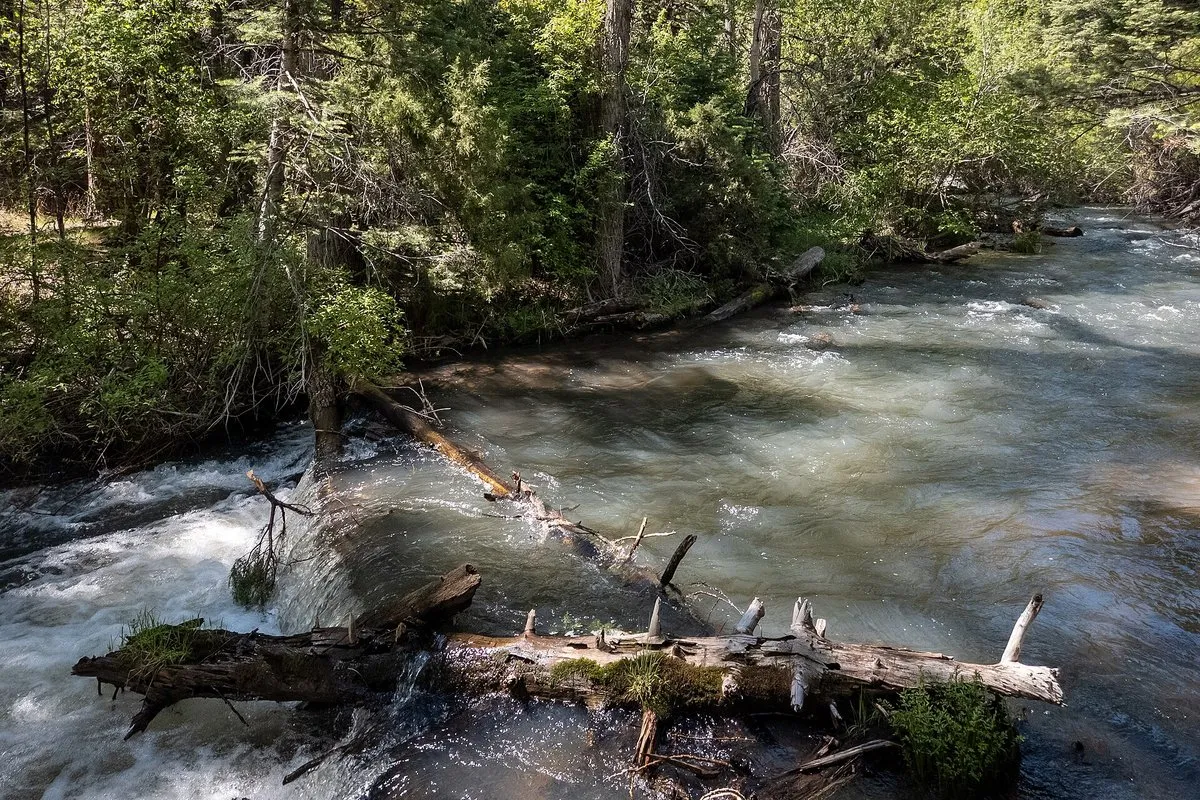
Cimarron Canyon State Park runs for about eight miles through a dramatic canyon whose signature Palisades are formed from a Tertiary porphyritic dacite sill in the Sangre de Cristo Mountains of northern New Mexico, roughly 35 miles east/northeast of Taos via US Highway 64, about 3 miles east of Eagle Nest. The Cimarron River cuts through the canyon floor, and the walls rise steeply on both sides, cloaked in ponderosa pine, spruce, and cottonwood. The park is part of the Colin Neblett Wildlife Area and is managed cooperatively with New Mexico Game and Fish, which gives it a character distinct from most state parks. It draws fly anglers, hikers, and campers who want high-elevation canyon scenery without the crowds of more prominent destinations.
Trout Fishing on the Cimarron River
Fishing is the primary reason many visitors come to Cimarron Canyon. The Cimarron River is stocked with rainbow trout and also holds wild brown trout, and the river runs alongside the highway for most of the park’s length, making access straightforward. Several pull-outs and informal access points allow anglers to drop into the river at different spots. The stretch through the canyon is designated catch-and-release in some sections, and regulations can change seasonally, so checking current New Mexico Game and Fish rules before arrival is strongly recommended. Anglers age 12 and older must have a valid New Mexico fishing license, except on designated free fishing days when license requirements are waived but other rules still apply. The best fishing conditions are typically in late spring and early fall when water temperatures are cooler and flows are more predictable.
The Palisades and Canyon Wall Scenery
The most visually striking feature of the park is the Palisades, a series of sheer porphyritic dacite columns and cliffs that rise sharply from the canyon floor on the north side of the highway near the center of the park. These formations reach several hundred feet in height and are composed of a Tertiary porphyritic dacite sill that gives the canyon a raw, imposing quality. The Palisades Picnic Area/roadside stop offers close views of the cliffs. Early morning and late afternoon light bring out the texture and color of the rock face most clearly.
Hiking the Canyon Trails
Several hiking trails extend from the main corridor into the surrounding terrain. The Clear Creek Trail follows a tributary stream up through a forested drainage and includes a waterfall, making it one of the more rewarding hikes in the park. The trail conditions can be rough and involve stream crossings that may be difficult during spring runoff. Tolby Creek Trail is another option when open; Tolby and Maverick Trails are seasonally closed May 15 through July 31 and during published big-game hunts, while Clear Creek Trail remains open during the May 15 through July 31 closure. Most trails here are relatively short by backcountry standards, but the elevation, with the park sitting at about 7,876 feet and the surrounding Colin Neblett area ranging from about 7,400 feet along the river to over 12,000 feet at Touch-Me-Not Mountain, means the hiking feels more demanding than mileage alone would suggest. Visitors coming from lower elevations should allow time to adjust before attempting longer routes.
Camping in the Canyon
The park has four camping areas: Maverick, Tolby, Ponderosa, and Blackjack Tent Area. Sites are non-electric/basic developed or tent sites; electric hookups are not available. Camping in a canyon with a river running through it and tall pines overhead is genuinely appealing, but the sites fill quickly on summer weekends and during fall foliage season. Check current New Mexico State Parks alerts and the Reserve America reservation system; Blackjack is seasonally closed October 1 through May 1 and Maverick is seasonally closed December 1 through March 1. The campgrounds have restrooms, and some sites have fire rings and picnic tables. Firewood gathering within the park is not permitted, so campers should bring their own or purchase it nearby.
Pet Policy
Pets are welcome at Cimarron Canyon State Park and must be kept on a leash no longer than ten feet at all times. This applies on trails, in campgrounds, and in all day-use areas. Except for service animals, pets are not allowed in visitor centers; visitors should follow posted rules for any other park buildings. Given the active wildlife in the canyon, keeping dogs leashed and under close control is important for their safety as well as for the wellbeing of the wildlife in the area.
Wildlife to Be Aware Of
Black bears are present throughout the canyon and are regularly seen near campgrounds, especially where food is improperly stored. All food, trash, and scented items must be stored in a vehicle or bear canister when not in use. Never leave coolers, pet food, or cooking supplies unattended at your site. If a bear approaches your camp, make noise, stand your ground, and do not run.
Mountain lions live in the forested areas and rocky terrain of the canyon. Sightings are uncommon but the population is present. If you encounter a mountain lion, face it directly, make yourself appear large, and back away slowly. Do not crouch or turn your back. Children and small dogs are at higher risk and should be kept close on trails.
Elk and mule deer are frequently seen on trails and along the highway, particularly at dawn and dusk. Driving slowly through the canyon at those hours is important, as collisions with large animals are a real hazard. On trails, give them space and do not approach.
Wild turkeys are common near campsites and day-use areas. They are generally not dangerous but can become bold around food and should not be fed.
Practical Information
Cimarron Canyon State Park is located on US Highway 64 between Cimarron and Eagle Nest, New Mexico. Eagle Nest is the closest town to the park’s western end/official address; Cimarron is farther east along US 64 and also has services. There is no dedicated park entrance station. Day use is $5 for New Mexico residents during the fee season, with residents exempt October 1 through April 30; nonresident day use is $10 per vehicle per day, collected at self-pay stations within the park. Camping fees vary by site type. A New Mexico State Parks annual pass covers the day-use fee and is worth considering for multiple visits. The park is open for day use, currently posted as 6 AM to 9 PM, but some campgrounds and trails have seasonal or hunt-related closures; visitors should check current park alerts before going. Cell service in the canyon is limited or absent. Campsite reservations can be made through the New Mexico State Parks reservation system online.
Frequently Asked Questions
Is there an entry fee for Cimarron Canyon State Park?
The day use fee is $5 per vehicle, collected at self-pay stations within the park, and camping fees vary by site type. A New Mexico State Parks annual pass covers the day use fee and is a good option if you plan multiple visits.
Are dogs allowed at Cimarron Canyon State Park?
Pets are welcome throughout the park, including on trails and in campgrounds, but must be kept on a leash no longer than ten feet at all times. Given the presence of black bears and mountain lions in the canyon, keeping dogs leashed and under close control is important for their safety.
What are the fishing rules on the Cimarron River?
A valid New Mexico fishing license is required, and some stretches of the river are designated catch and release, with regulations that can change seasonally. Checking current New Mexico Game and Fish rules before your visit is strongly recommended.
Do I need a reservation to camp at Cimarron Canyon State Park?
Reservations through New Mexico State Parks are recommended from late May through October, as the four campgrounds along the canyon fill quickly on summer weekends and during fall foliage season. Reservations can be made online through the New Mexico State Parks reservation system.