
Warren Dunes State Park
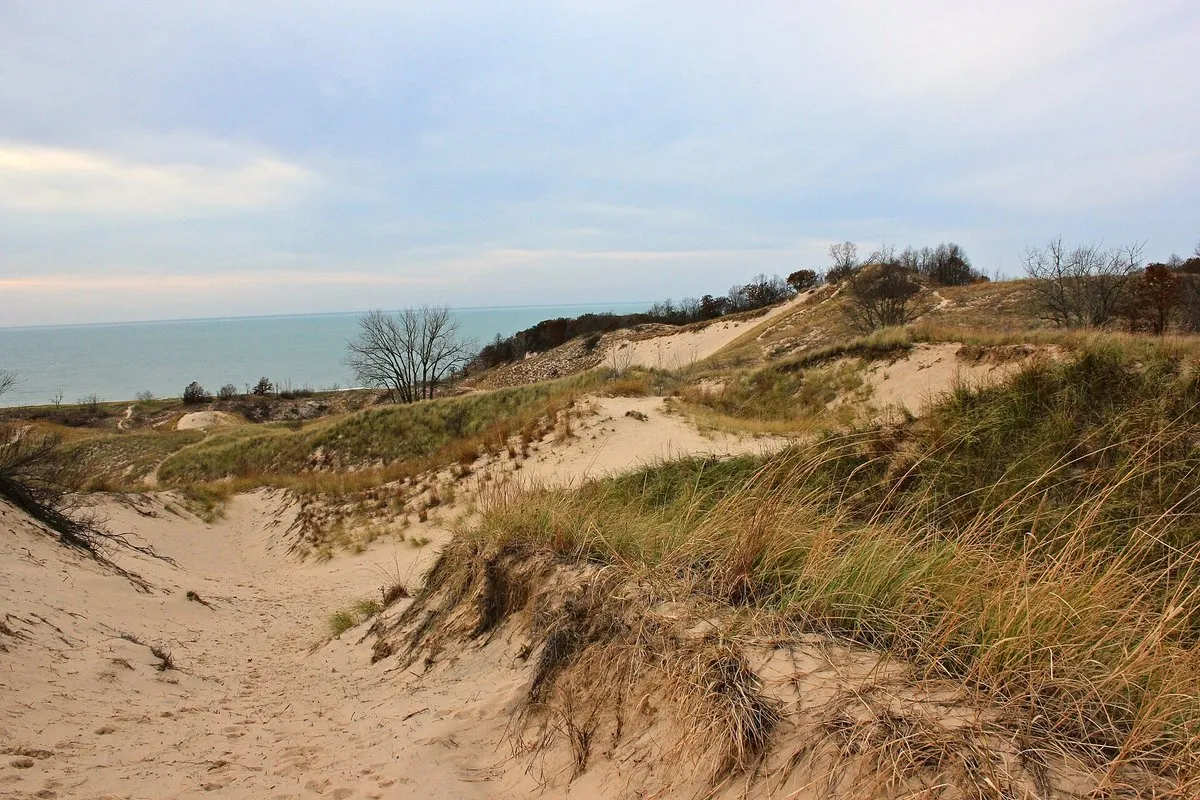
Warren Dunes State Park stretches along the eastern shore of Lake Michigan in Berrien County, at the southwestern tip of Michigan’s Lower Peninsula. The park covers roughly 1,500 acres and draws visitors primarily for one thing: its massive sand dunes, some of which rise 260 feet above the lake. Combined with a long swimming beach and a network of forested trails, the park offers enough variety to fill a full day or a long weekend.
The Dunes and Beach
The dunes are the centerpiece of the park, and they are genuinely impressive in scale. Tower Hill, the tallest dune, is a steep climb but rewards the effort with sweeping views over the lake and surrounding woodland. Most visitors make their way up at least one dune face, though the soft sand makes the ascent slow going. Children especially tend to love the descent, which is fast and mostly harmless.
The sandy shoreline runs about three miles and gets wide enough in summer to accommodate the large crowds that arrive on warm weekends. The swimming is good when the lake is calm. There are no lifeguards at Michigan state park beaches, so swimmers should stay within the buoyed swim area and follow the beach flag warning system.
Dune climbing is part of the park experience, though visitors should stay off any fenced or posted restoration areas, where vegetation is being reestablished to prevent erosion.
Hiking Through Dune and Forest
The park has around six miles of marked trails that move between open dune terrain and shaded forest. The contrast is part of what makes hiking here interesting. A trail that starts through oak woodland can open onto a sun-baked sand face within a quarter mile, then drop back into cool shade.
The trails range from relatively easy walks to routes with significant elevation changes given the dune topography. Footwear matters more here than in most parks: sandals and flip-flops make the sandy stretches uncomfortable and provide no support on the steep sections. Closed-toe shoes or trail runners are a better choice.
Trail users should carry water, especially in warm weather. There is little natural shade on the open dune portions, and heat reflects strongly off the sand.
Camping
Warren Dunes offers a large campground with 182 modern sites, most with electrical hookups, as well as a separate 37-site semi-modern campground. The modern campground fills quickly on summer weekends and holidays. Reservations through the Michigan DNR reservation system are strongly recommended from Memorial Day through Labor Day. Walk-in availability on busy weekends is unlikely.
The campground is separated from the beach by the dune terrain, so campers should expect a short walk to reach the water. Basic facilities including restrooms, showers, and concessions are available on site during the main season.
Pet Policy
Pets are welcome in the park but must be on a leash no longer than six feet at all times. Dogs are allowed on the trails and in the campground. Pets are not permitted in the buoyed swim area, but they are welcome north of the northernmost swim buoy, where 2.5 miles of shoreline is open to them. Owners are responsible for cleaning up after their animals throughout the park.
Wildlife to Be Aware Of
Biting flies are the most common nuisance at Warren Dunes, particularly along the beach. Stable flies can be a problem along Great Lakes beaches in mid to late summer, while deerflies and horseflies generally appear by mid-summer and can continue through warm weather. Any of them can make a beach visit genuinely unpleasant without some preparation. Insect repellents have limited effectiveness against some of these flies. Light-colored, loose-fitting clothing that covers arms and legs helps reduce bites. Early morning visits before the heat of the day tends to bring fewer flies than midday or afternoon.
Snakes are present in both the dune areas and forested sections of the park. Garter snakes are among the nonvenomous species visitors may encounter and will typically move away from foot traffic. If you see one, leave it alone. Flipping over logs or reaching into dense brush without looking first is the most likely way to have a close encounter you did not intend.
Rip currents are a real hazard along the Lake Michigan shoreline and should be taken seriously. They can develop quickly and catch even experienced swimmers off guard. Stay within the buoyed swim area, never swim alone, and follow the Great Lakes beach flag warning system. If you are caught in a rip current, do not try to swim directly back to shore against it. Swim parallel to the shoreline until you are out of the current, then angle back to the beach. Check current conditions at the park entrance or with park staff before entering the water.
Practical Information
Warren Dunes State Park is located at 12032 Red Arrow Highway in Sawyer, Michigan, approximately 12 miles north of the Michigan-Indiana state line. The nearest town with full services is Bridgman, about four miles north. From downtown Chicago, the park is roughly 85 miles northeast via I-94.
Entry requires a Michigan Recreation Passport. Michigan residents pay $15 for a vehicle Recreation Passport when purchased with license plate renewal, while a nonresident annual pass costs $42. A daily nonresident pass costs $12 and can be purchased at state parks and recreation areas. Camping fees are charged separately and vary by site type.
The park is open year-round, though swim buoys, concessions, and campground facilities are seasonal. The Mount Randall and Hildebrandt campgrounds are reservable May 1 through Oct. 21, and food trucks are typically on site from May through Labor Day weekend, often with some September weekend service. Fall and spring visits are quieter and can be rewarding, especially for hiking. Winter visits are possible but facilities are limited. Camping reservations can be made through MiDNRReservations.com or by calling 800-447-2757.
Frequently Asked Questions
Are dogs allowed at Warren Dunes State Park?
Dogs are welcome throughout the park on a leash no longer than six feet, including on trails and in the campground. While pets are not allowed in the buoyed swim area, 2.5 miles of shoreline north of the northernmost swim buoy is open to them.
How much does it cost to enter Warren Dunes State Park?
Entry requires a Michigan Recreation Passport. Michigan residents pay $15 for a vehicle Recreation Passport when purchased with license plate renewal, the non-resident annual pass costs $42, and a daily non-resident pass costs $12 at the park gate. Camping fees are charged separately.
Is alcohol allowed at Warren Dunes State Park?
Warren Dunes State Park is a dry campground, and bringing or consuming alcohol for personal use is prohibited throughout the park.
Are there lifeguards at the Warren Dunes beach?
There are no lifeguards at Warren Dunes, so swimmers should stay within the buoyed swim area and follow the beach flag warning system. Rip currents are possible along the Lake Michigan shoreline, making it especially important to swim in designated areas.