
Wolfe's Neck Woods State Park
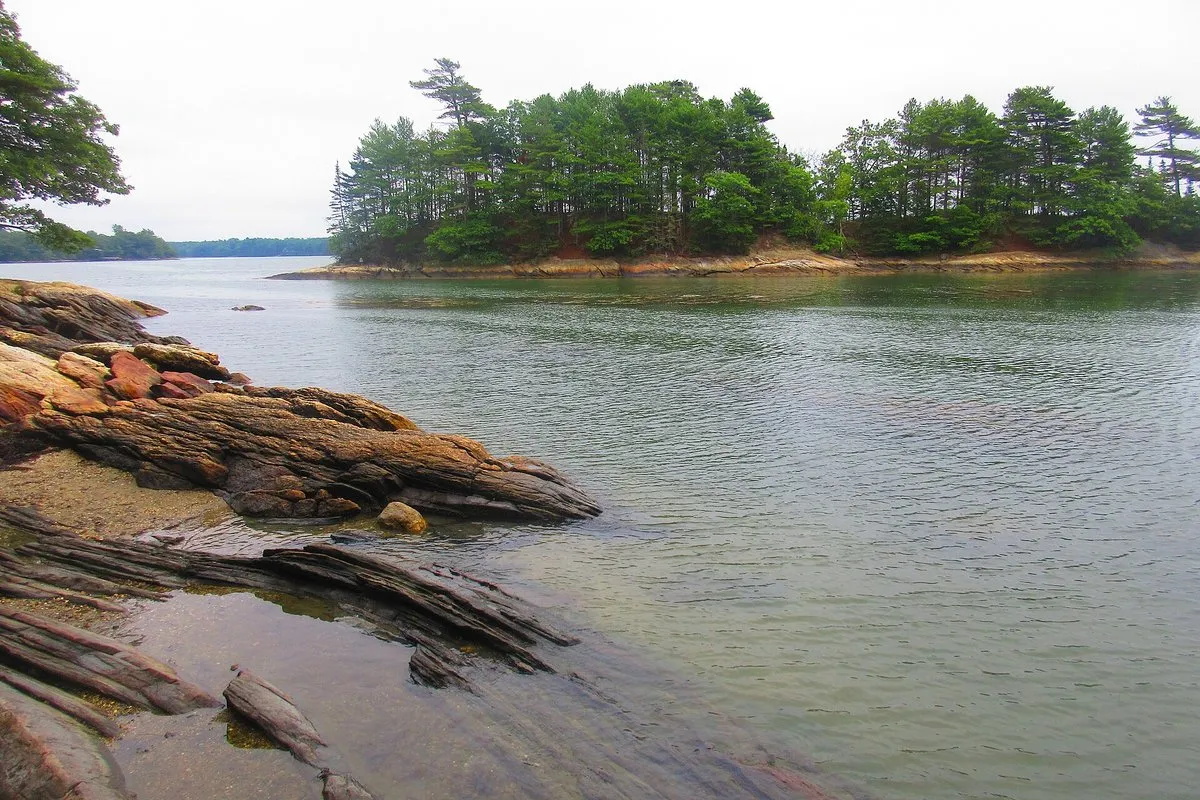
Wolfe’s Neck Woods State Park occupies a narrow peninsula along the coast of Freeport, Maine, where the Harraseeket River meets Casco Bay. The park covers about 245 acres of mixed coastal forest, with rocky shoreline, tidal flats, and stands of white pine and hemlock shading the trails. What sets it apart from most Maine coastal parks is the combination of genuine wildlife habitat and accessible, quiet hiking within a short drive of a busy town. It draws birdwatchers, families, and anyone looking for a few hours of calm on the water’s edge.
Osprey Nesting on Googins Island
The park’s most distinctive feature is the osprey nesting pair on Googins Island, a small wooded island visible from the shoreline trail. Ospreys return each spring and remain active through summer, and on a clear day visitors can watch adults diving for fish or carrying prey back to the nest. This is one of the more reliably productive osprey viewing spots in southern Maine, and the park has interpretive signs along the trail explaining the birds’ behavior and conservation history. Bring binoculars if you have them. The viewing is best from the Googins Island overlook on the White Pines Trail, where you can observe without disturbing the birds.
Hiking the Shoreline and Forest Trails
The trail network is modest in length but varied in character. The park has roughly five miles of trails in total, ranging from easy flat walks along the bay to slightly more rugged inland loops through dense hemlock forest. The Casco Bay Trail runs along the water and offers the most dramatic scenery, with views across the bay, exposed ledges at low tide, and the island nesting area in sight for much of the route. The Harraseeket Trail follows the opposite shore of the peninsula along the river, quieter and more sheltered. Interior trails connect the two shorelines and pass through older forest sections where the tree canopy is thick enough to make summer hiking comfortable even on warm days. Most trails are well-marked and manageable for older children and adults with basic mobility. The terrain stays relatively level with occasional rocky sections near the water.
The Coastline and Tidal Habitat
The shoreline itself is worth slowing down for. At low tide, the rocky and muddy flats along both the river and bay sides support a range of shorebirds, wading birds, and invertebrates. Great blue herons work the shallows regularly. The exposed ledges along the Casco Bay side show clear evidence of glacial activity in the striated rock and scattered boulders. Swimming is not a developed activity here, and there are no sandy beaches, but the rocky shore offers good spots to sit, watch the water, and observe tidal patterns. Kayakers sometimes put in near the park to explore the coastline, though there is no formal launch facility within the park boundary.
Picnicking and Group Use
The park has a picnic area suitable for family outings, with tables set back from the shoreline in a shaded section of the grounds. It is a straightforward, functional space rather than a destination in itself, but convenient if you want to extend your visit into the afternoon. The park hosts ranger-led programs during the warmer months, often focused on the osprey colony, coastal ecology, or forest habitats. These programs are free with park admission and can be a good option for families with younger children who want structured engagement with the landscape.
Pet Policy
Leashed pets are welcome on the trails and in most areas of the park. Pets must be on a leash under the physical control of the handler. Pets must be leashed, attended, and under control at all times, and owners must clean up their waste. Owners are expected to clean up after their animals and should bring waste bags. Given the active wildlife in the park, particularly nesting birds in spring and summer, keeping dogs close and under control is important for minimizing disturbance to the habitat.
Wildlife to Be Aware Of
Ospreys nesting on Googins Island are the centerpiece of the park’s wildlife experience, but they are also sensitive to disturbance during the breeding season. Observe them from the Googins Island overlook on the White Pines Trail and stay away from Googins Island. Loud noise and close approach can cause adults to abandon the nest temporarily, which puts eggs or young birds at risk.
Ticks are present throughout the wooded trails year-round, including in winter during mild stretches. Deer ticks capable of transmitting Lyme disease are common in this part of Maine. Wear long pants, tuck them into your socks, use repellent, and do a thorough full-body check after hiking. Pay attention to areas behind the knees, the scalp, and the waistband.
If you encounter a coyote, do not feed it or approach it, and keep children and pets close. A coyote that appears relaxed around humans or is active during midday should be reported to park staff.
Practical Information
Wolfe’s Neck Woods State Park is located at 426 Wolfe’s Neck Road in Freeport, Maine, approximately five miles from downtown Freeport. From Route 1, take Bow Street east and follow signs to Wolfe’s Neck Road. The park is open year-round, 9:00 a.m. to sunset daily unless otherwise posted at the gate. Admission is $4 for adult Maine residents, $6 for adult nonresidents, $2 for nonresident seniors, $1 for children ages 5 to 11, and free for children under 5 and Maine residents 65 and older. Ranger-led nature programs are free with park admission. No reservations are required for day use. For current program schedules or accessibility information, contact the Maine Bureau of Parks and Lands or check the state park website before your visit.
Frequently Asked Questions
What is the admission fee for Wolfe's Neck Woods State Park?
Admission is $6 for adults, $2 for Maine seniors, $1 for children ages 5 to 11, and free for children under 5. Visitors attending a ranger-led program get in free with their program registration.
Are dogs allowed at Wolfe's Neck Woods State Park?
Leashed dogs are welcome on the trails and in most areas of the park, provided the leash is six feet or shorter. Pets are not permitted in the picnic area or during ranger-led programs, and owners are expected to clean up after them.
Where can I find tide charts for Wolfe's Neck Woods State Park?
Current tide predictions for the Freeport area are available through NOAA's tide chart tool at tidesandcurrents.noaa.gov. Timing your visit around low tide is worthwhile here because the exposed flats along both the Harraseeket River and Casco Bay sides of the park attract the most shorebird and wading bird activity.
Are ticks a problem at Wolfe's Neck Woods State Park?
Ticks are present throughout the wooded trails year-round, including during mild stretches in winter, and deer ticks capable of transmitting Lyme disease are common in this part of Maine. Wearing long pants tucked into your socks, using repellent, and doing a thorough full-body check after hiking are all strongly recommended.