
Myakka River State Park
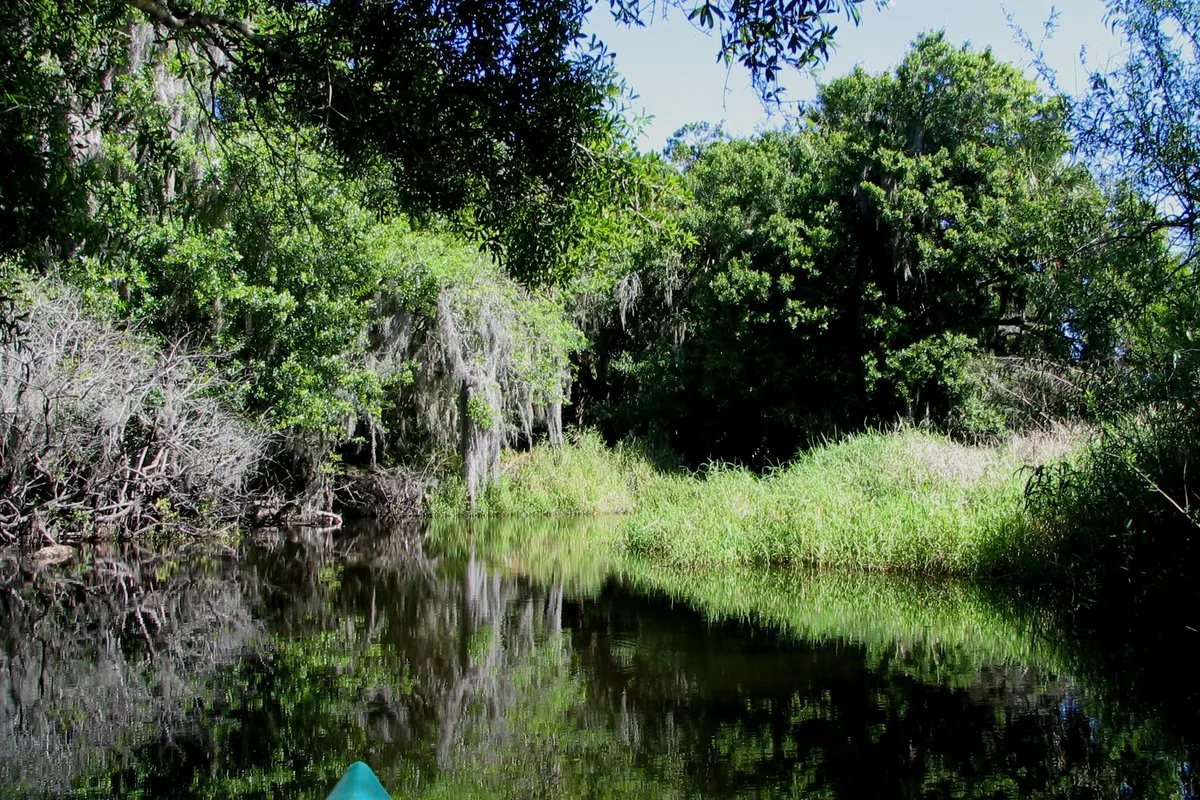
Myakka River State Park covers more than 37,000 acres of subtropical wilderness in Sarasota and Manatee counties, making it one of the largest state parks in Florida. The Myakka River winds through the park’s core, feeding two shallow lakes and spreading across open wet prairies that stretch wide under the sky. Designated as a Florida Wild and Scenic River, the waterway draws paddlers, anglers, and birders who come to experience a landscape that has changed little over centuries.
Wildlife and Birding
Few parks in Florida match Myakka for sheer wildlife density. Alligators are abundant and visible year-round along the river banks and lake edges. White-tailed deer, wild turkeys, sandhill cranes, and river otters move through the park with regularity. The bird list runs to more than 200 species, and the park is considered one of the premier birding destinations in the southeastern United States. Roseate spoonbills, wood storks, anhingas, and limpkins are among the wading birds commonly spotted in the marshy shallows. The upper observation platform at the canopy walkway gives visitors a treetop view across the hammock and prairie, offering a different angle on the birdlife below.
Paddling and Boating
The Myakka River corridor is the heart of the park experience on the water. Canoes and kayaks can be launched from the State Road 72 bridge area and from Upper Myakka Lake, and conditions range from beginner-friendly at normal water levels to swift current during high water and portaging during dry spells. Upper Myakka Lake provides open-water paddling with frequent alligator sightings along the margins, while access to Lower Myakka Lake and other areas south of State Road 72 requires a limited-access wilderness permit from the ranger station. Boat tours and tram tours are currently suspended until further notice, so visitors should confirm availability before planning around a narrated tour. Fishing is popular throughout the park, with bass, bream, and catfish drawing anglers to both the river and the lakes.
Trails and Camping
The park holds a 38.9-mile hiking loop, with paved and backcountry routes for bicycling and options ranging from short lakeside walks to multi-day backcountry routes. Flatwoods, prairie, and oak hammock environments shift across the landscape as trails move through different zones. The deep shade of the oak canopy contrasts with the wide exposure of the open prairies, where grasses and palmettos spread out in every direction. Backcountry camping is available for those who want to cover more ground on foot, and the experience of camping in the Florida wilderness here is genuinely remote despite the park’s proximity to the coast. Drive-in campsites across the three developed campgrounds include electric service and tent and RV options, with sewer hookups available at Palmetto Ridge and restrooms and shower facilities throughout.
Pet Policy
Pets are welcome in Myakka River State Park but must be kept on a leash no longer than six feet at all times. Dogs and other pets are allowed in the developed campgrounds, on most trails, and in parking areas. Pets are not permitted in cabin rentals, park buildings, or concession facilities, and are excluded from the Canopy Walkway and other structures, bathing areas and shallow-water margins, and primitive or youth and group campgrounds. Owners are responsible for cleaning up after their animals throughout the park.
Practical Information
Myakka River State Park is located at 13207 State Road 72 in Sarasota, Florida. The coordinates are 27.2364, -82.3209. The nearest city is Sarasota, approximately 17 miles to the west. State Road 72 provides the primary access route, connecting the park entrance to Sarasota in one direction and to Arcadia and I-75 in the other. The park is open daily from 8 a.m. to sunset. The entrance fee is $6 per vehicle for two to eight people, $4 for single-occupant vehicles, and $2 for pedestrians and cyclists. The North Gate is open on Saturdays, Sundays, and state holidays from 8 a.m. to 5 p.m. only. Camping reservations can be made through the Florida State Parks reservation system and are recommended well in advance, especially during the dry season from November through April when wildlife viewing peaks and temperatures are most comfortable. Summer months bring higher humidity, afternoon thunderstorms, and more insects, but also lush green landscapes and fewer crowds.