
Florida
Florida occupies the southeastern tip of the continental United States, a long peninsula flanked by the Atlantic Ocean to the east and the Gulf of Mexico to the west. The state spans roughly 500 miles from the subtropical Florida Keys in the south to the Panhandle in the northwest, where rolling red-clay hills and longleaf pine forests feel more akin to neighboring Georgia and Alabama than to the tropics below. Florida borders Georgia to the north and Alabama to the northwest, and its geographic variety is extraordinary for a state commonly associated with flat terrain.
The landscape shifts dramatically by region. South Florida is defined by the vast, slow-moving River of Grass known as the Everglades, mangrove-lined estuaries, and the coral-reef ecosystems of the Florida Keys. Central Florida is characterized by a chain of freshwater lakes, sinkholes, and the famous natural springs that bubble up at a constant 68 degrees Fahrenheit year-round. The Gulf Coast from Naples north to the Panhandle offers some of the finest white-quartz-sand beaches in North America, while the Atlantic Coast stretches from the wild Canaveral National Seashore south through the busy corridors of Miami and Fort Lauderdale.
Florida manages 175 state parks, trails, and historic sites covering more than 815,000 acres and 101 miles of beaches, making it one of the most robust state park systems in the country. Beyond the state system, Florida hosts 11 National Park Service units, including Everglades National Park, Biscayne National Park, and the remote Dry Tortugas, accessible only by boat or seaplane. Twenty-seven designated scenic highways wind through the state, including two All-American Roads: the Florida Keys Scenic Highway and the A1A Scenic and Historic Coastal Byway.
Wildlife draws visitors from around the world. Florida is one of the best places in North America to observe manatees, American crocodiles, sea turtles, roseate spoonbills, and hundreds of migratory bird species. The freshwater springs of the Suwannee River corridor and the nature coast attract snorkelers, paddlers, and divers seeking crystal-clear water and warm-weather adventure. Theme parks and cosmopolitan cities share the calendar with ecotourism and backcountry camping, giving Florida unusually broad travel appeal.
The best time to visit most of Florida for outdoor recreation is October through April, when temperatures are mild, humidity is manageable, and afternoon thunderstorms are rare. The dry season also concentrates wildlife around water sources, making wildlife viewing especially rewarding. Summer travel remains popular, particularly for beach trips and theme park visits, but visitors should expect heat, humidity, and the possibility of tropical weather systems from June through November.
Featured State Parks in Florida
-

Bahia Honda State Park
A Florida Keys gem with award-winning beaches, world-class snorkeling, and a historic railroad bridge.
-
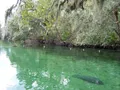
Blue Spring State Park
A Florida gem famous for manatee watching, crystal-clear 72-degree spring waters, kayaking, and year-round outdoor fun.
-

Fakahatchee Strand Preserve
A wild Florida cypress swamp preserve teeming with rare orchids, alligators, and miles of scenic tram and boardwalk trails.
-

Ichetucknee Springs
A pristine spring-fed river paradise offering tubing, kayaking, snorkeling, and peaceful nature trails in north Florida.
-
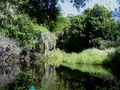
Myakka River State Park
One of Florida's largest and oldest parks, rich with wildlife, river paddling, and vast open prairies.