
Ichetucknee Springs
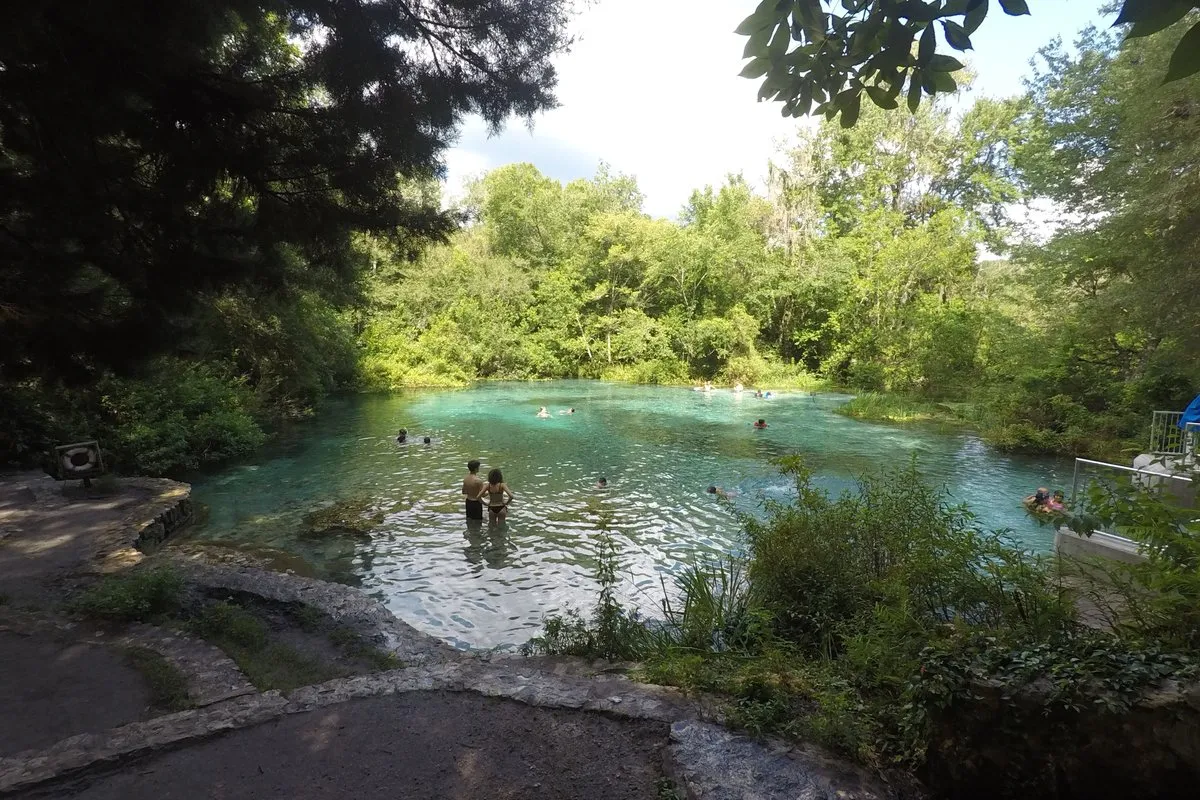
Ichetucknee Springs State Park protects the upper 3.5 miles of one of Florida’s most celebrated natural waterways, a six-mile spring-fed river that flows through hardwood forests and limestone terrain in Columbia and Suwannee counties. The river draws its water from eight major springs and maintains a constant temperature of 72 degrees Fahrenheit year-round, producing water so clear that fish, turtles, and aquatic plants are visible below the surface. This combination of clarity, consistent flow, and undisturbed shoreline makes Ichetucknee one of the most visited natural attractions in north Florida.
Tubing and Water Recreation
Tubing the Ichetucknee River is the defining experience of the park, and the tradition draws large summer crowds. Tubers enter at Dampier’s Landing at the south entrance and float downstream at a leisurely pace, carried by the gentle current through shaded corridors of cypress and sycamore. The run from Dampier’s Landing to the south takeout takes about 45 minutes to an hour. The north section is currently closed to tubing, and Midpoint Launch is closed for repairs. Tube rentals are available within the park, and visitors may also bring their own or rent from outside vendors. Kayaking and canoeing are permitted year-round, with put-in access at the north entrance and Dampier’s Landing. Snorkeling is permitted only at Ichetucknee Spring and Blue Hole Spring at the north entrance, where fish and turtles are commonly seen. Swimming in the main spring basin at the head spring area is one of the park’s highlights and draws visitors even during the off-season.
Wildlife and Natural Environment
The river corridor supports a dense and diverse community of wildlife. Limpkins, great blue herons, and anhingas are commonly spotted along the banks. River otters are sometimes seen, particularly early in the morning before crowds arrive. Softshell turtles, Florida cooters, and the occasional alligator share the water with swimmers and floaters. The spring-fed environment also supports a variety of native aquatic plants, including eelgrasses and other submerged vegetation that provide habitat for fish species like bass, gar, and sunfish. The surrounding landscapes include sandhill and floodplain forest ecosystems, which support gopher tortoises and white-tailed deer. The park’s spring system is carefully managed, with visitor use controlled to reduce impacts on the river corridor.
Hiking and Land Trails
The park offers several trails for visitors who want to explore the landscape on foot. The Trestle Point Trail, Blue Hole Trail, and Pine Ridge Trail provide access to different sections of the river and surrounding upland habitats. These paths wind through mixed hardwood forests and give walkers a quieter alternative to the water-based activities. The trails are easy walks suitable for most fitness levels. Birdwatching along the trails is especially rewarding in the early morning hours, and the forest canopy provides shade even in summer.
Pet Policy
Pets are allowed in the park but are restricted from the river and all water recreation areas. Dogs must be on a leash no longer than six feet at all times. Pets are permitted in parking areas and picnic areas, and on the Trestle Point, Pine Ridge, and Discovery trails. They are not allowed on the tubing run, in the spring swimming areas, on trails leading to launches or swimming areas, or in vessels on the river. Visitors traveling with pets should plan their visit around the trail and picnic options.
Practical Information
Ichetucknee Springs State Park is located at 12087 Southwest U.S. 27, Fort White, Florida 32038, approximately 25 miles south of Lake City. The nearest town with services is Fort White. The park is accessible via U.S. Highway 27. The entrance fee is $6 per vehicle for two to eight people, $4 for single-occupant vehicles and motorcycles, and $2 for pedestrians and cyclists. Tube rentals from the park concessionaire start at $7.50 and do not include the entrance fee. During hot summer weekends and holidays, the north and south entrance parking areas often reach capacity and may close temporarily to manage visitor numbers. Advance passes do not guarantee entry or allow visitors to bypass the line, so early arrival is strongly recommended from June through August. The park is open year-round, and fall and spring visits offer a quieter experience with designated swimming, paddling, and short-run tubing access.