
Blue Spring State Park
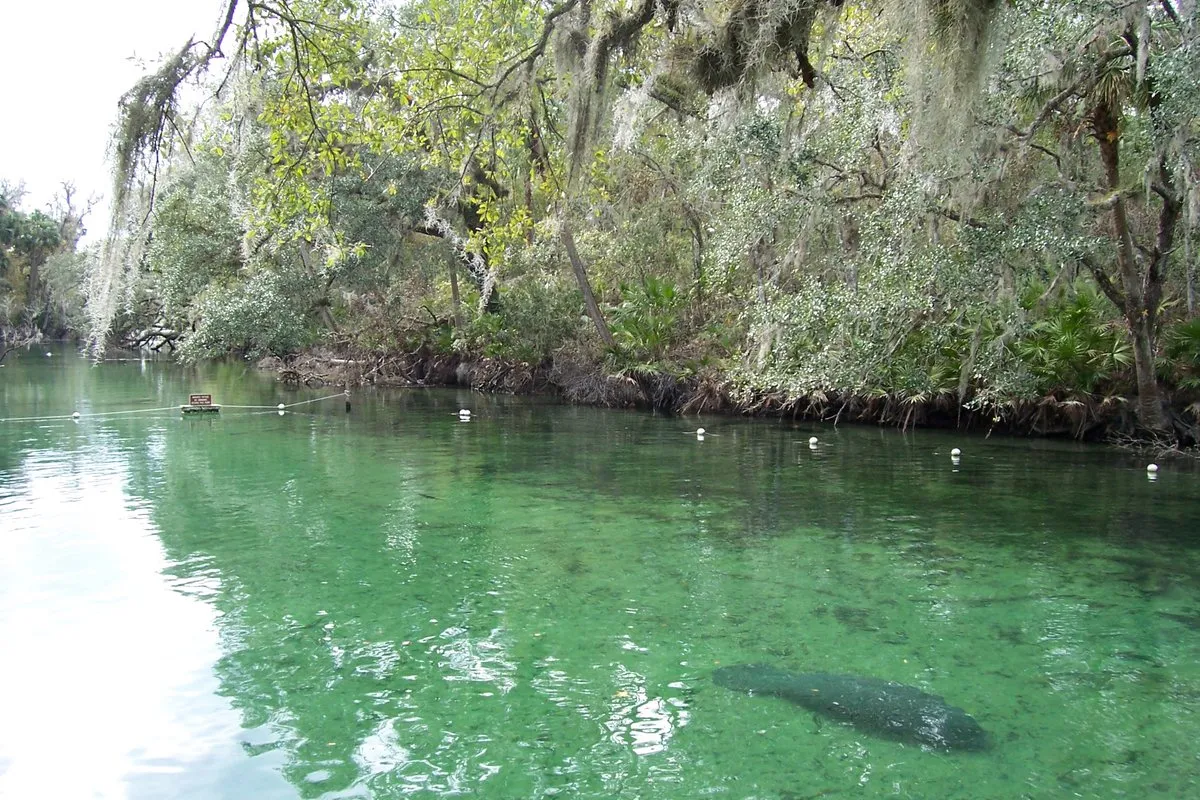
Blue Spring State Park sits along the St. Johns River near Orange City in Volusia County, Florida, about an hour north of Orlando. The park’s centerpiece is a first-magnitude spring that pumps more than 100 million gallons of crystal-clear, 72-degree water daily into the river. That constant temperature is what makes this park genuinely unlike most others in Florida. It draws one of the largest concentrations of West Indian manatees in the state each winter, turning the spring run into one of the best wildlife viewing experiences in the Southeast.
Manatee Watching
From November 15 through March 31, manatees move out of the cooler St. Johns River and into the warm spring run to rest and regulate their body temperature. On cold days, counts can exceed 500 individuals in a single morning. The park maintains elevated boardwalks along the spring run so visitors can watch from above without disturbing the animals. Rangers are often present to answer questions and help with identification. During manatee season, swimming, kayaking, and all other water activities in the spring run are prohibited to protect the animals. Check the park’s website before you go, as reopening can be delayed if manatees remain in the spring due to lingering cool weather.
Swimming and Water Recreation
From April 1 through November 14, the spring run opens up for swimming, snorkeling, and tubing. The water stays at 72 degrees year-round, which feels refreshing in summer and warm on cooler spring or fall days. Visibility in the spring is exceptional, making it a popular spot for snorkelers who want to explore the underwater landscape without heading to the coast. Kayaks and canoes can be launched from the park to explore the St. Johns River, and rentals are available on site. Paddling out into the broader river gives a different perspective, with views of cypress trees, water birds, and the quiet backwater channels that define much of central Florida’s river ecosystem.
History and Natural Features
The land around Blue Spring has been occupied for thousands of years. Timucua people used the area long before European contact, and the spring itself served as a landmark for early settlers and traders moving along the St. Johns River. The park preserves a historic homestead built in the 1870s by Louis Thursby, and the Thursby House still stands near the spring. It is listed on the National Register of Historic Places. Interpretive exhibits are available inside, and special programs are offered periodically. The spring vent sits at the base of a short, wide run that flows into the river, and the geology reflects the same karst limestone formations found throughout much of central Florida, where underground aquifer water pushes upward through openings in the rock.
Pet Policy
Pets are welcome in many areas of the park but must be kept on a leash no longer than six feet at all times. Dogs are allowed in the campground, on trails, and in most common areas. They are not permitted on the swimming beach, in the spring run, or on the boardwalks near the manatee viewing area. Service animals are welcome in public areas in accordance with Florida State Parks policy, though no animals are permitted on the water during swimming and tubing. Each campsite has water, and pet owners are required to pick up after their pets and dispose of waste properly.
Practical Information
Blue Spring State Park is located at 2100 W. French Avenue, Orange City, Florida 32763. The nearest town is Orange City, and the park is easily accessible from Interstate 4 via Highway 472. The entrance fee is $6 per vehicle for two to eight people. Single-occupant vehicles pay $4, and pedestrians and cyclists pay $2. The park is open daily from 8 a.m. to sunset. Camping is available at 51 sites with water and electricity, and cabins are also available; reservations are strongly recommended, especially from November through March when manatee season brings the highest visitor volumes. Swimming closures during manatee season are posted at the entrance and updated on the Florida State Parks website.