
Cape Disappointment State Park
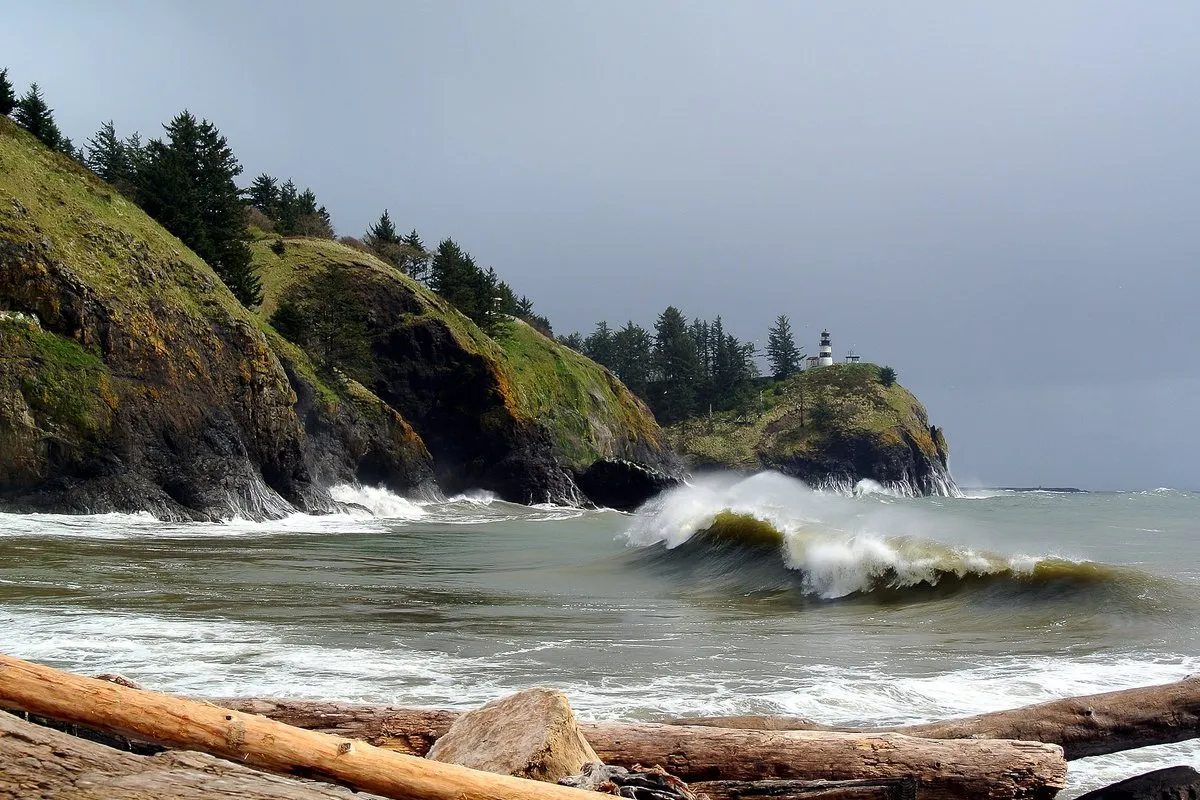
Where the Columbia River meets the Pacific Ocean at Washington’s southwestern tip, Cape Disappointment State Park occupies one of the most historically and geographically significant headlands on the West Coast. The park takes its name from British trader Captain John Meares, who in 1788 failed to locate the Columbia’s entrance and mistook the river mouth for a bay. Today those same dramatic conditions, crashing surf, shifting sandbars, and windswept bluffs, draw visitors seeking wild coastline, genuine American history, and some of the most striking lighthouse scenery in the Pacific Northwest.
Lewis and Clark History
Cape Disappointment marks the end of the Lewis and Clark Expedition’s westward journey, and the park takes that legacy seriously. The Lewis and Clark Interpretive Center sits at the headland’s edge, offering exhibits that trace the full arc of the Corps of Discovery from its 1804 departure through its arrival at the Pacific in November 1805. The center uses journals, artifacts, and dramatic overlook windows to connect the history to the actual landscape the expedition encountered. A short trail links the interpretive center to Cape Disappointment Lighthouse, letting visitors walk through the landscape where members of the Corps explored the cape and first took in the Pacific. This combination of indoor interpretation and outdoor context makes the park one of the more complete Lewis and Clark sites along the entire trail.
The Two Lighthouses
The park contains two operating lighthouses, which is unusual enough to anchor any visit. Cape Disappointment Lighthouse, built in 1856, is the oldest working lighthouse on the West Coast north of the Columbia River. It stands on a basalt promontory above the river’s mouth, and the trail to its base passes through Sitka spruce forest before opening onto views of the bar where so many ships were lost. North Head Lighthouse, completed in 1898, was built specifically because Cape Disappointment’s light was hidden from ships approaching from the north. It sits at the park’s northwestern edge and offers unobstructed Pacific views from some of the highest ground in the park. Cape Disappointment Lighthouse does not offer regular interior tours, but North Head Lighthouse offers seasonal climbs, typically May 1 through September 30, when volunteer staffing is available. Both are accessible on foot and the surrounding grounds are open to visitors.
Ocean Beaches and Coastal Access
The park includes several miles of Pacific shoreline, ranging from the broad sand of Waikiki Beach near the main day-use area to the rockier, more exposed stretches near the headlands. Note that Waikiki Beach and North Jetty access are currently closed during an ongoing renovation project. Benson Beach runs north from the Cape Disappointment jetty toward North Head and is popular for walking and watching surf. The beach environment changes significantly with the tide and season, and winter storms can reshape the shoreline overnight. Surf fishing for red tail perch is common along these beaches. Clamming for razor clams is occasionally permitted depending on current regulations from the Washington Department of Fish and Wildlife, so checking conditions before arriving is worth doing if that’s part of your plan.
Trails and Forest Interior
The park’s trail network connects the lighthouses, interpretive center, beaches, and forested interior. The North Head Trail runs roughly two miles through old growth Sitka spruce and offers access to both the lighthouse and bluff overlooks without requiring beach walking. The Coastal Forest Trail is shorter and good for a quick loop through the dense, moisture-heavy forest that dominates the park’s interior. Trail conditions can be muddy well into spring, and windfall is common after winter storms. The trails are generally well-marked but narrow in places, and the dense canopy means some sections stay wet long after rain stops.
Camping
The campground is closed through the summer of 2026 while major renovations are underway. Under normal operations, the park offers a large campground with standard sites, partial hookups, full hookups, and five primitive hiker/biker campsites, plus yurts and historic vacation houses available for reservation. The campground is set in forest away from direct ocean exposure, which moderates wind but also means sites are often damp. When camping is open, reservations are strongly recommended from late spring through Labor Day and can be made through the Washington State Parks reservation system. The primitive hiker/biker sites are first-come, first-served.
Pet Policy
Leashed pets are welcome in most areas of the park, including campgrounds, day-use areas, and on trails. Leashes must be no longer than eight feet. Pets are not permitted inside public buildings such as the Lewis and Clark Interpretive Center or in the park’s yurts or vacation houses. On the beach, standard leash rules apply. Clean-up is required throughout the park.
Wildlife to Be Aware Of
The most serious hazard at Cape Disappointment is the surf itself. Sneaker waves strike the beach and jetty areas without warning, year-round, and can sweep people off beaches, rocks, and jetties. Do not turn your back on the ocean, keep children close at all times, and treat every calm moment on the beach as temporary. The jetty rocks are particularly dangerous when waves are running. Gray whales pass offshore during migration in spring and fall, and watching from the bluffs above North Head or Cape Disappointment is rewarding and completely safe. Do not wade into surf to get a closer look.
Black bears and other wildlife may be present in the broader forested landscape. Store all food, coolers, and scented items securely in your vehicle or other approved storage when camping. Bears are generally not aggressive but should never be approached or fed. On trails, make noise and carry the group together rather than spreading out.
Stinging nettles and similar irritating plants grow along many trail edges, particularly in damp or brushy sections. Wearing long pants and staying on the trail center reduces contact significantly.
Practical Information
Cape Disappointment State Park is located near Ilwaco, Washington, at the southwestern corner of the Long Beach Peninsula. From Highway 101, follow signs for Ilwaco and then Cape Disappointment. The nearest services, including gas, groceries, and lodging, are in Ilwaco, about two miles from the park entrance. A Discover Pass is required for vehicle entry: $10 per day or $45 for an annual pass valid at two vehicles. Transaction fees may apply. Reservations for camping and lodging are available through the Washington State Parks website. The park is open year-round, though camping, Waikiki Beach, North Jetty, and boat launch access are affected by the current renovation closure. While summer brings the most visitors, the park’s stormy winter character has its own appeal for those prepared for the weather.
Frequently Asked Questions
What is the entry fee for Cape Disappointment State Park?
A Discover Pass is required to enter, costing $10 per vehicle per day or $45 for an annual pass, and transaction fees may apply. One annual pass covers two vehicles.
Are dogs allowed at Cape Disappointment State Park?
Leashed pets are welcome in most areas including campgrounds, day-use areas, and trails, with a maximum leash length of eight feet. Pets are not permitted inside public buildings such as the Lewis and Clark Interpretive Center, or in the park's yurts or vacation houses.
Is camping available at Cape Disappointment State Park right now?
Camping at Cape Disappointment is closed entirely until June 30, 2026 due to ongoing major park renovations. Waikiki Beach, the North Jetty, and the Boat Launch are also unavailable during this closure.
Can you tour the inside of Cape Disappointment Lighthouse?
Cape Disappointment Lighthouse does not offer regular interior tours, but North Head Lighthouse offers seasonal climbs typically from May 1 through September 30 when volunteer staffing is available.