
Snow Canyon State Park
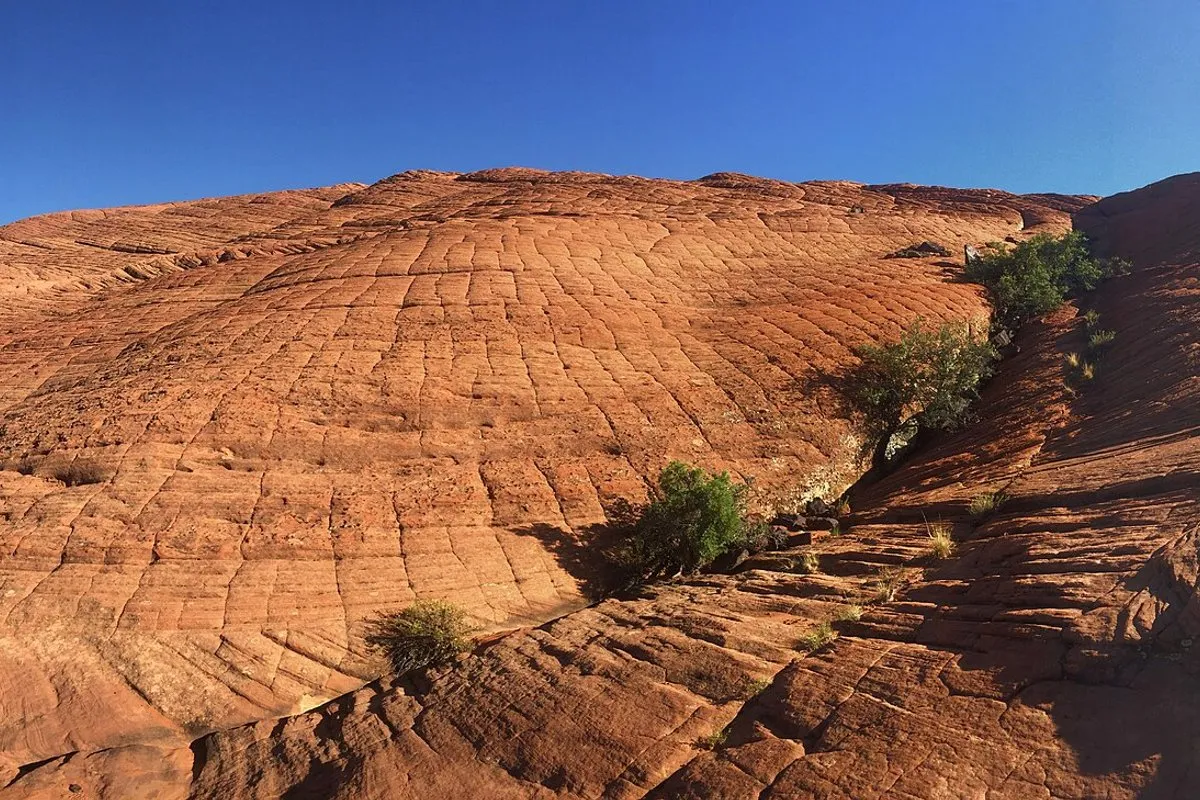
Snow Canyon State Park sits just north of St. George in southwestern Utah, carved from ancient Navajo sandstone that glows red, orange, and cream depending on the light and time of day. What sets this park apart from other canyon country destinations is the combination of that weathered sandstone with dramatic volcanic geology. Dark lava fields from eruptions thousands of years ago spill across the canyon floor alongside the warm-toned rock walls, creating a landscape that feels genuinely unlike anywhere else in the region. The park covers roughly 7,400 acres and draws hikers, climbers, campers, and photographers year-round.
Sandstone Canyons and Volcanic Terrain
The geological contrast is the heart of the park’s identity. The Navajo sandstone walls rise sharply from the canyon floor, streaked with desert varnish and shaped by wind and water over millions of years. Walk a short distance and you can step from smooth red rock onto the jagged black surface of a lava field, the two formations meeting at abrupt and striking boundaries. Several areas in the park preserve lava tubes, underground passages formed when the outer shell of a lava flow cooled and hardened while molten rock continued moving through the interior and eventually drained out. The tubes are accessible on foot and worth exploring, though sturdy footwear and a flashlight are recommended.
Hiking the Canyon
Trails here range from flat, easy walks to strenuous scrambles, and the variety is one reason the park draws a broad range of visitors. The Butterfly Trail offers relatively mellow terrain with excellent views of the canyon walls. Johnson Canyon Trail is an easy route when open, but it closes March 15 through September 14 except for ranger-guided hikes. The Hidden Pinyon Trail takes hikers through a mix of desert scrub and slickrock with panoramic views of the surrounding landscape. For something more demanding, the Petrified Dunes area rewards hikers with sweeping views across rippled ancient sandstone that once formed a massive sand sea. Distances in the park are generally short compared to larger wilderness areas, making it possible to cover several trails in a single day. Most trails are clearly marked, but conditions can change seasonally and some routes involve uneven or exposed rock surfaces.
Rock Climbing
Snow Canyon has a well-established reputation as a climbing destination, particularly among visitors from the broader St. George area and climbers passing through southern Utah. The sandstone walls offer routes across a wide range of difficulty levels, and the compact geography of the canyon means multiple crags are accessible without long approaches. Popular areas include the walls near the campground and several sport climbing sectors along the canyon road. Climbers should be aware that some surfaces can be fragile, and leaving the established routes to protect the rock and vegetation is expected. Check current conditions and any closures before heading out, as seasonal park closures can affect access to specific areas.
Camping at Snow Canyon
The park has a single campground with 38 sites, including partial hookup, tent, hike-in, and group camping options, all located within the canyon itself. Waking up inside the canyon walls with direct access to trails makes this one of the more rewarding camping experiences in the Utah state park system. Sites fill quickly, especially from spring through early summer and in the fall, so advance reservations are strongly recommended. The campground has restrooms and showers. Evenings in the canyon are quiet and, away from St. George’s light, offer a decent look at the night sky.
Pet Policy
Pets are welcome in Snow Canyon State Park but must be kept on a leash no longer than six feet at all times. Leashed pets are allowed on all park trails and in the campground. Before taking a pet into the lava tubes, check with park staff and be prepared for rough, dark, confined terrain. Given the desert heat and rocky terrain, bring enough water for your pet and check trail surfaces before heading out, as sun-heated rock can burn paws.
Wildlife to Be Aware Of
The desert environment at Snow Canyon supports species that require real caution. Venomous snakes, including Great Basin rattlesnakes and Mojave sidewinders, are present in the park and are most active during warm months, particularly in spring and fall when temperatures are moderate. Snake encounters in the canyon are rare, but they can occur on trails and around rocky outcroppings. Stay on marked paths, watch where you step and where you place your hands, and give any snake you spot plenty of space. Do not attempt to handle or move them.
Gila monsters, one of only a few venomous lizard species in North America, live in the desert scrub areas of the park. They are slow-moving and generally not aggressive, but their venom is delivered through a chewing bite and they should never be approached or handled. If you see one, observe it from a safe distance and move on.
Desert tortoises also live within the park and are a federally protected species. If you encounter one on a trail, do not touch it, pick it up, or disturb it in any way. If you find one in the road, stop safely and move it across in the direction it was traveling, or contact park staff if you are unsure what to do. Unnecessary handling can cause a tortoise to release stored water as a defense mechanism, which can be fatal to the animal in an arid environment.
Practical Information
Snow Canyon State Park is located at approximately 37.2031 latitude, -113.6414 longitude, off Snow Canyon Drive, reached from Snow Canyon Parkway or Utah State Route 18 north of St. George. Ivins is immediately adjacent, and St. George is the nearest larger city with full services including lodging, fuel, and groceries. The park is accessible year-round, though summer temperatures regularly exceed 100 degrees Fahrenheit and midday hiking in July and August is not advisable. Spring and fall are the most comfortable seasons. Day use entry costs $15 per vehicle for Utah residents and $20 per vehicle for non-residents. An annual Utah State Parks day use pass is available for $125 for Utah residents and $65 for Utah senior residents 65 and over, and covers day use at most state parks across Utah. See the official Utah State Parks fee page for current rates. Camping reservations can be made through the Utah State Parks reservation system.
Frequently Asked Questions
What is the entry fee for Snow Canyon State Park?
Day use costs $10 per vehicle, and an annual Utah State Parks pass is available for $25, though fees vary for residents, seniors, and non-residents, so checking the official fee page for current rates is recommended.
Are dogs allowed at Snow Canyon State Park?
Snow Canyon State Park does permit dogs, though visitors should be aware that trails and rocky areas, especially during warm months, are habitat for western rattlesnakes and Gila monsters, so keeping pets close and on-leash is strongly advisable.
Can you explore the lava tubes at Snow Canyon State Park?
The lava tubes are accessible on foot and worth exploring, though sturdy footwear and a flashlight are recommended for venturing inside these underground passages formed by ancient volcanic activity.
Do I need a reservation to camp at Snow Canyon State Park?
Advance reservations are strongly recommended because campsites fill quickly, particularly from spring through early summer and in the fall, and the single campground offers both tent and RV sites with restrooms and showers inside the canyon.