
Dead Horse Point State Park
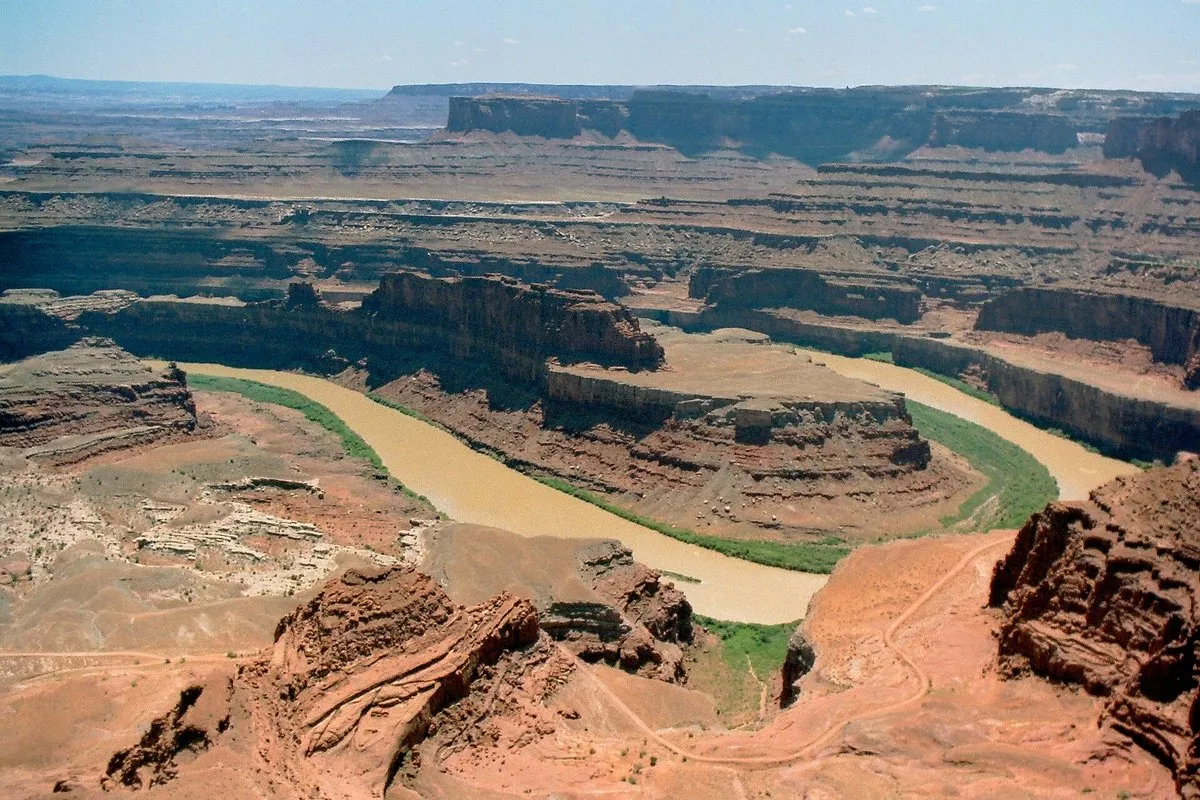
Perched 2,000 feet above the Colorado River on a mesa in southeast Utah, Dead Horse Point State Park delivers one of the most dramatic overlooks in the American West. The park sits within the canyon country of the Colorado Plateau, adjacent to Canyonlands National Park, and its narrow mesa tip drops away on nearly all sides into a labyrinth of red and orange canyons carved over millions of years. The name comes from a grim piece of local legend: cowboys once used the point as a natural corral, fencing off the narrow neck of the mesa to trap wild horses. According to the story, a herd was left behind and died of thirst within sight of the river far below. That history adds a layer of weight to a place that already commands attention on its own terms.
The Overlook and Canyon Views
The main draw here is the view from Dead Horse Point itself, and it earns every superlative attached to it. From the primary overlook, visitors look down onto a sweeping gooseneck of the Colorado River, where the water loops back on itself in a curve so wide it looks impossible from above. The Canyonlands basin stretches beyond in every direction, with buttes, mesas, and canyon walls fading into the distance in shades of rust, cream, and purple. The view changes dramatically with the light. Early morning brings soft shadows that define every rock layer, midday flattens things out, and late afternoon turns the canyon walls deep red before the color drains out at dusk. Stargazing after dark is exceptional here. The park is a designated International Dark Sky Park with minimal light pollution, though day-use access ends at the park’s 10:00 pm closing time.
Trails Along the Rim
The park has about seven miles of hiking trails along the rim, along with more than 17 miles on the Intrepid Trail System and nearly six miles of mixed-use trails. The main hiking trail is a loop that circles the point and connects several overlooks, giving hikers multiple vantage points across the canyon system. The terrain is mostly flat to gently rolling across open slickrock and desert scrub, which makes the trails accessible to a wide range of visitors, though the exposed conditions and elevation change the difficulty depending on weather. Mountain biking is permitted on designated trails and attracts a steady following, particularly on the Intrepid Trail System, a series of interconnected loops that wind through the mesa with technical sections and sweeping canyon backdrops. Trails are well-marked but offer almost no shade, which matters significantly in the warmer months.
Camping on the Mesa
Dead Horse Point has two developed campgrounds with sites for tents and RVs, along with nine yurts available for reservation. Kayenta sits tucked among junipers while Wingate occupies the open mesa with broad views. Facilities include water, restrooms, and fire rings, though fires may be restricted during dry conditions. Camping here means waking up in the middle of canyon country, with the option to walk to the overlook for sunrise before other day visitors arrive. Sites fill quickly from spring through fall and reservations are strongly recommended during peak season.
Pet Policy
Pets are allowed in the park but must be kept on a leash no longer than six feet at all times. They are permitted in the campgrounds and on hiking and biking trails. Given the exposed terrain, the heat, and the rough slickrock, keeping pets leashed, watered, and off hot rock during the heat of the day is the safer choice for both the animal and the owner.
Wildlife to Be Aware Of
Rattlesnakes can be present in the Moab canyon country and are active during warm months, typically from spring through early fall. They may be encountered on or near trails and among rocky terrain, where they blend in easily with the surroundings. Walk carefully, watch where you step and where you place your hands, and give any snake you spot a wide berth. Scorpions are present in the area and tend to hide in dark, sheltered spots, including shoes, packs, and gear left on the ground overnight. Shake out footwear and clothing every morning at camp before putting anything on. The desert heat presents its own serious risk. The rim trails are almost completely exposed, with no tree cover and reflective rock underfoot. Dehydration and heat exhaustion can set in faster than expected, especially on hot days or during midday hours. Carry more water than you think you need, start hikes early in the morning during summer, and know the signs of heat-related illness in yourself and your group.
Practical Information
Dead Horse Point State Park is located about 32 miles southwest of Moab, Utah, via US-191 north and then State Route 313 west. Moab is the closest town with full services including gas, food, lodging, and medical care. The park is open year-round, though winter can bring snow and ice that affect road and trail conditions. Spring and fall are the most comfortable seasons for hiking and camping. Summer is popular but demanding due to heat. Entry fees are $20 per vehicle for up to eight people, $10 per motorcycle, and $10 per four walk-in or bike-in visitors. An annual pass is available, and camping fees are charged separately. Reservations for campsites and yurts can be made through the Utah State Parks reservation system and are recommended well in advance for any visit between March and November.
Frequently Asked Questions
Are dogs allowed on the trails at Dead Horse Point State Park?
Pets are welcome in the campground and on paved surfaces but are not permitted on the natural surface trails, so dogs should be left at camp during hikes. All pets must be kept on a leash no longer than six feet at all times throughout the park.
How much does it cost to enter Dead Horse Point State Park?
Entry fees are $20 per vehicle for up to 8 people, $10 per motorcycle, and $5 for walk-in or bike-in visitors, with an annual pass also available. Camping fees are charged separately on top of the standard entry fee.
Can you camp at Dead Horse Point State Park?
The park has a developed campground with tent and RV sites, along with a small number of yurts, all located in a sheltered section of the mesa away from the rim. Sites fill up quickly from spring through fall, so reservations are strongly recommended during peak season.
Is Dead Horse Point State Park good for stargazing?
Dead Horse Point is a designated International Dark Sky Park with minimal light pollution, making after-dark stargazing exceptional. The combination of the dark sky designation and the remote canyon country setting puts it among the better stargazing destinations in the region.