
Antelope Island State Park
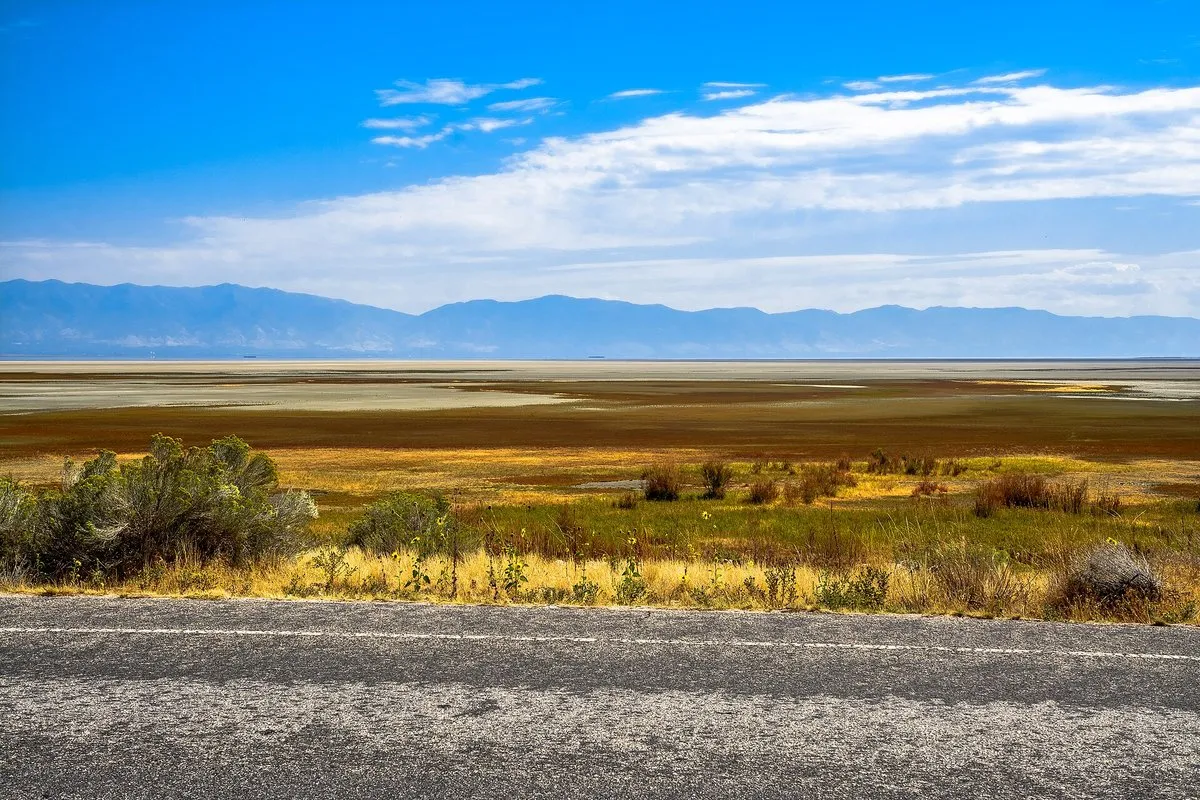
Antelope Island rises from the southeastern arm of the Great Salt Lake as Utah’s largest island, covering roughly 28,000 acres of rugged terrain, grassland, and shoreline. Connected to the mainland by a seven-mile causeway, it sits about an hour north of Salt Lake City and offers one of the more unusual landscapes in the American West. The combination of vast, hypersaline water on all sides, a free-roaming bison herd, and high desert ridgelines gives the island a character found nowhere else in the region.
The Bison Herd
The island’s bison herd is the primary reason most visitors come. Numbering around 500 to 700 animals depending on the season, this is one of the oldest and largest publicly owned bison herds in the country, established here in 1893. The herd roams freely across the island’s grasslands and can often be spotted from the main road or from trailheads without any effort. Each fall, the annual Bison Roundup draws crowds to watch rangers and volunteers drive the herd for health assessments, and a portion of the animals are auctioned off to manage population size. If you visit during late October, this event alone is worth planning around.
Hiking the Island’s Ridges and Trails
Antelope Island has more than 45 miles of trails ranging from flat shoreline walks to steep ridge climbs. Frary Peak Trail is the standout, gaining roughly 2,100 feet over about 3.2 to 3.5 miles to the island’s highest point at 6,596 feet. On a clear day the views stretch across the full expanse of the Great Salt Lake and into several surrounding mountain ranges. The White Rock Bay Loop and the Elephant Head Trail offer more moderate options with strong wildlife-viewing opportunities. The Lakeside Trail follows the western shoreline and is popular with mountain bikers as well as hikers. Trails are generally well-marked but exposed, with little shade, so early morning starts are wise from late spring through summer.
The Great Salt Lake Shoreline
Swimming in the Great Salt Lake is a genuine experience and Bridger Bay Beach is the designated area for it. The water’s salinity, which varies with lake levels and location but runs several times that of the ocean, makes floating effortless. The lake bottom near shore can be soft and silty, and the smell of brine is present, particularly on warm days with little wind. Showers are available at the beach area to rinse off after swimming. Sunset views from the western shoreline are exceptional, especially in summer and fall when the light hits the water and the Promontory Mountains to the north. Kayaking and paddleboarding are permitted, though low water levels have closed the main boat ramp to motorized launching.
Camping
Bridger Bay Campground offers tent and RV sites near the northern end of the island, with restrooms and running water available. Ladyfinger Campground, located a few miles south, provides a more primitive experience without hookups. Both campgrounds fill quickly on summer weekends and reservations through the Utah State Parks system are strongly recommended from May through September. The island also has several group camping areas for larger parties.
Pet Policy
Leashed pets are welcome on the island’s trails and at the campgrounds. The leash must be six feet or shorter at all times. Pets are not permitted on the beach swimming area at Bridger Bay. Given the presence of free-roaming bison and other wildlife, keeping pets close and under control is important for both animal safety and your own.
Wildlife to Be Aware Of
Bison are unpredictable despite appearing calm, and injuries from close encounters do occur at parks where herds roam freely. Keep a minimum of 75 feet between yourself and any bison at all times. Do not approach them for photographs, do not feed them, and if a bison moves toward you, give it space immediately. This applies on trails, near the road, and in campgrounds.
Snakes are present on rocky terrain across the island, particularly in warm months from spring through early fall. Watch where you place your feet and hands, especially when stepping over rocks or reaching into crevices. If you encounter a snake on a trail, give it room to move away.
Biting midges, or no-see-ums, are a genuine nuisance in spring from April through June, while brine flies cover the shorelines from early summer through fall. The flies do not bite, but they swarm in dense clouds near the water’s edge. Midges can bite and are most active in calm conditions. A fine-mesh head net is the most reliable protection against them, while insect repellent helps with mosquitoes and deer flies.
Pronghorn antelope live in the island’s open grasslands and are frequently visible from the road and trails. Like all wildlife here, they are wild animals and should be observed from a distance rather than approached.
Practical Information
Antelope Island State Park is located at approximately 41.0836, -112.2069, accessed via the Antelope Island Causeway off Interstate 15 near Syracuse, Utah, about 41 miles north of Salt Lake City. Take Exit 332 west and follow the signs to the causeway entrance.
Entry costs $15 per vehicle for up to eight people. Reduced rates apply for seniors, motorcycles, bicycles, and pedestrians. A Utah State Parks annual pass covers entry. The park is open year-round, though the causeway can occasionally close during severe weather or high water events. Summers are hot and dry with intense sun, so bring plenty of water regardless of how long you plan to stay. The visitor center near the northern end of the island is currently closed for construction and renovation, with temporary visitor information and gifts available at the Antelope Island Marina.
Frequently Asked Questions
Are dogs allowed at Antelope Island State Park?
Leashed dogs are welcome on the island's trails and at the campgrounds, provided the leash is six feet or shorter at all times, though pets are not permitted at the Bridger Bay beach swimming area.
How much does it cost to enter Antelope Island State Park?
Entry is $15 per vehicle for up to eight people, with reduced rates available for seniors, motorcycles, bicycles, and pedestrians, and a Utah State Parks annual pass is also accepted.
How close can you get to the bison on Antelope Island?
Visitors must maintain a minimum distance of 75 feet from bison at all times and should never approach or feed them, as the herd roams freely across the island and can be encountered near roads and trailheads.
When is the Antelope Island Bison Roundup?
The annual Bison Roundup takes place in late October, when rangers and volunteers drive the herd for health assessments and a portion of the animals are auctioned off to manage population size.