
Cummins Falls State Park
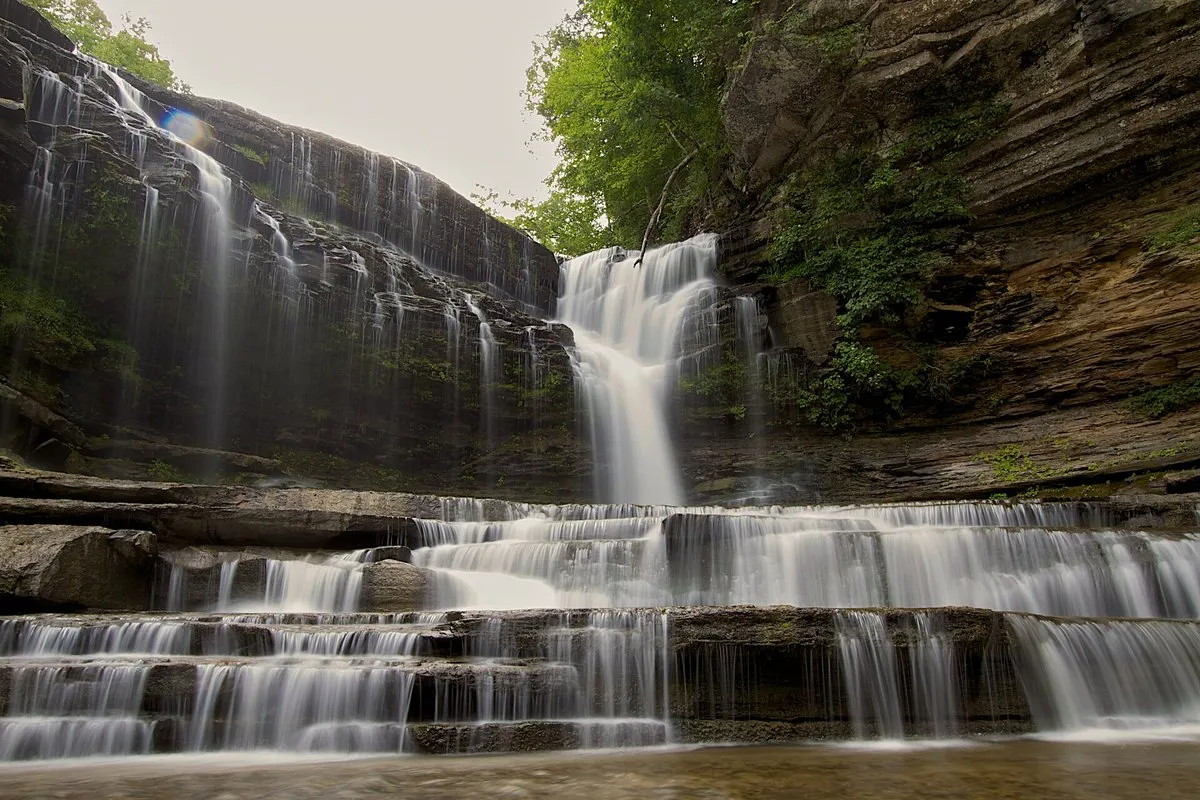
Cummins Falls State Park protects a dramatic stretch of Blackburn Fork State Scenic River in Jackson County, Tennessee, anchored by one of Tennessee’s most significant waterfalls by volume. The falls drop roughly 75 feet into a wide plunge pool surrounded by steep gorge walls, and the combination of whitewater, swimming holes, and rugged terrain draws visitors from across the region. The park is compact but genuinely striking, and the gorge experience sets it apart from most other Tennessee state parks.
Cummins Falls and the Gorge
The waterfall is the reason most people come, and it earns the trip. Reaching the base requires a Gorge Access Permit, which must be reserved in advance at reserve.tnstateparks.com. Permits are limited to manage the number of people in the gorge at any one time, so planning ahead is essential, especially on weekends and during summer.
The gorge trail descends steeply from the trailhead and involves multiple stream crossings before reaching the plunge pool. There is no maintained walkway along much of the route. Hikers move over and between boulders, wade through shallow sections of Blackburn Fork, and navigate uneven terrain throughout. Sturdy shoes with ankle support and grip are strongly recommended. Water shoes or sandals with straps are popular for the wading sections, though many visitors bring a dry pair of shoes to change into.
Swimming in the plunge pool is allowed and is a major draw during warm months. The water is cold year-round. Jumping from rocks into the pool is not permitted. Even without jumping, the area demands attention: wet rock surfaces around the falls are extremely slick, and falls here can cause serious injury.
The Upper Trail and Overlook
Visitors who prefer to stay above the gorge can access a trail that follows the rim and provides elevated views of the waterfall and the river valley below. This route is considerably less strenuous than the gorge descent and does not require a permit. It offers a worthwhile perspective on the falls and surrounding terrain and is a reasonable option for those with young children, dogs, or anyone who prefers to observe rather than descend into the gorge.
Pet Policy
Pets are welcome at Cummins Falls State Park and must be kept on a leash, crated, caged, or otherwise under physical restrictive control at all times. Some areas of the park may be posted off-limits to pets, so check current signage and ask a ranger if you’re unsure where dogs are allowed. The gorge route itself is rugged and may be unsafe for many dogs. Pet owners are responsible for cleaning up after their animals.
Wildlife to Be Aware Of
The gorge environment at Cummins Falls presents a few specific hazards that visitors should understand before entering.
Flash flooding is the most serious risk. The gorge sits in a narrow drainage, and water levels in Blackburn Fork can rise rapidly when rain falls upstream, sometimes with very little warning at the park itself. The gorge can close on short notice when conditions warrant. Before visiting, check the forecast and monitor any park alerts or closures posted at reserve.tnstateparks.com or at the trailhead. If water begins rising while you are in the gorge, move to higher ground immediately and do not wait to see how high it gets.
Copperhead snakes are present throughout the gorge and along trailside vegetation. The rocky terrain and boulder piles are exactly the kind of habitat copperheads favor, and encounters are possible, particularly in warmer months. Watch where you place your hands and feet, especially when climbing over rocks or reaching into crevices. Do not reach into areas you cannot see clearly. If you encounter a copperhead, give it space and move around it.
Slippery rocks are a consistent hazard at the waterfall pool and along the stream crossings. The combination of constant moisture, algae, and smooth stone surfaces makes falls easy and serious injuries possible. Move carefully through the gorge, take your time at each crossing, and use a trekking pole if you have one. Do not rush near the water.
Practical Information
Cummins Falls State Park is located near Cookeville, Tennessee, with the main address at 390 Cummins Falls Lane, Cookeville, TN 38501. From Cookeville, follow TN-56 north toward Baxter and Gainesboro, then TN-290 east and local park signs to the entrance. The drive from Cookeville is roughly 15 to 20 minutes.
Park entry is free. A Gorge Access Permit is required to enter the gorge area and access the waterfall base. Permits are limited and must be reserved in advance at reserve.tnstateparks.com. Walk-up availability is not guaranteed and is uncommon on busy days. Reserving ahead is strongly recommended.
The park is open year-round, though gorge access may be suspended during periods of high water or unsafe conditions. Summer brings the highest visitation, and permit slots fill quickly for weekends. Spring can be a rewarding time to visit for waterflow and cooler temperatures, though flooding risk is also higher. Cell service in and around the gorge is limited, so download any maps or permit confirmations before arriving.
Frequently Asked Questions
Is there an entry fee for Cummins Falls State Park?
Park entry is free, but a Gorge Access Permit is required to access the waterfall base and gorge area, and permits must be reserved in advance at reserve.tnstateparks.com.
Are dogs allowed at Cummins Falls State Park?
Pets are welcome at the park and must be kept on a leash or otherwise under physical restrictive control at all times, though the rugged gorge route may be unsafe for many dogs.
How long does it take to hike to Cummins Falls?
Most visitors spend about 45 minutes hiking down to the falls and roughly the same amount of time returning, and anyone at the base of the waterfall must begin walking out by 5:00 PM to be out of the park by the 6:00 PM closing time.
Is it safe to bring young children into the gorge at Cummins Falls?
The park recommends that children 5 and under not go to the falls, as the gorge involves steep terrain, multiple stream crossings, extremely slippery rocks, and flash flood risk that can develop with little warning.