
Myrtle Beach State Park
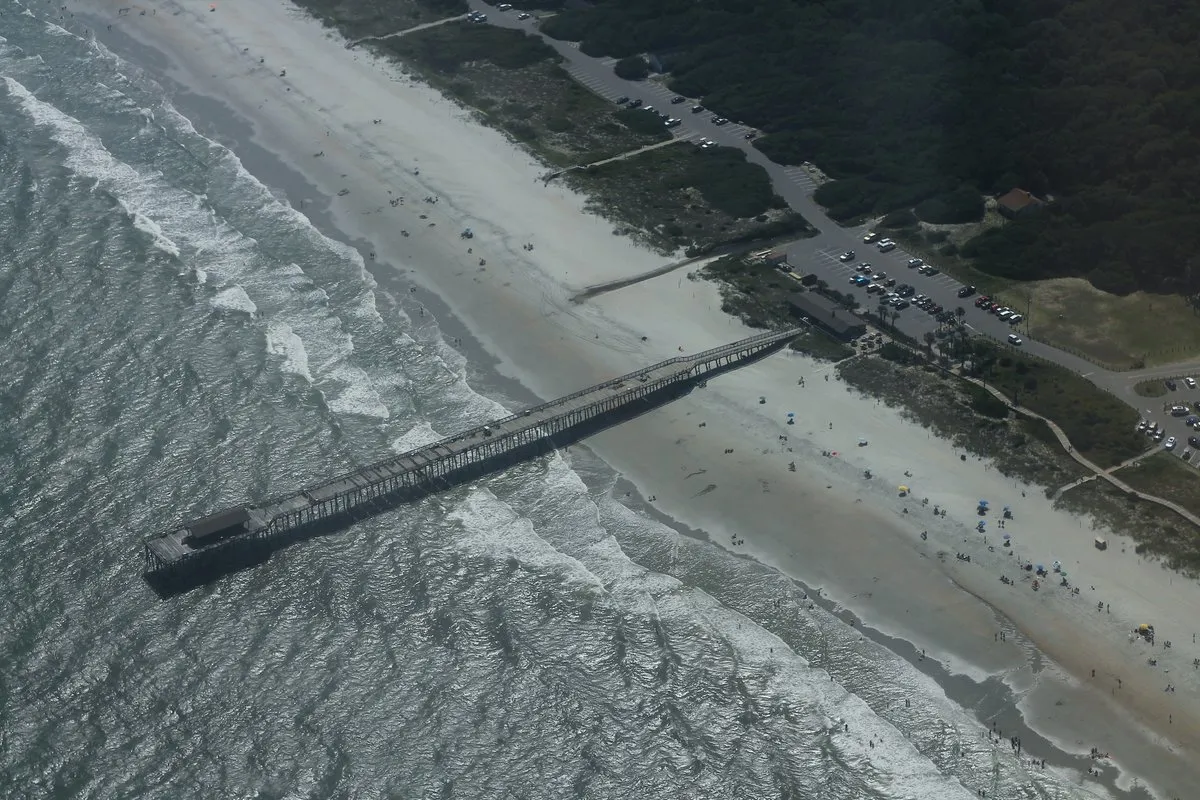
Myrtle Beach State Park sits on the Atlantic coast about three miles south of downtown Myrtle Beach, offering a rare stretch of undeveloped shoreline in one of the most heavily commercialized beach regions on the East Coast. The park covers 312 acres of maritime forest, a freshwater pond, and about one mile of natural beach, making it a genuine natural retreat within minutes of the hotels and boardwalks most visitors associate with this stretch of South Carolina.
The Beach
The main draw here is straightforward: a wide, clean Atlantic beach that stays far less crowded than the commercial shoreline nearby. Horry County lifeguards are stationed on the beach north of the pier from mid-May through mid-September, with a flag system in place to communicate daily conditions. Swimming, surfing, and bodyboarding are all popular, and the surf can be strong enough in summer and fall to make it worth checking conditions before getting in. The park has a nature center with programs and exhibits, plus a fishing pier that extends several hundred feet into the Atlantic. Pier fishing is popular year-round, with red drum, flounder, and sheepshead among the common catches. Fishing rod rentals are available at the pier gift shop.
Maritime Forest Trails
About a mile of official nature trails winds through the maritime forest interior, passing through live oak canopy draped in Spanish moss, wax myrtle thickets, and scrubby understory that gives the forest a layered, dense character. The Sculptured Oak Trail is the main walk, offering a short and accessible route through the forest. The Yaupon Trail and pond spur provide additional short options and can be combined with the Sculptured Oak Trail for a longer walk toward the beach. Birdwatching is especially good during spring and fall migration. Painted buntings turn up here, though sightings are not guaranteed, and the park bird list includes a wide range of migrating warblers. Trails are sandy and mostly flat, appropriate for all fitness levels.
Camping
Myrtle Beach State Park offers one of the few camping options directly on the South Carolina Grand Strand. The campground includes both tent sites and full-hookup RV sites, along with a small set of vacation cabins available for rental. Sites are tucked into the maritime forest rather than sitting exposed on the beach, which provides shade and a sense of separation from the more open areas of the park. Reservations are strongly recommended from spring through early fall and can be made through the South Carolina State Park Service reservation system. The campground has restrooms and shower facilities.
Pet Policy
Leashed pets are welcome in most outdoor areas of the park, including the trails and the campground. The standard leash length limit is six feet. Pets are not allowed on the beaches between 10 a.m. and 5 p.m. from May 1 through Labor Day, and pets are not permitted in cabins or cabin areas. Pet owners are expected to clean up after their animals. Alligators are a presence throughout coastal South Carolina’s freshwater ponds and wetland edges, so keep pets close and away from the water.
Wildlife to Be Aware Of
American alligators are common throughout coastal South Carolina and may be present around the park’s freshwater pond and marshy areas. These animals are wild, can move quickly, and should never be fed or approached. Keep children and pets well back from pond edges and any marshy shoreline.
Jellyfish are common in the Atlantic surf during warm months, particularly from late spring through early fall. Stings range from mildly irritating to quite painful depending on the species. Check the beach flag system before entering the water, and be aware that even waves washing onto shore can carry jellyfish fragments capable of stinging.
Loggerhead sea turtles nest on the park’s beach from May through October. Marked nests are protected by law, and disturbing them carries serious penalties. Give all marked nest areas a wide berth. If you are on the beach after dark during nesting season, avoid using white flashlights or phone screens near the waterline, as artificial light disorients nesting females and newly hatched turtles.
Copperheads are the snake to watch for in the wooded campground and forest areas. Watch where you step when walking trails, and avoid reaching into brush or stepping over logs without looking first. These snakes are not aggressive, but they will defend themselves if surprised at close range. Most encounters are avoidable with basic trail awareness.
Practical Information
Myrtle Beach State Park is located at 4401 South Kings Highway, Myrtle Beach, South Carolina, about three miles south of downtown Myrtle Beach. The park is accessible via US-17 Business south from Myrtle Beach, with clear signage to the park entrance.
Entry fees are $8 per adult, $4 per child ages 6 through 15, and free for children 5 and under. South Carolina seniors age 65 and older are admitted for $5, and the Annual All Park Passport is accepted in lieu of daily fees. During peak season, optional $5 guaranteed parking reservations are available on Saturdays, Sundays, and holidays from May 16 through September 7; park admission or a valid Park Passport is still required. The park is open year-round, though amenities including the lifeguard service, pier shop, and nature center programs operate on seasonal schedules. Camping and cabin reservations can be made online through the South Carolina State Park Service.
Frequently Asked Questions
What is the entry fee for Myrtle Beach State Park?
Admission is $7 per adult (ages 16 and up), $3.50 per child (ages 6 through 15), and free for children 5 and under, with a South Carolina senior discount available and the Annual All Park Passport accepted in lieu of daily fees. Starting in May 2024, a $5 daily guaranteed parking reservation fee also applies during peak season.
Are dogs allowed at Myrtle Beach State Park?
Leashed pets are welcome on the trails and in the campground, provided the leash is no longer than six feet and owners clean up after their animals. Pets are not permitted on the swimming beach or inside any park buildings, and should be kept well away from the freshwater pond and marshy areas where alligators are present.
Is fishing included with park admission at Myrtle Beach State Park?
Park admission covers general access, but pier fishing requires a separate pier fee, and rod rentals and bait are available for purchase at the small shop on the pier. Common catches from the pier include red drum, flounder, and sheepshead.
How crowded does Myrtle Beach State Park get, and is there a risk of the park closing?
The park can reach capacity and temporarily close to new visitors during peak hours, particularly on summer weekends and holidays, with closures most likely between approximately noon and 2 p.m. Arriving early in the morning is the best way to secure entry during busy periods.