
Hunting Island State Park
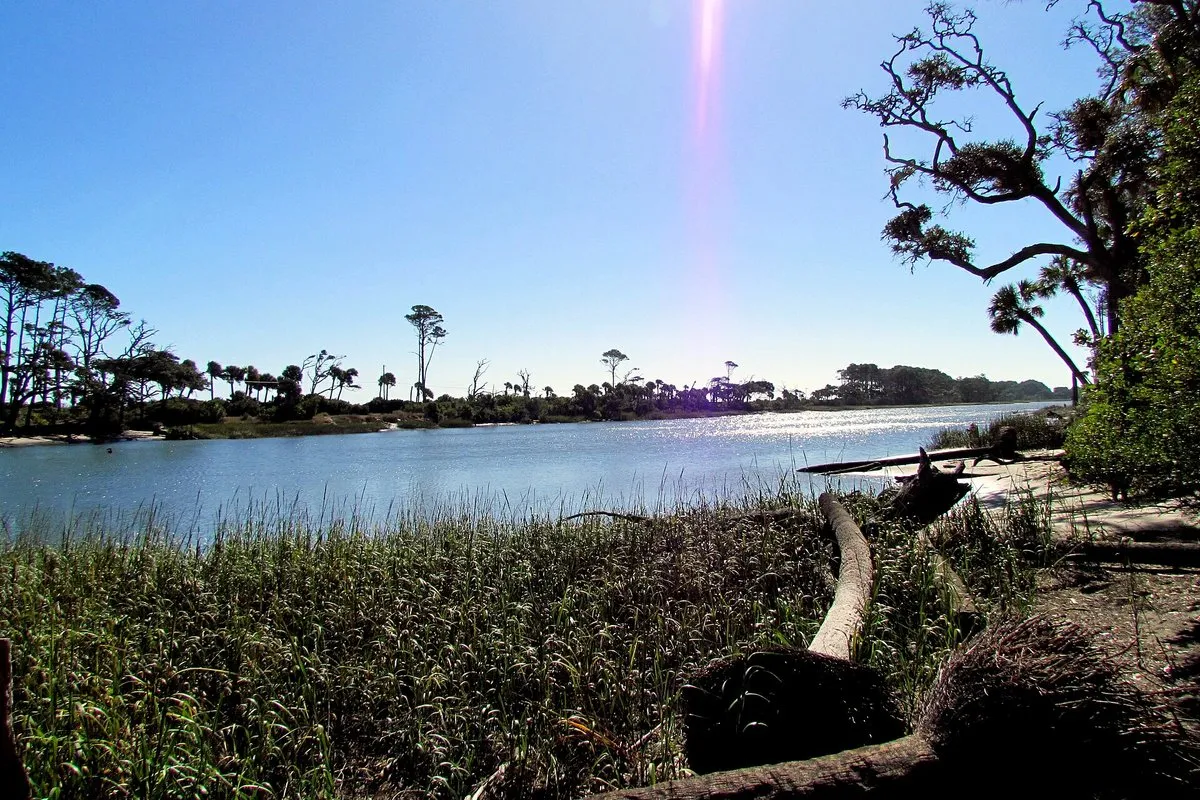
Hunting Island State Park stretches across a barrier island off the coast of South Carolina, about 16 miles east of Beaufort. It is one of the most visited state parks in South Carolina, and for good reason. The island offers a rare combination of wild Atlantic shoreline, a historic lighthouse, a sheltered saltwater lagoon, and some of the most atmospheric beach scenery on the East Coast, all within a relatively accessible coastal location.
The Lighthouse
The Hunting Island Lighthouse is the centerpiece of the park and the only publicly accessible lighthouse in South Carolina. Originally built in 1859 and rebuilt in 1875 after it was destroyed during the Civil War, it was moved inland in 1889 due to severe erosion. It stands 136 feet tall and visitors can climb all 167 steps to the top for a wide view over the island, the Atlantic Ocean, and the surrounding marshland. The lighthouse climb is open on a first-come, first-served basis, though the tower may close in unsafe weather. A $5 per person fee applies to climb the tower. The grounds around the lighthouse are worth walking even if you skip the climb, with large live oaks and interpretive signage explaining the history of the structure and the shifting coastline around it.
Boneyard Beach
Boneyard Beach is what draws many visitors to Hunting Island. A stretch of shoreline near the southern end of the park is littered with the skeletal remains of trees, bleached white by salt and sun, that have fallen as the beach erodes. The effect is stark and striking. Waves wash around the pale trunks and root masses, and the scene changes constantly as storms shift the sand and logs. It is one of the park’s most photographed natural features. The beach is accessible via a walk from the Nature Center area along the Nature Center Scenic Trail. Facilities are limited once you leave the Nature Center area, so bring water and sun protection.
Lagoon Trail and Interior Hiking
A network of trails winds through the interior of the island, with the Lagoon Trail being the most popular. The trail runs along the edge of a saltwater lagoon within the park, passing through maritime forest with palmetto, live oak, and loblolly pine. The total trail system covers several miles and is mostly flat, making it accessible for most fitness levels. The lagoon is beautiful at low tide when shorebirds and wading birds gather along the muddy banks. Fishing from the lagoon is permitted with a valid South Carolina fishing license, and paddling is possible in appropriate areas. Check with the park or local outfitters for current rental options.
Oceanfront Camping
Hunting Island has one of the few campgrounds in South Carolina where you can camp within a short walk of the Atlantic Ocean. The campground offers more than 100 sites, including 102 standard sites with water and electrical hookups and 25 designated walk-in tent sites. The park also has one rental cabin located near the lighthouse. Nightly rates vary by season and demand and can be confirmed through the South Carolina state parks reservation system. The campground is extremely popular, especially in summer and fall, and reservations should be made well in advance. The sites are set among the pines and palmettos, and the sound of the ocean is audible from most of them at night.
Pet Policy
Pets are welcome at Hunting Island State Park in most outdoor areas provided they are kept under physical restraint or on a leash no longer than six feet. Pets are not allowed in the cabin or cabin area, on the pier, or inside the lighthouse complex. Dogs are not permitted on the tip of North Beach past the posted markers to protect critical shorebird habitat. Pet owners are responsible for cleaning up after their animals and for keeping pets from threatening or harassing wildlife.
Wildlife to Be Aware Of
Alligators are present throughout the park, particularly in and around the lagoon, freshwater ponds, and along the lagoon trail. They are wild animals and should never be approached, fed, or harassed. Give any alligator you see significant distance, and keep children and pets close to you near any water. Alligators can move quickly on land and are most active in warmer months.
Venomous snakes are also present, including the Eastern Diamondback Rattlesnake, which is one of the largest venomous snakes in North America. Snakes may be encountered anywhere in the park, including on trails, in the campground, and at the edges of the beach. Watch where you step and where you place your hands. Do not reach into brush or under logs. Wear closed-toe shoes on trails. If you see a snake, leave it alone and move around it slowly.
Raccoons are active in the campground, particularly at night. They are habituated to people and will raid food left out in the open. Store all food in sealed containers or in your vehicle when not in use. Do not feed raccoons under any circumstances, and do not approach them. Raccoons can carry rabies and other diseases.
Practical Information
Hunting Island State Park is located at 2555 Sea Island Parkway, Hunting Island, SC 29920. The park is approximately 16 miles east of Beaufort via US-21. The nearest commercial services are in the town of Beaufort or the community of Saint Helena Island along the drive in.
Entry fees are $8 for adults, $5 for South Carolina seniors, $4 for children ages 6 to 15, and free for children 5 and under. Camping rates vary by season and demand and can be confirmed at southcarolinaparks.com, where reservations can also be made. Reservations are strongly recommended. The park is open year-round, though the lighthouse and some facilities may have limited hours in winter. Fall is an excellent time to visit for smaller crowds and cooler temperatures.
Frequently Asked Questions
What is the entry fee for Hunting Island State Park?
Admission is $8 for adults, $5 for South Carolina seniors, $4 for children ages 6 to 15, and free for children 5 and under. Camping ranges from $34 to $80 per night depending on site type and season.
Are dogs allowed at Hunting Island State Park?
Pets are welcome throughout most of the park, including trails and the campground, but must be kept on a leash no longer than six feet at all times. Pets are not permitted inside park buildings or in certain beach areas, so check posted signage at the entrance for any current restrictions.
Can you climb the Hunting Island Lighthouse?
The lighthouse is currently closed for repairs, so visitors should call the park before their visit to confirm its status. When open, it costs $5 per person to climb the 167 steps to the top for views over the island, the Atlantic Ocean, and the surrounding marshland.
Are there alligators at Hunting Island State Park?
Alligators are present throughout the park, particularly around the lagoon, freshwater ponds, and along the Lagoon Trail. They are wild animals and should never be approached or fed, and visitors should keep children and pets close near any body of water.