
Valley of Fire State Park
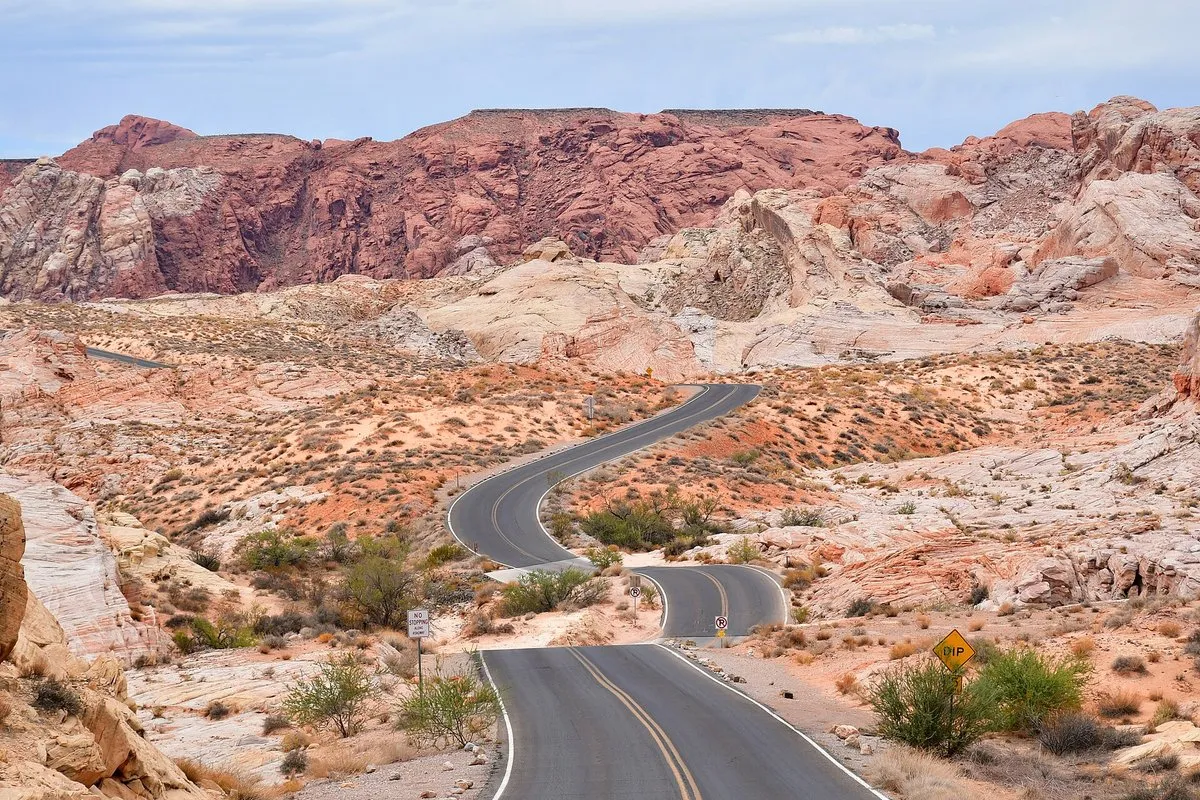
Located about 55 miles northeast of Las Vegas in southern Nevada, Valley of Fire State Park is Nevada’s oldest state park, established in 1935. The park takes its name from the red Aztec sandstone formations that dominate the landscape, ancient dunes compressed into rock over 150 million years ago. Set within the Mojave Desert at elevations ranging from 1,300 to over 4,000 feet, the park covers approximately 40,000 acres of eroded canyon walls, beehive-shaped rock clusters, and open desert flats that glow with intense color at sunrise and sunset.
Crimson Formations and the Geology You Came to See
The sandstone landscape is the reason most visitors make the drive. Formations like the Beehives, Elephant Rock, and the Fire Wave draw photographers and hikers who want direct contact with the geology rather than a distant viewpoint. The Fire Wave, a swirling pattern of red, pink, and white stone, requires a 1.5-mile round-trip hike across open terrain with minimal shade. The trail closes each year from May 15 through September 30 due to extreme heat. White Domes Loop is one of the more complete experiences in the park, a 1.25-mile trail that passes through a narrow slot canyon, past old movie set ruins, and around some of the most varied rock color in the area. Most of the popular formations are accessible from Valley of Fire Highway and Mouse’s Tank Road, so visitors who prefer to stay near the car can still get close to striking scenery.
Petroglyphs and the Human History of the Site
Long before the park existed, the Ancestral Puebloan people used this area and left behind an extensive record of their presence in the form of petroglyphs. Mouse’s Tank, named after a Southern Paiute fugitive who used the area in the 1890s, is one of the densest concentrations of petroglyph panels in the region. The 0.75-mile round-trip trail to Mouse’s Tank follows a sandy wash and passes numerous rock carvings at close range. Atlatl Rock features a panel high on a sandstone face that includes an image of an atlatl, a spear-throwing tool. A metal staircase provides access to the panel for a closer look. These sites are protected under federal and state law. Do not touch, chalk, or attempt to trace any carvings.
Hiking the Desert Terrain
Beyond the formation-specific hikes, the park has a range of short to moderate trails suited to desert conditions. Rainbow Vista leads to a broad overlook of multi-colored sandstone and connects to the Fire Canyon Trail for those who want a longer outing. The Pinnacles Loop is a quieter option away from the main corridor. Most trails in Valley of Fire are short, under 3 miles, because the desert environment demands respect. Shade is limited, temperatures can exceed 110 degrees Fahrenheit in summer, and the exposed terrain offers no relief from direct sun. Carry more water than you think you need, at least one liter per person per hour in warm conditions, and start early in the day.
Camping at Valley of Fire
The park has two campgrounds, Atlatl Rock Campground and Arch Rock Campground. Atlatl Rock Campground offers sites with electric hookups as well as tent sites, along with restrooms and showers. Arch Rock Campground provides more primitive camping without hookups. All campsites are available by reservation through the Nevada State Parks reservation system, and reservations are strongly recommended year-round. Summer camping is hot and exposed, though sites fill on weekends throughout the year.
Pet Policy
Pets are welcome in Valley of Fire but must be kept on a leash no longer than six feet at all times. Pets are allowed on trails, in campgrounds, and in picnic areas. They are not permitted inside any park buildings or visitor facilities. Desert summers are dangerous for animals, and hot pavement and rock surfaces can cause paw injuries quickly. Bring enough water for your pet and avoid hiking with animals during midday heat.
Wildlife to Be Aware Of
Mojave rattlesnakes are present throughout the park, particularly on rocky trails and in crevices. They are most active during spring and fall when temperatures are moderate. Watch where you place your hands and feet, avoid reaching into rock crevices, and give any snake you encounter plenty of space. Desert tortoises are a protected species and may be seen along trail margins and road shoulders. Do not pick them up, move them, or otherwise interfere with them, even if they appear to be in danger from traffic. If a tortoise must be moved off a road for safety, contact park staff. Scorpions are common in the area and are not always visible during daytime hours. When camping overnight, shake out shoes, shake out clothing left on the ground, and check sleeping gear before use. Coyotes are active at dawn and dusk and have become comfortable around humans in high-visitation areas. Never feed them, and do not approach them. A fed coyote becomes a problem animal, and repeated feeding incidents lead to the animal being removed from the park.
Practical Information
Valley of Fire State Park is located at approximately 36.4854, -114.5357, off Interstate 15 at exit 75, about 55 miles northeast of Las Vegas. The nearest town with services is Overton, roughly 15 miles north on Valley of Fire Road. The visitor center near the park entrance provides maps, exhibit space, and staff assistance. Entry fees are $15 per vehicle for out-of-state visitors, with Nevada residents paying $10. A Nevada State Parks annual pass covers entry and is available for purchase. Camping fees are charged separately. The park is open year-round, but summer visits require careful planning due to extreme heat. October through April offers the most comfortable conditions for hiking and exploration.
Frequently Asked Questions
What is the entry fee for Valley of Fire State Park?
Day use entry costs $15 per vehicle, or $10 for Nevada residents, with an annual state parks pass also available for frequent visitors.
Are dogs allowed at Valley of Fire State Park?
Pets are welcome at Valley of Fire State Park, though the park's pet policy details are available through the visitor center and Nevada State Parks resources.
Are trails open year-round at Valley of Fire?
Many of the park's trails close annually from May 15 through September 30 for the safety of guests, staff, and local rescue services due to extreme summer heat.
Do you need a reservation to visit Valley of Fire State Park?
Reservations are not required for day use of the park, though camping reservations are strongly recommended from October through April when visitation is at its heaviest.