
Berlin-Ichthyosaur State Park
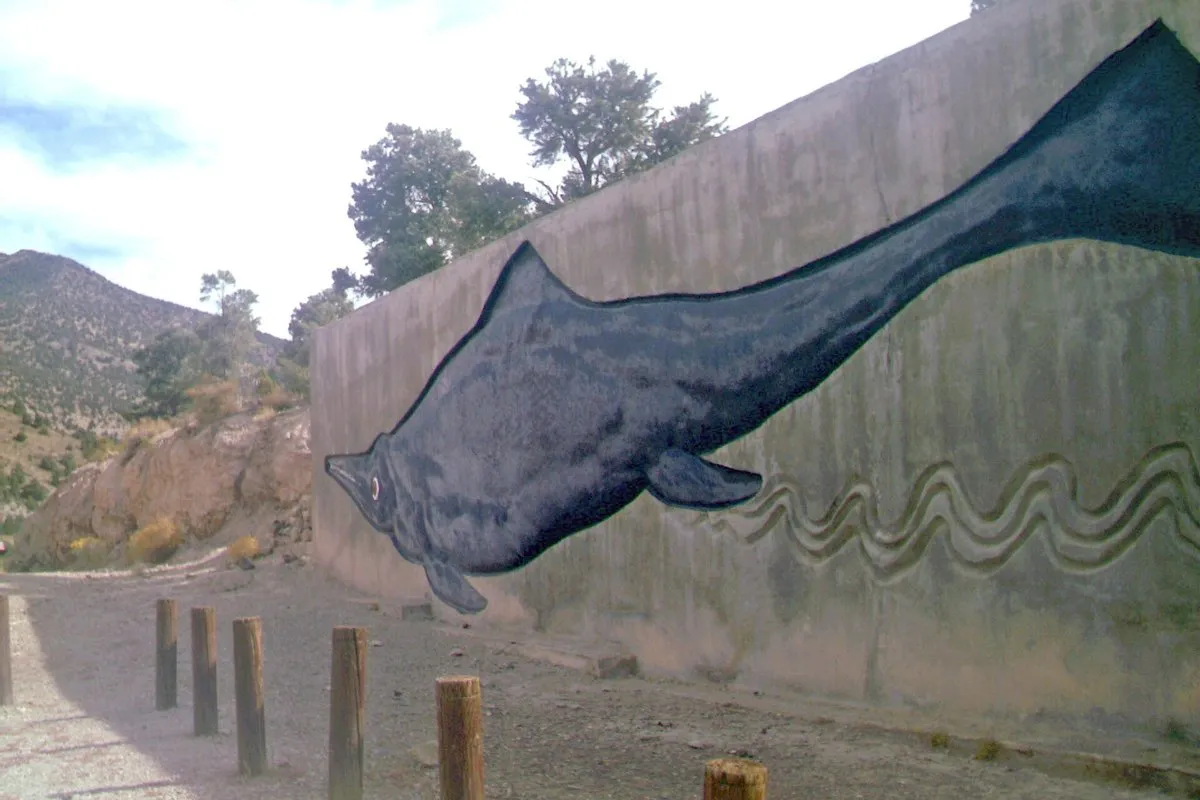
Tucked into the Shoshone Mountains of central Nevada, Berlin-Ichthyosaur State Park preserves two remarkable chapters of history in one remote location: a nearly intact silver mining ghost town from the 1890s and the largest concentration of ichthyosaur fossils ever found in one place. The park sits at elevations ranging from roughly 6,840 to 7,880 feet in Nye County, drawing visitors who make the long drive across the high desert to see creatures that swam Nevada’s ancient seas 225 million years ago and the miners who tried their luck on the same land long after.
The Ichthyosaur Fossil Shelter
The park’s centerpiece is the fossil shelter, a covered structure built directly over an excavation site containing the remains of multiple ichthyosaurs, marine reptiles that could reach 50 feet in length during the Late Triassic period. Nevada’s state fossil and the largest known ichthyosaurs ever discovered are preserved here, and the scale of these animals becomes genuinely striking when you see the bones in context. Guided tours of the shelter run at 10 am and 2 pm on weekends from April 18 through Memorial Day, daily at those same times from Memorial Day through Labor Day, and on weekends again through November 1, led by park rangers who explain the paleontology, the excavation history, and what the shallow tropical sea covering this region looked like millions of years before the desert formed. Outside of tour hours, visitors can view the fossils through the shelter windows. The site is one of the few places in the world where ichthyosaur remains of this size can be seen in their original resting position rather than reassembled in a museum.
Berlin Ghost Town
A short walk from the fossil shelter brings you into the ghost town of Berlin, which was active from around 1897 to 1911. Unlike many ghost towns reduced to foundations and scattered debris, Berlin retains a remarkable number of standing structures, including the mill, the mine superintendent’s house, and various outbuildings. The Nevada State Museum has worked to stabilize rather than restore these buildings, preserving their weathered and authentic appearance. Interpretive signs throughout the town explain what each structure was used for and what daily life looked like for the people who lived here. Visitors can walk through the town independently any time during daylight hours, though you should stay on established paths and not enter structures that are closed to entry, both for safety and preservation.
Hiking and Landscape
The terrain around the park offers a few short trails suited to the high desert environment. The Diana Mine Trail leads to the mine ruins above town and provides views across the valley. The landscape itself, dry hills covered in pinyon pine and sage, is part of the experience. This is remote Great Basin country, and the isolation is palpable. Bring more water than you think you need regardless of the season, as the elevation and dry air accelerate dehydration.
Camping at Berlin-Ichthyosaur
The park has a small campground with 14 well-spaced sites, some suitable for RVs up to 25 feet, offering a genuine sense of remoteness. Campers wake to very dark skies, minimal light pollution, and quiet that is hard to find closer to populated areas. Sites include fire rings and picnic tables, and pit toilets are available. There are no hookups and no showers. The campground operates on a first-come, first-served basis, with no reservations accepted and a 14-day limit within any 30-day period. The campground stays open into the fall, and autumn visits, with cooler temperatures and thinner crowds, are worth considering.
Pet Policy
Leashed pets are welcome in the campground and on most outdoor areas of the park. Pets are not permitted inside the fossil shelter or within the enclosed areas of the ghost town structures. Keep pets close and under control, particularly in the rocky terrain around the ghost town, where hazardous wildlife is a real concern.
Wildlife to Be Aware Of
Great Basin rattlesnakes are present throughout the park, especially in rocky areas and during warmer months from spring through early fall. Watch where you step and avoid putting your hands into crevices or under ledges. If you encounter a rattlesnake, give it space and go around. Black widow spiders are commonly found in and around the ghost town structures, particularly in wood piles, dark corners, and under debris. Treat any old building as potential habitat and avoid reaching into spaces you cannot see clearly. Scorpions are another hazard in this high desert environment and are found under rocks, boards, and any loose material on the ground. Shake out shoes and clothing left on the ground before putting them on, and check sleeping gear if you are camping. Mule deer are frequently seen in the area, especially at dawn and dusk, and pose a real collision risk on the approach roads. Drive carefully and reduce speed when visibility is low.
Practical Information
Berlin-Ichthyosaur State Park is located approximately 23 miles east of Gabbs, Nevada, which is the nearest town. The drive from Gabbs follows a mostly paved road with some rough sections, and high-clearance vehicles are recommended for the final approach if conditions have been wet. The park is roughly 70 miles from Fallon and about 160 miles southeast of Reno.
Entry fees are $5 per vehicle for Nevada residents and $10 per vehicle for non-residents, and camping costs $15 per night for residents and $20 per night for non-residents. The park accepts cash or check only, with no credit cards accepted, so plan accordingly before you leave the nearest town.
The fossil shelter tours run weekends from Memorial Day through Labor Day. Cell service is limited to nonexistent in the area, so download maps and information before you arrive. The park is managed year-round, though winter access can be affected by snow and road conditions, and drinking water is typically available from mid-April through the end of October.
Frequently Asked Questions
Are dogs allowed at Berlin-Ichthyosaur State Park?
Leashed pets are welcome throughout the park, and leashes must be no more than six feet in length.
What is the entry fee for Berlin-Ichthyosaur State Park?
Entry costs $5 per vehicle for Nevada residents and $10 per vehicle for non-residents, with camping available for $15 or $20 per night respectively, and the park accepts cash or check only.
When can I take a guided tour of the ichthyosaur fossil shelter?
Ranger-led tours of the fossil shelter run on weekends from Memorial Day through Labor Day, and outside of tour hours visitors can view the fossils through the shelter windows.
Can I take fossils or artifacts from the ghost town or dig site?
Removing, disturbing, or damaging any fossil, historic structure, artifact, or other park feature is strictly prohibited under state and federal law.