
Fort Robinson State Park
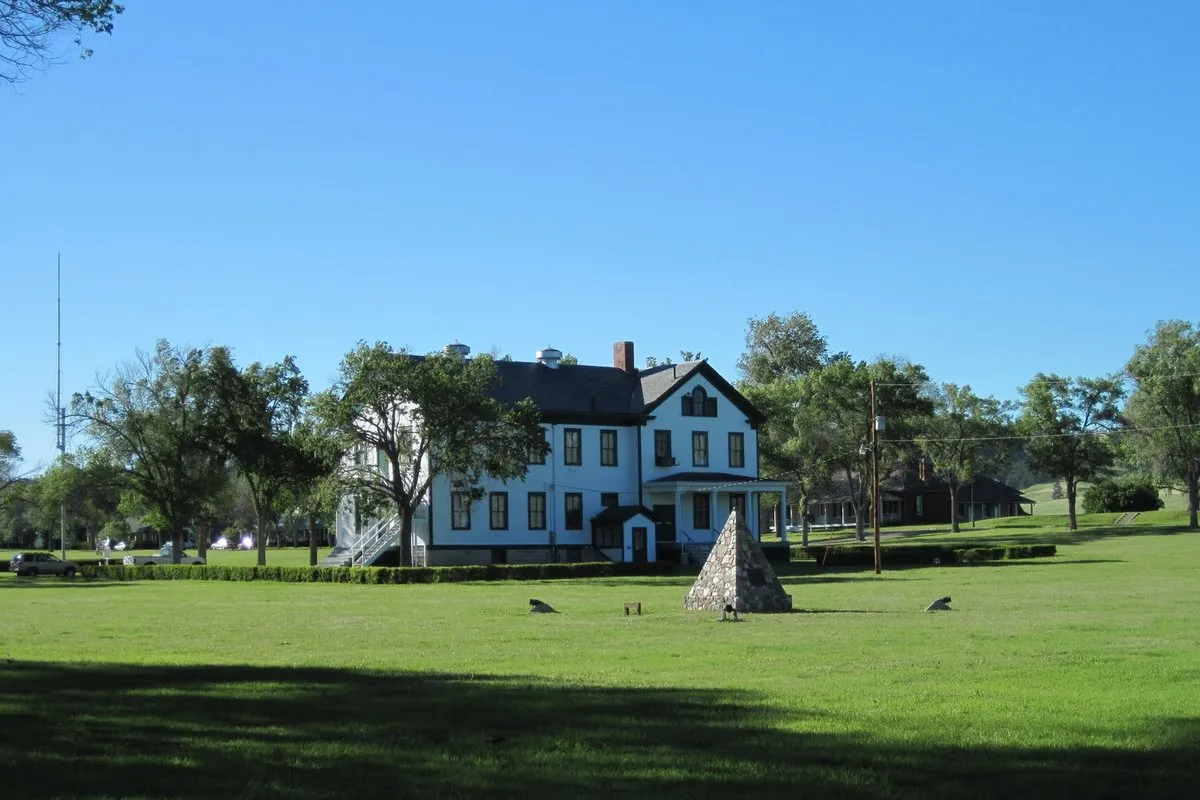
Fort Robinson State Park occupies a wide sweep of northwest Nebraska’s Pine Ridge country, where open grasslands give way to rugged buttes, canyon breaks, and ponderosa pine draws. The park covers more than 22,000 acres in Dawes and Sioux counties near Crawford and carries one of the most layered histories of any state park in the Great Plains. It was an active U.S. Army post from 1874 through 1948, and the remnants of that fort sit at the center of the park today, giving visitors both a living history site and a full-scale outdoor recreation destination.
The Fort and Its History
The original post at Fort Robinson was established to monitor the Red Cloud Agency, and the fort went on to play a central role in some of the most consequential events of the Indian Wars era. Oglala Lakota leader Crazy Horse was killed here on September 5, 1877. The park preserves the adobe brick and wood-frame buildings from multiple periods of the fort’s life, and the Nebraska State Historical Society operates a museum on the grounds that traces the post’s history from the Indian Wars through its use as a German prisoner of war camp during World War II. Visitors can tour the buildings, view exhibits, and get a clear sense of how much ground this place covers historically.
Trails Through the Pine Ridge Buttes and Canyons
For outdoor visitors, the terrain is the main draw. The park contains miles of maintained trails that climb through canyon walls and across the tops of flat-topped buttes with long views into South Dakota and Wyoming on clear days. The Red Cloud Buttes area offers some of the most dramatic walking in the region. Trails range from short interpretive loops near the main complex to longer backcountry routes that require real navigation. The landscape is a mix of open ridge, rocky outcroppings, and shaded pine draws, so conditions change quickly as you move through it. Mountain biking is permitted on designated trails, and horseback riding has deep roots here. The park offers seasonal guided horseback trail rides and has dedicated equestrian trails.
Bison Herd and Open Range Driving
Fort Robinson manages a bison herd that visitors may view from vehicles in designated pasture/open-range driving areas, and driving through those areas gives the park a character unlike most Midwest parks. The herd is managed by the park and viewed in large pasture areas rather than as a small zoo-style exhibit; visitors should stay in their vehicles and not enter bison pastures on foot, bike, or horseback. Bison may be seen from designated park roads when the viewing pastures are open and the park is open, though sightings are not guaranteed year-round. The sight of them moving across the grasslands below the Pine Ridge buttes is one of the more striking things this park offers. Drivers should slow down and give the animals room without approaching on foot.
Camping and Lodging
The park offers an unusually wide range of overnight options. Tent and RV camping is available at multiple campgrounds with varying levels of hookup service. Beyond standard camping, the park rents historic lodge rooms, cabins, and adobe brick buildings from the old fort complex itself, allowing visitors to stay inside the original military post structures. Reservations for lodging fill well in advance, especially in summer. A seasonal aquatic center and restaurant operate at the main complex; verify any tennis-court availability directly with the park before your visit. This makes the park a workable base for multi-day stays with families.
Pet Policy
Pets are welcome at Fort Robinson State Park and must be kept on a leash no longer than six feet at all times. Pets are allowed on trails and in most outdoor areas of the park. Pets are not allowed in park buildings, museum spaces, or lodge rooms, but they are allowed in cabins with the required one-time pet fee; service animals are exempt. Be aware that bison share the open range areas with visitors, and keeping dogs under control is important for the safety of both the animal and the dog.
Wildlife to Be Aware Of
Bison are the most immediate wildlife concern at Fort Robinson. The herd moves through the park’s pasture areas, including along designated roads near campgrounds. Never approach bison on foot. They are fast and unpredictable, and a safe viewing distance is at least 100 yards. Rattlesnakes are present throughout the park, particularly on the rocky butte trails and in canyon areas where they use rock outcroppings for shelter. Watch where you place your hands and feet on any trail with exposed rock, and check around the base of rocks before sitting down. Mountain lions have been reported in the Pine Ridge backcountry. Sightings are rare, but the habitat supports them. If you encounter one, do not run. Make yourself appear large, back away slowly, and make noise. Wildfire is a real seasonal hazard across the dry grassland and pine areas. Before visiting, check park alerts on the Nebraska state parks website for any fire restrictions or closures, and follow all guidelines around campfires and open flames.
Practical Information
Fort Robinson State Park is located off U.S. Highway 20, three miles west of Crawford, Nebraska. Crawford is the nearest town with gas and basic services. Fort Robinson is normally open year-round, but it is currently closed until further notice due to the South Fork Fire; visitors should check current Nebraska Game and Parks alerts before traveling. Some amenities, including the restaurant, aquatic center, and guided horseback rides, operate on a seasonal schedule from roughly late spring through early fall. A daily vehicle permit is required for entry, and an annual Nebraska state park permit is also available. Current permit pricing is listed at outdoornebraska.gov/permits/permit-pricing/. Camping fees are charged separately from the vehicle permit. Lodging and camping reservations can be made through the Nebraska Game and Parks Commission reservation system, and summer bookings should be made well in advance.
Frequently Asked Questions
Are dogs allowed at Fort Robinson State Park?
Pets are welcome at Fort Robinson State Park and must be kept on a leash no longer than six feet at all times, including on trails and in most outdoor areas. Pets are not permitted inside park buildings, museum spaces, or lodging units.
How much does it cost to enter Fort Robinson State Park?
A daily vehicle permit is required for entry, and an annual Nebraska state park permit is also available, with current rates listed at outdoornebraska.gov/permits/permit-pricing/. Camping fees are charged separately from the vehicle permit.
Can you see bison at Fort Robinson State Park?
Fort Robinson manages a free-ranging bison herd that moves through open areas of the park year-round, including along roads and near campgrounds. Visitors should never approach bison on foot and should maintain a viewing distance of at least 100 yards at all times.
Does Fort Robinson State Park offer lodging other than camping?
The park rents historic lodge rooms, cabins, and adobe brick buildings from the original fort complex, allowing guests to stay inside the actual military post structures. Reservations fill well in advance, especially in summer, so booking early is strongly recommended.