
Indian Cave State Park
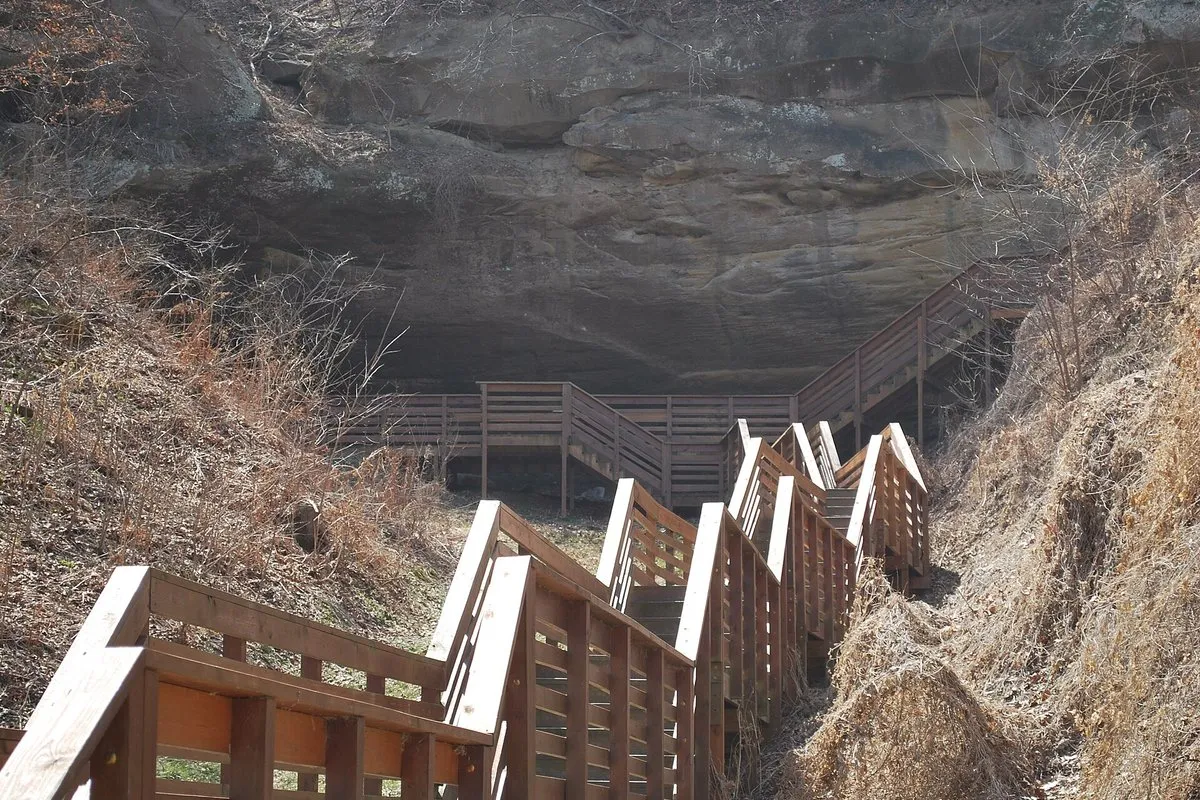
Tucked into the far southeastern corner of Nebraska, Indian Cave State Park runs along a long stretch of Missouri River bluffs that most people wouldn’t expect to find in the Great Plains. The park takes its name from a large sandstone cave near the river, its interior walls marked with Native American petroglyphs that make this one of the most historically significant natural sites in the state. With more than 3,000 acres of forested hills, river-bottom bottomland, and dramatic ridgeline terrain, it draws hikers, campers, and history-minded visitors looking for something beyond flat prairie.
The Petroglyphs and Indian Cave
The cave itself is the reason most first-time visitors come, and it earns the attention. The sandstone formation sits close to the Missouri River and contains carvings made by Indigenous peoples, depicting figures and symbols that researchers believe date back centuries. The cave is accessible via a short trail from the river-level campground area, and interpretive signage helps put the carvings in context without being overwhelming. The sandstone walls are soft and fragile, so visitors are asked to look without touching. Beyond the historical weight of the site, the cave and surrounding bluff face give a strong sense of what this stretch of the Missouri River corridor looked like long before European settlement.
A reconstructed 1800s frontier settlement near the park entrance adds another layer of historical texture. The log structures are modest, but they give a useful reference point for understanding how this land was used and inhabited during the homesteading era.
22 Miles of Bluff and Bottomland Trails
Trails are the park’s other major draw, and the system is extensive enough to reward multiple visits. The 22 miles of trails range from easy riverside walks to steep ridge climbs that gain real elevation by Nebraska standards. The bluff-top routes offer long views over the Missouri River valley, and the descents into wooded drainages feel genuinely remote. Trail conditions vary considerably by season. Spring brings mud and creek crossings that can be challenging after rain. Fall is widely considered the best time to hike here, when the hardwood forest turns and the humidity drops.
Several trails are open to equestrians, and the park has a dedicated horse camp for riders who bring their own animals. Mountain biking is permitted on designated trails as well. The trail system is well-signed, but carrying a downloaded map is worthwhile because cell service is inconsistent throughout the park.
Camping Along the Missouri
Indian Cave offers one of the more varied camping setups in the Nebraska state park system. Options include electric hookup sites for RVs, basic tent sites, equestrian camping with corrals, and walk-in primitive sites that put you further into the woods and away from the main campground noise. A reservable picnic shelter is also available. The campground areas near the river provide easy access to the cave trail and the boat ramp. Reservations are strongly recommended for weekends from late spring through fall, as the park fills regularly. Camping reservations can be made through the Nebraska Game and Parks Commission website.
Pet Policy
Pets are welcome at Indian Cave State Park and must be kept on a leash no longer than 6 feet, crated, or caged at all times. This applies on all trails, in campgrounds, and throughout the park. Pets are not permitted inside enclosed park buildings. Given the terrain and the presence of wildlife including timber rattlesnakes, keeping dogs close and on leash is especially important here.
Wildlife to Be Aware Of
Timber rattlesnakes are present in the park, particularly on the rocky bluffs and along woodland trails during warmer months. They are not aggressive but will defend themselves if startled or cornered. Watch where you step and where you place your hands when scrambling over rocks or logs. If you encounter one, give it space and walk around. Sturdy footwear and attentiveness go a long way.
White-tailed deer are abundant throughout the park and frequently cross the park roads, especially at dawn and dusk. Drive slowly, particularly on the winding interior roads where sight lines are short. Deer often travel in groups, so if one crosses, others may follow immediately behind.
Wild turkeys are common and visible throughout the park in most seasons. They are harmless to humans but can appear in large groups and occasionally behave boldly near campsites if they have been fed by visitors. Do not feed them.
Ticks are a year-round concern in the wooded trails and tall grass areas, with peak activity in spring and early summer. Wear long pants, use repellent, and do a thorough tick check after every hike. Checking pets after outings is equally important.
Practical Information
Indian Cave State Park is located in Nemaha and Richardson counties in far southeastern Nebraska, roughly 20 to 23 road miles east and southeast of Auburn via Highway 136, Highway 67, and Spur 64E. The park is also about 10 miles south of Brownville and 5 miles east on S64E. The nearest town with services is Shubert, though Auburn has more extensive options including fuel, groceries, and lodging. The roads into the park are paved but narrow and winding in sections.
A vehicle entry permit is required. For 2026, daily park permits are $7.35 for Nebraska-licensed vehicles and $14.35 for non-Nebraska-licensed vehicles, and annual permits are $36 for Nebraska-licensed vehicles and $71 for non-Nebraska-licensed vehicles. Permits can be purchased at the park entrance or online through Nebraska Game and Parks. The park is open year-round, though some facilities are reduced or closed in winter. Spring and fall offer the most comfortable hiking conditions.
Frequently Asked Questions
Are dogs allowed at Indian Cave State Park?
Dogs are welcome at Indian Cave State Park and must be kept on a leash no longer than six feet at all times on all trails, in campgrounds, and throughout the park. Pets are not permitted inside enclosed park buildings.
How much does it cost to enter Indian Cave State Park?
A vehicle entry permit is required and costs $6 per day for Nebraska-plated vehicles and $9 per day for out-of-state vehicles, with annual permits available for $30 and $45 respectively. Permits can be purchased at the park entrance or online through Nebraska Game and Parks.
Are there rattlesnakes at Indian Cave State Park?
Timber rattlesnakes are present in the park, particularly on the rocky bluffs and along woodland trails during warmer months. They are not aggressive but will defend themselves if startled, so sturdy footwear and watching where you step and place your hands are strongly recommended.
Can you see the petroglyphs at Indian Cave?
The sandstone cave containing the Native American petroglyphs is accessible via a short trail from the river-level campground area, with interpretive signage on site to help explain the carvings. Visitors are asked not to touch the walls, as the sandstone is soft and fragile.