
Sandy Point State Park
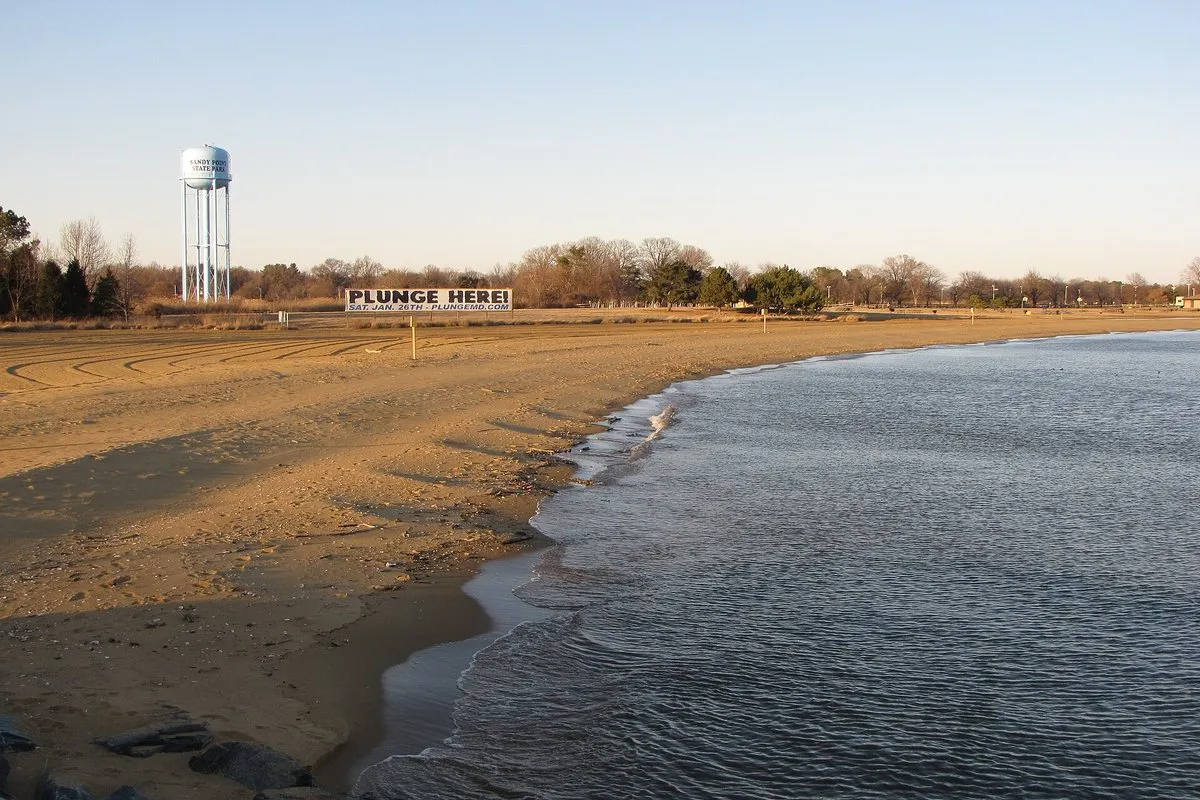
Sandy Point State Park sits on the western shore of the Chesapeake Bay just outside Annapolis, Maryland, where the dual spans of the Bay Bridge cross overhead and the open water stretches east toward the Eastern Shore. The park is a straightforward, well-loved destination for anyone who wants a genuine bay beach experience without traveling far from the Baltimore-Washington metro area. The combination of sandy shoreline, boat access, and unobstructed views of one of the most recognizable structures in the Mid-Atlantic gives the park a character that is hard to replicate elsewhere in the state.
Bay Beach and Swimming
The beach is the core reason most people come to Sandy Point, and the park delivers a classic Chesapeake experience. The water is calmer than ocean beaches, the sand is soft, and on clear days the view across the bay is wide and unhurried. Lifeguards are on duty during the summer season, and the swim area is clearly marked. The water temperature rises quickly in summer, making it comfortable for families, though the same warmth that draws swimmers also brings sea nettles, the stinging jellyfish common throughout the bay. More detail on that hazard appears in the wildlife section below.
Boating and the Marina
Sandy Point has a boat launch and a full-service marina, making it one of the more accessible points for getting onto the Chesapeake from the western shore. The ramp accommodates trailered boats, and seasonal slips are available for those who want longer-term access. Kayakers and paddleboarders also use the park, launching from calmer areas near the shoreline. The bay in this section runs deep and can produce significant chop, particularly when afternoon winds pick up, so paddlers should be mindful of conditions before heading out. Fishing from boats is popular throughout the season, with anglers targeting striped bass, bluefish, perch, and other bay species.
Fishing Along the Shore
Shore fishing at Sandy Point is productive and popular. Anglers cast from the beach, the pier, and rocky points along the park’s edge, pursuing a mix of species depending on the season. Striped bass and white perch are common targets, and crabbing is a regular activity for families who bring lines and chicken necks rather than formal gear. A Maryland fishing license is required for anglers 16 and older, and all state regulations apply.
Birding at Sandy Point
The park sits along the Atlantic Flyway and sees significant bird activity throughout the year, particularly during spring and fall migration. Shorebirds, waterfowl, and raptors move through in numbers, and the open bay view makes spotting hawks and eagles relatively easy. Osprey nest in the park, and bald eagles are a consistent presence. The variety of habitats, including open water, beach, marsh edge, and wooded areas, supports a wide range of species. Birders who visit during migration can expect a full and varied list without needing to cover much ground.
Pet Policy
Leashed pets are welcome in the park from October 1 through April 30, including in parking areas and along some shoreline sections. Pets are not permitted in the park from May 1 through September 30. Owners are responsible for cleaning up after their animals.
Wildlife to Be Aware Of
Sea nettles are the most common wildlife concern for swimmers at Sandy Point. These jellyfish are a natural and abundant part of the Chesapeake Bay ecosystem, and their numbers typically peak from mid-summer through early fall, when water temperatures are highest. A sting is painful but not dangerous for most people, producing a burning or itching sensation on the skin. Rinsing with saltwater rather than fresh water is generally recommended, and lifeguards can provide basic first aid. Checking local reports before visiting during peak season can help set expectations.
Osprey and bald eagles both nest within the park, and visitors should give those areas a wide berth during the nesting season, which runs roughly from spring through midsummer. Both species are federally protected, and disturbing nesting birds is illegal. Watching from a distance with binoculars is the appropriate approach and generally offers better views anyway.
Horseshoe crabs come ashore to spawn on the beach in late spring, typically from May into June. They are ancient animals and entirely harmless, but their shells are sharp and their spines firm. If you handle one, grasp it by the sides of the shell rather than by the tail, and return it gently to the water. The spawning event is worth watching on its own terms.
Practical Information
Sandy Point State Park is located at 1100 E College Pkwy, Annapolis, MD 21409, at coordinates 38.9926, -76.4099. The park sits at the western foot of the Bay Bridge on Route 50 and is well signed from the highway. Annapolis is the nearest city, roughly five miles to the west.
The park is open year-round, excluding Christmas Day, with the beach and marina fully staffed during the summer season. Weekends and holidays from Memorial Day through Labor Day require advance reservations. Seasonal fees apply, and vehicle entry rates vary by day and season. Annual passes are available and offer good value for frequent visitors. For current rates, check the Maryland DNR admission page directly, as prices are updated seasonally.
Weekends from Memorial Day through Labor Day are the busiest times, and the parking lot can fill by mid-morning on hot days. Arriving early or on a weekday is the most reliable way to secure parking and a good spot on the beach.
Frequently Asked Questions
Are dogs allowed at Sandy Point State Park?
Leashed pets are welcome in most areas of the park, including parking areas and some shoreline sections, but pets are not permitted on the designated swim beach.
How much does it cost to enter Sandy Point State Park?
Seasonal fees apply and vehicle entry rates vary by day and season, with annual passes also available, so visitors should check the Maryland DNR admissions page for current rates.
Do I need a reservation to visit Sandy Point State Park?
Visitors must make a day-use parking reservation in advance for weekends and holidays to help reduce overcrowding at the park.
Are there jellyfish in the swimming area at Sandy Point?
Sea nettles, the stinging jellyfish common throughout the Chesapeake Bay, are present in the swim area and are most abundant from mid-summer through early fall due to warm water temperatures.