
Assateague State Park
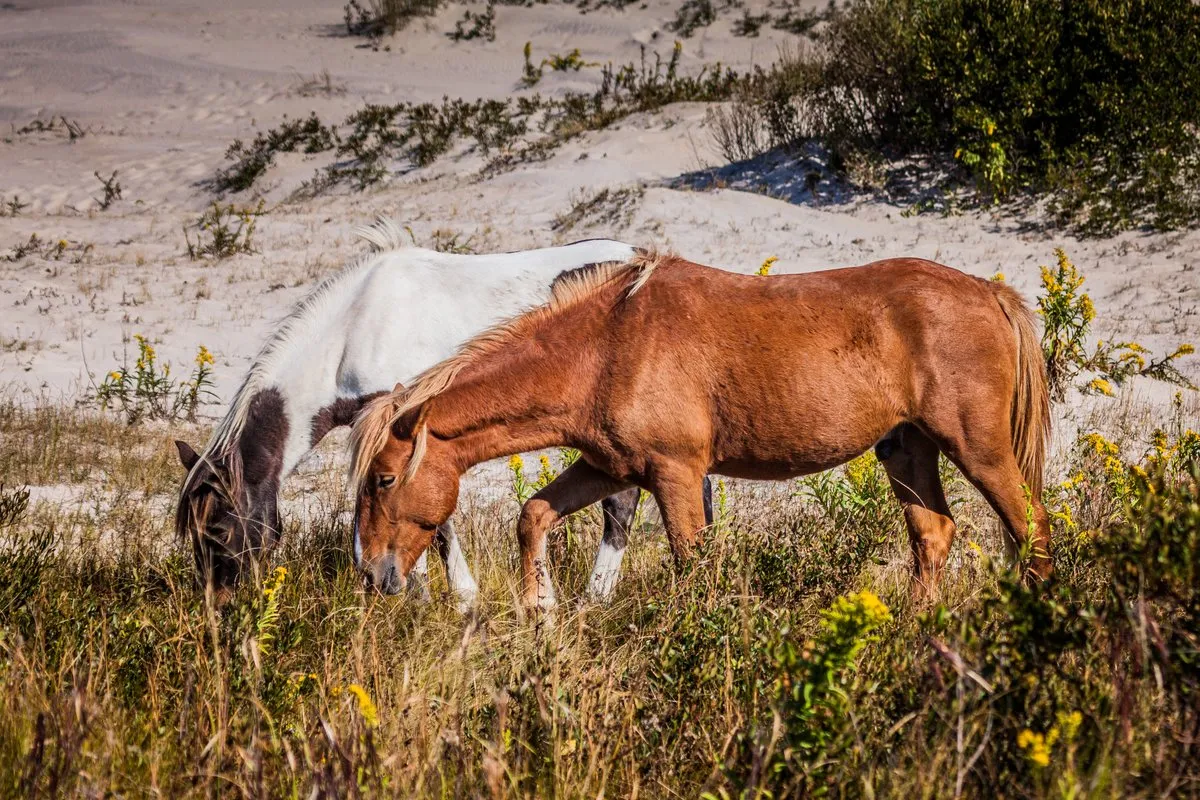
Assateague Island is a 37-mile barrier island off the Maryland and Virginia coasts, and the Maryland portion is managed by Assateague State Park and Assateague Island National Seashore. The state park encompasses approximately 855 acres of the northern island, where Atlantic surf meets a low landscape of beach grass, salt marsh, and maritime scrub. The island is best known for its wild ponies, feral horses that have lived here for centuries, but it also delivers one of the most accessible undeveloped ocean beaches on the Mid-Atlantic coast. Sand, wind, and salt define everything here.
The Wild Ponies of Assateague
The ponies are the reason most people come, and they are genuinely wild animals. Two separate herds live on the island, divided by the Maryland-Virginia state line. The Maryland herd is managed by the National Park Service and roams freely across the Maryland portion of the island, including campgrounds, parking lots, and picnic areas. Seeing them is nearly guaranteed. Keeping a safe distance requires deliberate effort, because the ponies are habituated to humans and will walk directly into your space without hesitation. They are not tame. They bite and kick without warning, and injuries happen every season to visitors who get too close or attempt to feed them. The rule is a minimum of 40 feet, though more is better. Watch them from a distance and resist the pull to close the gap for a better photo.
Ocean Beach and Swimming
The state park’s primary recreation is straightforward: ocean swimming, surf fishing, sunbathing, and beachcombing along a wide Atlantic beach. The waves are consistent and the water is clean, though rip currents can develop, especially during or after storms. Lifeguard service at Assateague Island National Seashore has been suspended due to staffing shortages, so swimming is at your own risk. The beach is wide enough to feel uncrowded even on busy summer weekends, and the lack of development behind the dune line keeps the setting stark and unfiltered.
Surf fishing is popular along both the state park beach and the national seashore stretches to the south. Anglers target striped bass, bluefish, flounder, and red drum depending on the season. An off-road vehicle permit from the National Park Service is required to drive onto designated beach areas.
Camping on the Island
Assateague State Park offers a unique camping experience compared to other Maryland state parks. The campground sits close to the beach, and the sounds, wind, and salt air are constant. The state park operates oceanside and bayside campsites, including some with electric hookups. There are no cabins or shelters. Tent campers should come with a serious stake system; the sandy soil and persistent Atlantic wind will destroy a flimsy setup. Horse flies and mosquitoes can be severe in summer, particularly near the marsh. Many experienced Assateague campers consider late spring and fall far more comfortable than July and August. Reservations are strongly recommended for summer weekends and can be made through the Maryland state park reservation system.
The National Park Service operates backcountry campsites accessible by foot or canoe, for those looking for a more remote experience.
Kayaking and Bayside Exploration
The bayside of the island, facing Sinepuxent Bay, is quieter and ecologically richer than the ocean beach. Salt marsh, tidal flats, and shallow water make it excellent territory for kayaking and canoe paddling. Birding is productive year-round on the bayside, with shorebirds, wading birds, waterfowl, and raptors all well represented. There are no kayak rentals available at the state park; visitors need to bring their own or arrange rentals nearby.
Pet Policy
Pets are permitted in the state park campgrounds and on the bayside of the island but are not allowed on the ocean beach from Memorial Day weekend through Labor Day. Outside of that restricted season, leashed pets are allowed on the beach. The leash rule is enforced year-round. Pets are not permitted on National Seashore beaches. Because the ponies roam the entire island, including campsites, keeping pets secured and under control at all times is essential for the safety of both animals.
Wildlife to Be Aware Of
The ponies are the most visible hazard but not the only one. Horse flies and green-head flies are aggressive biters throughout summer and can make a beach day genuinely miserable near marsh areas. Mosquitoes are heavy at dawn and dusk, especially in the campground. Bring strong insect repellent and long sleeves for evening hours. Jellyfish are a consistent seasonal presence in the surf. Sea nettles are common in warmer months and produce a painful sting. Portuguese man-o-war wash ashore occasionally and remain capable of stinging even after beaching, so avoid handling any jellyfish or jellyfish-like organisms on the sand. Sharks are present in the Atlantic water offshore. Attacks are rare, but the park does post beach closure notices when there is credible cause for concern. Heed those notices without exception.
Practical Information
Assateague State Park is located at the northern end of Assateague Island, accessible via Route 611 from the town of Berlin, Maryland. Ocean City is roughly eight miles to the north. The park address is 7307 Stephen Decatur Highway, Berlin, MD 21811. Day use fees and camping fees vary by site type and are subject to change; confirm current rates with the Maryland Department of Natural Resources before your visit. The adjacent Assateague Island National Seashore charges a separate vehicle entry fee and accepts the America the Beautiful annual pass; check current rates with the National Park Service. The park is open year-round, though facilities are limited in winter. Summer is the busiest season. Campsite reservations are available through the Maryland Department of Natural Resources reservation system and are recommended well in advance for summer weekends.
Frequently Asked Questions
Can I bring my dog to Assateague State Park beach?
Pets are permitted in the day use areas from Labor Day through the Friday before Memorial Day, but are not allowed at the State Park beach area during the summer season.
How much does it cost to enter Assateague State Park?
Day use beach access at the Maryland State Park costs $5 per person for in-state visitors and $6 per person for out-of-state visitors, while the adjacent Assateague Island National Seashore charges $25 per vehicle or accepts the America the Beautiful Pass.
Can I feed or pet the wild ponies at Assateague?
The ponies are genuinely wild animals and must not be fed, touched, or approached, as they bite and kick without warning and injuries occur every season among visitors who get too close.
When is the best time to camp at Assateague to avoid bugs?
Many experienced Assateague campers consider late spring and fall far more comfortable than July and August, when horse flies and mosquitoes can be severe, especially near the marsh areas of the campground.