
Patapsco Valley State Park
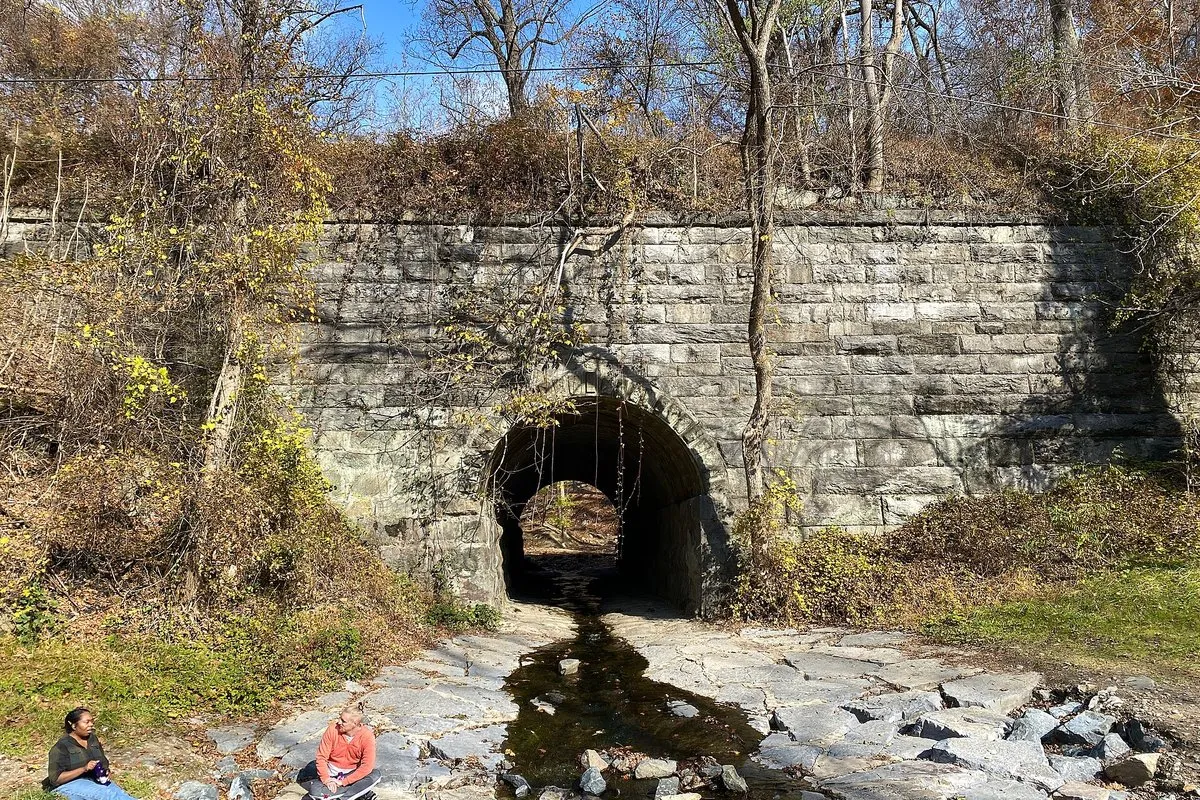
Patapsco Valley State Park follows the Patapsco River through a narrow, forested corridor stretching roughly 32 miles south and west of Baltimore. It is one of Maryland’s oldest state parks, drawing hikers, mountain bikers, history enthusiasts, and campers from across the region. What makes it genuinely distinctive is the combination of rugged natural terrain and deep industrial history: the same valley that once powered iron furnaces and textile mills now harbors cascading waterfalls, stone ruins, and more than 170 miles of trail winding through second-growth forest above the river.
Historic Ruins and the Valley’s Industrial Past
Few state parks in the mid-Atlantic carry as much layered history as Patapsco Valley. The ruins of the 1835 Thomas Viaduct, one of the oldest multi-arch stone railroad bridges in the United States, still spans the river near Relay. The Avalon area holds the remnants of the Orange Grove flour mill, destroyed in the catastrophic 1868 flood. Interpretive signs throughout the park explain how the river was dammed, diverted, and put to work across two centuries of industry. Visitors who pay attention to the landscape will notice millraces, stone foundations, and collapsed walls absorbed into the forest floor. The history here is not confined to a visitor center exhibit; it is embedded in the terrain itself.
Trails for Hikers and Mountain Bikers
Trails are the primary reason most people come to Patapsco Valley, and the network is extensive enough to reward repeated visits. The park is divided into several distinct areas, including Avalon, Orange Grove, Hilton, Hollofield, McKeldin, Daniels, Pickall, and Woodstock, each with its own trailhead and character. The orange-blazed Cascade Falls Trail in the Orange Grove area leads to one of the park’s most photographed features, a multi-tiered waterfall tucked into a rocky hollow less than a mile from the parking area. The Grist Mill Trail runs flat along the river and connects to the orange and yellow trails for longer loops. In the McKeldin area at the northern end of the park, the landscape opens up around the confluence of the North and South Branches of the Patapsco, and the trails there tend to be less crowded.
Mountain biking is well established in several areas, particularly around Hilton and the single-track routes near Rolling Road. Terrain ranges from smooth riverside paths suitable for beginners to technical rooted climbs. Hikers and bikers share many trails, so awareness and trail etiquette matter, especially on weekends.
The River and Outdoor Recreation
The Patapsco River itself draws swimmers, anglers, and paddlers. The river is shallow and rocky through most of the park, with a handful of wider, calmer pools. Tubing is popular on warm summer weekends, particularly between the Avalon and Orange Grove areas. Anglers fish for smallmouth bass, sunfish, and the occasional trout stocked in certain stretches. There are no developed boat launches within the main park corridor, but experienced paddlers sometimes put in at access points along the river.
Camping at Hollofield
Hollofield is the park’s primary camping area, with more than 70 sites for tents and RVs, though the campground is closed for upgrades and repairs throughout 2026. When open, it has electric hookups, modern restrooms, and shower facilities. Sites sit on wooded terrain above the river. Reservations are strongly recommended from late spring through early fall. Group camping and a camp store are also available. The campground does not have a direct trail connection to the main Avalon trail network, so campers who want to hike the waterfall corridors should plan to drive between areas.
Pet Policy
Leashed pets are welcome in designated areas of the park, though policies vary by area, so it is worth confirming the rules for wherever you plan to go before you arrive. Owners are required to clean up after their animals. Given the volume of trail traffic and the mix of hikers, cyclists, and families, keeping dogs on leash at all times is both a rule and a practical courtesy.
Wildlife to Be Aware Of
Ticks are a persistent concern throughout Patapsco Valley from early spring through late fall. Both deer ticks, which can carry Lyme disease, and lone star ticks are present in the forested and riverside terrain. Wear long pants and closed shoes, apply insect repellent with DEET, and do a full-body tick check after every visit. Removing ticks promptly significantly reduces disease transmission risk.
Copperhead snakes live in the rocky outcrops and wooded hillsides throughout the park. They are venomous but not aggressive, and most bites occur when people accidentally step on or reach near a snake. Watch where you place your hands and feet when scrambling over rocks or stepping over logs, and stay on trail when possible.
Poison ivy is widespread along the trails and riverbanks. Learn to recognize its three-leaflet pattern before visiting, and avoid touching any low-growing vegetation along trail edges. Wash exposed skin thoroughly after time in the park.
Practical Information
Patapsco Valley State Park spans parts of Baltimore, Howard, Carroll, and Anne Arundel counties in Maryland, with the most-visited areas accessible from the Avalon entrance off Washington Boulevard (US-1) in Elkridge, near the intersection of I-95. The McKeldin area is accessed from Marriottsville Road in Carroll County.
A day-use fee applies at staffed areas including Avalon, Hollofield, and Hilton, with rates varying by area and Maryland residency. Current fee information is available on the Maryland Department of Natural Resources website. Many trailhead access points along the corridor are free to enter. The Maryland Passport annual pass covers day-use fees at state parks and is a good value for frequent visitors.
Camping reservations can be made through the Maryland State Parks reservation system. The Maryland Park Service is launching a new reservation platform on February 24, 2026, so check the Maryland Department of Natural Resources website before booking. The park is open year-round, though staffed areas have reduced hours outside of the main season. Trails can be muddy after rain, and the river rises quickly during storms, so check conditions before visiting.
Frequently Asked Questions
Is there an entry fee to visit Patapsco Valley State Park?
A day-use fee applies at staffed areas such as Avalon, Hollofield, and Hilton, with rates varying by area and Maryland residency, though many trailhead access points throughout the park are free. Frequent visitors can purchase an annual Maryland Passport pass to cover day-use fees at state parks.
Are dogs allowed on the trails at Patapsco Valley State Park?
Dogs are welcome in the park but should be kept on a leash, and owners should be aware that ticks, including deer ticks and lone star ticks, are present throughout the forested and riverside trails especially from spring through fall. Copperhead snakes and widespread poison ivy along trails and riverbanks are additional hazards to watch for when hiking with pets.
Where is Cascade Falls located and how difficult is the hike?
Cascade Falls is located in the Avalon area of the park and is reached via the orange-blazed Cascade Falls Trail, a short hike of less than a mile from the parking area to the multi-tiered waterfall. The trail leads into a rocky hollow and is one of the most popular and photographed destinations in the park.
Can you go tubing or swimming in the Patapsco River?
Tubing is a popular warm-weather activity on the Patapsco River, particularly between the Avalon and Orange Grove areas on summer weekends. The river runs shallow and rocky through most of the park with some wider, calmer pools that also attract swimmers and anglers fishing for smallmouth bass and sunfish.