
Pikes Peak State Park
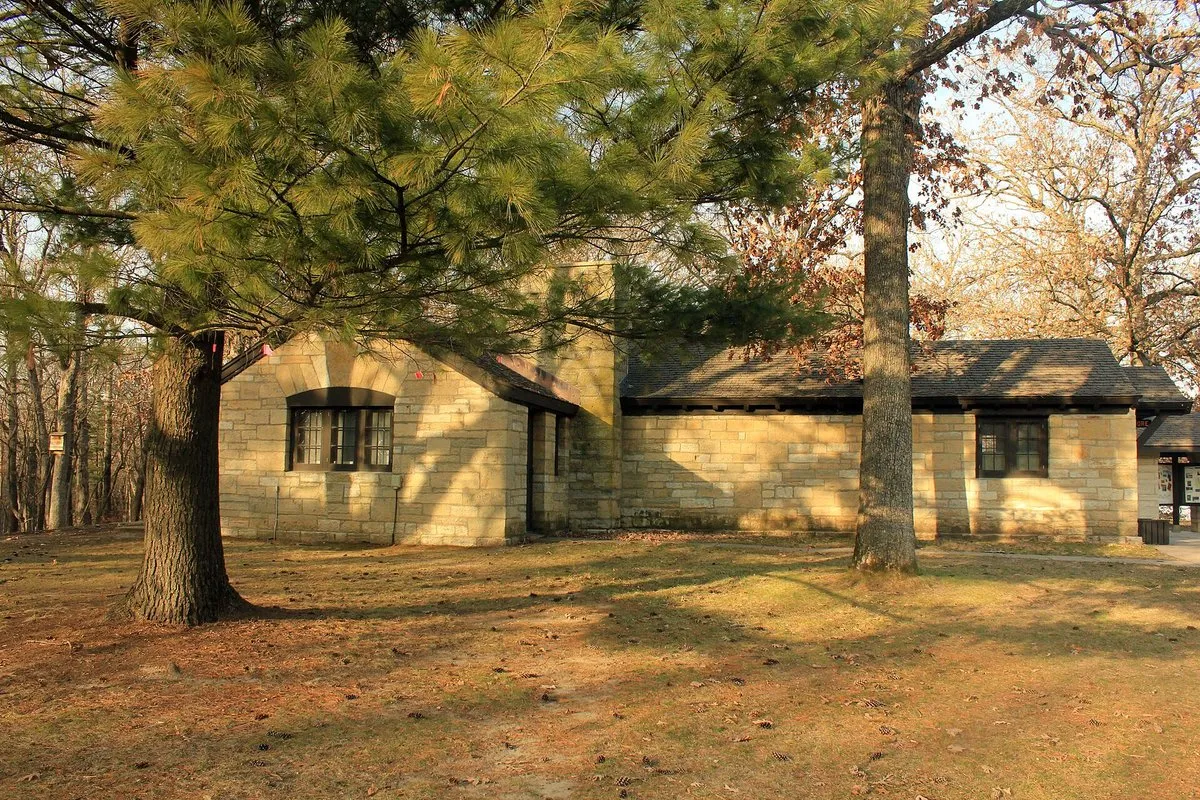
Pikes Peak State Park stands on a limestone bluff 500 feet above the Mississippi River in northeastern Iowa, just south of McGregor. Often described as the tallest bluff on the Mississippi River, that elevation shapes everything about the park. The views across the river into Wisconsin are expansive and genuinely dramatic, and the mix of hardwood forest, sandstone outcroppings, and hidden waterfalls makes it one of the most geologically interesting state parks in Iowa.
The Blufftop Views and Overlooks
The overlooks are the reason most people make the drive to Pikes Peak, and they deliver. The main overlook near the park entrance gives a sweeping view of the Mississippi floodplain, the backwater sloughs, and the Wisconsin bluffs on the far shore. In fall, when the hardwoods turn, the entire valley fills with color and the view becomes something people return for year after year. Several pull-offs and short paths along the bluff edge allow you to find quieter spots without much effort. Sunrise and late afternoon light are especially good here.
Waterfalls and Sandstone Formations
Bridal Veil Falls is one of the park’s most visited features, a delicate cascade that drops over a moss-covered dolomite ledge into a small pool. It sits along the trail system and is reachable without a strenuous hike, which makes it accessible to most visitors. The surrounding geology is worth paying attention to. The park sits on a transition between ancient sandstone layers and the limestone bluffs above, and you can see evidence of that layering in the exposed rock faces along the trails. The formations are fragile, so staying on marked paths protects both the rock and the plant communities that grow in the crevices.
Trails Through Forest and Ravine
The park has roughly 11 miles of marked trails ranging from easy blufftop walks to steeper routes that descend into wooded ravines. The longer loops take hikers through dense forest, past the waterfalls, and along the bluff edge with periodic views opening up through the trees. Trail surfaces vary from packed dirt to exposed root and rock in the steeper sections, so sturdy footwear is recommended. Most trails are for foot traffic only, though some sections allow mountain biking. Trail maps are available at the park office and at the main trailhead.
Camping
The campground at Pikes Peak is well-regarded for its setting within the trees, with reasonable separation between sites. There are both electric and full hook-up sites. Current posted rates list Standard Electric sites at $26 peak season and $20 off-season, Standard Full Hook-Up sites at $38 peak season and $20 off-season, and Youth Group Only sites at $20; displayed rates may exclude taxes or additional fees. Reservations can be made online through the Iowa DNR reservation system, which is strongly recommended on summer and fall weekends when the park fills quickly. The campground has modern restrooms and shower facilities. A basic playground is available near the camping area for families with young children.
Pet Policy
Pets are welcome at Pikes Peak State Park and must be kept on a leash no longer than six feet at all times. This applies on all trails, in the campground, and at the overlooks. Pets are not permitted inside any park buildings. Owners are expected to clean up after their animals. Given the rocky and uneven terrain on some trail sections, booties or careful foot-checking may be useful for dogs on longer hikes.
Wildlife to Be Aware Of
Timber rattlesnakes are present in the park and are most commonly encountered near rocky bluff edges and talus slopes where they sun themselves on warm days. They are not aggressive but will defend themselves if surprised or cornered. Watch where you place your hands and feet when scrambling near rock outcroppings, and give any snake you encounter plenty of space. Timber rattlesnakes are protected in Clayton County, where Pikes Peak State Park is located, so leave them alone.
Ticks are a consistent concern from spring through fall, particularly on wooded trails where vegetation brushes against legs and arms. Deer ticks, which can carry Lyme disease, are present throughout the park. Wearing long pants tucked into socks, using insect repellent with DEET, and doing a thorough tick check after any hike are practical steps that reduce your risk significantly. Removing a tick promptly, within the first 24 to 36 hours of attachment, greatly reduces the chance of disease transmission.
White-tailed deer are abundant in the area and frequently cross park roads, especially at dawn and dusk. Drive slowly on the access roads and on the highway approaching the park during those hours. Deer may move in groups, so if one crosses ahead of you, slow down and expect others to follow.
Practical Information
Pikes Peak State Park is located at the end of Pikes Peak Road, south of McGregor in Clayton County. McGregor is the nearest town, roughly two miles away, and offers food, lodging, and basic supplies. The park is accessible from McGregor via County Road X56 and Pikes Peak Road and is well-signed from downtown McGregor. Day use is free. Current posted rates list Standard Electric sites at $26 peak season and $20 off-season, Standard Full Hook-Up sites at $38 peak season and $20 off-season, and Youth Group Only sites at $20; displayed rates may exclude taxes or additional fees. Online reservations are available through the Iowa DNR. The park is open year-round, though winter access can be limited after heavy snow. Fall is the most popular season due to the foliage, and weekends in October book up well in advance.
Frequently Asked Questions
Is there an entry fee for Pikes Peak State Park?
Day use at Pikes Peak State Park is free. Camping costs $11 to $16 per night for non-electric sites and $16 to $21 per night for electric sites, with reservations available online through the Iowa DNR.
Are dogs allowed at Pikes Peak State Park?
Pets are welcome throughout the park, including on trails, at the overlooks, and in the campground, but must be kept on a leash no longer than six feet at all times. Owners are required to clean up after their animals, and pets are not permitted inside any park buildings.
What is the best time of year to visit Pikes Peak State Park?
Fall is the most popular season, when the hardwood forests along the Mississippi River valley fill with color and the blufftop views become especially dramatic. Fall weekends, particularly in October, fill up quickly and campsites should be reserved well in advance.
Are there rattlesnakes at Pikes Peak State Park?
Timber rattlesnakes are present in the park and are most often found near rocky bluff edges and talus slopes where they sun themselves on warm days. They are a protected species in Iowa and will not attack unprovoked, but visitors should watch where they place their hands and feet near rock outcroppings and give any snake a wide berth.