
Maquoketa Caves State Park
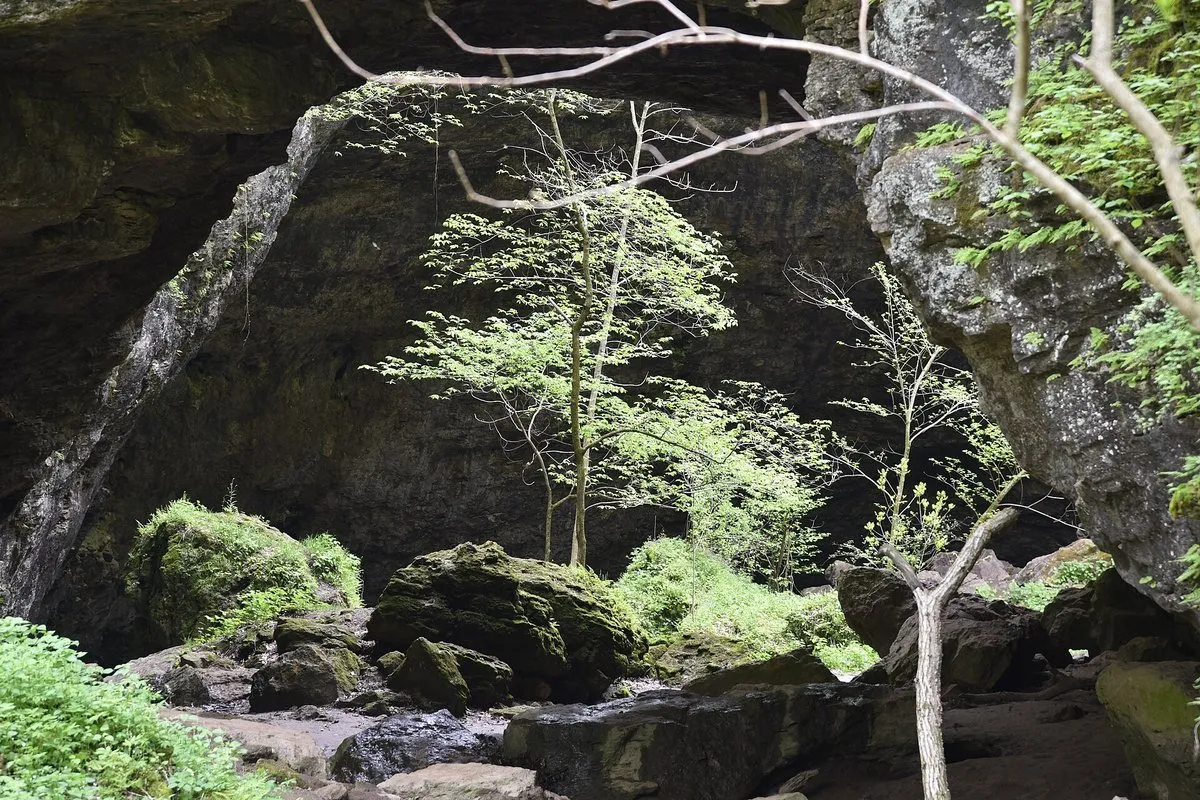
Maquoketa Caves State Park sits in the limestone hill country of eastern Iowa, about 6 to 7 miles northwest of the city of Maquoketa in Jackson County. It protects one of the most unusual geological landscapes in the state: a compact stretch of wooded bluffs cut through with 13 named limestone caverns, sinkholes, and natural bridges. Iowa is not a state people typically associate with caves, which makes this park a genuine surprise. It draws visitors who come specifically to walk through the caves themselves, and the experience holds up.
The Caves
The caves are the reason to come, and they range widely in character. Dancehall Cave is the largest and most accessible, stretching nearly 1,100 feet and lit with electric lighting along its main passage. Visitors can walk through without specialized equipment, though low ceilings and uneven floors mean you will be crouching and watching your footing throughout. Rainy Day Cave and Hernando’s Hideaway are smaller passages that require crawling and tight maneuvering.
Some caves are accessible to the general public on a self-guided basis. The caves are closed annually from November 15 through April 1 to protect overwintering bats. Check current conditions at the park office before heading into any of the gated caves, as access rules can shift by season.
Flashlights or headlamps are strongly recommended. The park does not provide lighting equipment, and even in Dancehall Cave the illuminated path has dark corners. Wear shoes with real ankle support and grip. The floors are wet in most conditions.
Hiking the Bluffs and Forested Ridge
The park has roughly six miles of hiking trails that connect the caves to each other and wind through the surrounding upland forest. The trail network passes natural bridges, overlooks above wooded ravines, and several sinkholes that drop unexpectedly from the forest floor. The Balanced Rock trail leads to a freestanding limestone formation that has become one of the park’s most photographed features.
Trail conditions vary significantly with weather. After rain, the clay-based sections become slick and the cave entrances collect standing water. Hiking poles are useful on the steeper bluff sections. Note that a section of trail between Window Cave and Match Cave is currently closed due to boardwalk damage, and visitors should check DNR park alerts before planning to cover the full network, though moving slowly through the caves adds time.
Camping at Maquoketa Caves
The park has a campground with both electric and non-electric sites. It is a functional, quiet campground in a wooded setting and works well as a base for a multi-day visit that lets you explore the caves at different times of day and in different light conditions. The campground has modern restrooms and shower facilities. Camping reservations are required for all campsites and are made through the Iowa state parks online reservation system, which is especially important during summer weekends and fall color season, when the park sees its heaviest use.
There is no restaurant or camp store on site. The city of Maquoketa is a short drive and has full services.
Pet Policy
Leashed pets are welcome on the park’s hiking trails and in the campground. The standard Iowa state park leash rule applies: pets must be on a leash no longer than six feet at all times. Pets are not permitted inside the caves. This is a firm restriction tied to both visitor safety in confined spaces and the protection of cave-dwelling wildlife, including bat colonies. Do not attempt to bring a dog into any cave entrance.
Wildlife to Be Aware Of
The caves shelter bat populations, and white-nose syndrome, a fungal disease that has killed bats across North America, is present in this park. Roosting bats should never be touched or disturbed. If you see a bat on the ground or behaving unusually, do not approach it and report it to park staff. Visitors can also help slow the spread of white-nose syndrome by not wearing clothing or gear inside these caves that has previously been inside other caves without being properly decontaminated.
Timber rattlesnakes are a realistic possibility on the rocky bluff sections of the trail system and along trail edges where warm limestone outcrops are exposed to sun. They are not aggressive but will defend themselves if surprised or cornered. Watch where you place your feet and hands, avoid reaching into rock crevices, and give any snake you encounter space to move away. Sightings are not common, but the habitat here is well suited to them.
The cave floors themselves are a physical hazard worth treating seriously. Low ceilings mean most adults will be bent over for extended stretches. Uneven and wet rock surfaces make footing unpredictable. Falls are a significant hazard on wet, uneven cave floors and steep trail sections. Sturdy, closed-toe footwear with good traction is strongly recommended. Sandals and casual sneakers are poor choices.
Practical Information
Maquoketa Caves State Park’s current Iowa DNR location address is 9688 Caves Rd., Maquoketa, IA 52060. The coordinates are approximately 42.1188, -90.7738. From Maquoketa, take US-61 north and follow signs west toward the park. The nearest full-service city is Maquoketa, roughly 6 to 7 miles away.
There is no vehicle entry fee for the park. Camping rates for 2026 are $20 per night for nonelectric sites and $28 per night for electric sites in peak season, with off-season rates of $15 and $23 respectively, and possible holiday or special-event fees. Reservations can be made through the Iowa State Parks reservation system at iowastateparks.reserveamerica.com.
The park is open year-round, but all caves are closed annually from November 15 through April 1 to protect hibernating bats. Spring and fall offer the best hiking conditions and lighter crowds than the peak summer season. Summer weekends are the busiest period, and arriving early in the morning gives you the best chance of exploring the caves without heavy foot traffic inside the passages.
Frequently Asked Questions
Is there an entry fee for Maquoketa Caves State Park?
There is no vehicle entry fee to visit Maquoketa Caves State Park. Camping is available for $11 per night for non-electric sites and $16 per night for electric sites, with reservations bookable at reserveiaparks.com.
Are dogs allowed in the caves at Maquoketa Caves State Park?
Leashed pets are welcome on the hiking trails and in the campground, but pets are not permitted inside any of the caves. The restriction exists for both visitor safety in confined spaces and to protect the bat colonies living within the cave system.
Do you need a flashlight to explore the caves?
Bringing a flashlight or headlamp is strongly recommended, as the park does not provide lighting equipment and even Dancehall Cave, which has electric lighting along its main passage, has dark corners throughout. Sturdy, closed-toe shoes with real traction are also required, since cave floors are wet and uneven in most conditions.
Are all the caves at Maquoketa Caves State Park open to visitors?
Some caves are open for self-guided exploration, while others have gates or seasonal closures in place to protect bat populations during hibernation. Checking current conditions at the park office before entering any gated cave is recommended, as access rules shift by season.