
Ledges State Park
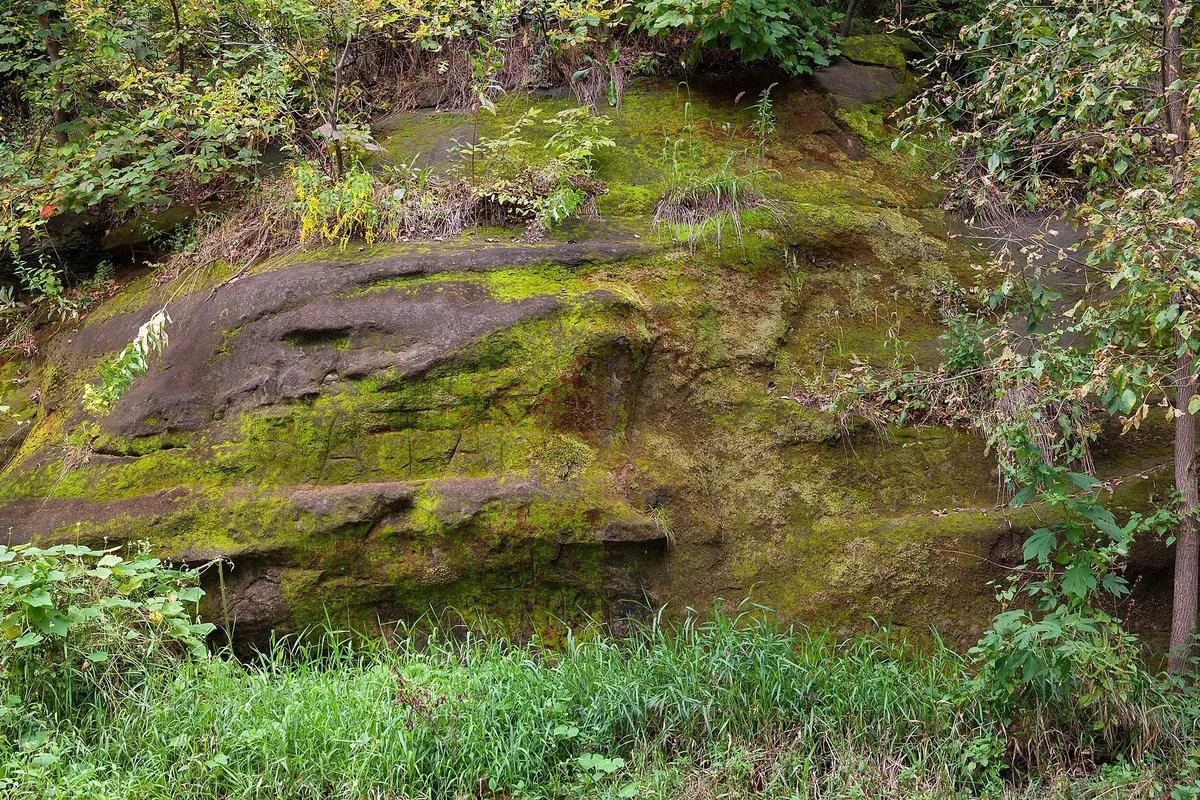
Ledges State Park sits along the Des Moines River about five miles south of Boone, Iowa, and it earns a reputation unlike almost any other park in the state. The park takes its name from the ancient sandstone and limestone ledges that form dramatic canyon walls, some rising nearly 100 feet above the canyon floor. The sandstone was deposited about 300 million years ago, and glacial meltwater began carving the park’s cliffs and valleys about 13,000 years ago, and the result is a landscape that feels genuinely surprising in a region more commonly associated with open farmland. Seasonal flooding, dense woodland, and the winding river corridor make this a place that looks meaningfully different depending on when you visit.
The Canyons and Sandstone Ledges
The geological formations are the central reason people come to Ledges. Pea’s Creek Canyon and the Lost Lake area cut through the sandstone bluffs, creating shaded corridors with exposed rock faces, dripping seeps, and fern-covered walls. The stone layers visible in the canyon walls record sediment deposited during the Pennsylvanian Period, roughly 300 million years ago, and you can trace the horizontal banding clearly from the canyon floor. Spring and early summer bring the most dramatic conditions, when water flows actively through the canyons and vegetation is thick on the ledges above. The lower canyon area is accessible to most visitors, though the footing on the canyon floor can be wet and uneven, especially after rain.
Trails Through Woodland and River Bluffs
The park has about four to four and a half miles of hiking trails, according to Iowa DNR, ranging from flat riverside paths to steep climbs up the bluff faces. The lower canyon trails are the most heavily used and offer the most direct access to the sandstone formations. Upper park trails wind through oak and hickory forest along the bluff tops, with occasional views down toward the Des Moines River. Some sections involve significant elevation change and loose or rocky footing, so sturdy footwear matters more here than at many Iowa parks. Trails are not paved, and the lower canyon paths flood periodically, sometimes closing for days or weeks at a time. Checking current trail conditions before visiting is worthwhile, particularly in spring. There is no dedicated bike trail, and bikes are not permitted on the hiking paths.
Camping
The park has both modern and non-electric campsites spread across the upper portion of the park, away from the canyon area. Sites are set in a wooded environment and offer reasonable privacy compared to more open campgrounds. The campground has modern restrooms, showers, a trailer dump station, and a playground; a vault toilet is listed at the Upper Picnic Area. A reservation is required for campsites; the campground accepts reservations March through November and is closed December through February. Ledges is one of the more popular state parks in central Iowa and fills quickly on weekends.
The Des Moines River and Picnic Areas
The Des Moines River runs along the park’s western boundary, and a river access area at the bottom of the park allows for fishing and informal wading. Anglers target catfish, bass, and other warm-water species along this stretch. The park has five picnic areas and two reservable shelters, some of which can be reserved for group use. These tend to stay busy on summer weekends, so arriving early helps secure a spot. A small area near the river provides an informal launch point for canoes and kayaks, though river conditions vary considerably with rainfall and season.
Pet Policy
Leashed pets are welcome throughout the park, including on trails and in the campground. The leash must be six feet or shorter and under control at all times. Pets are not permitted in park buildings. Owners are expected to clean up after their animals.
Wildlife to Be Aware Of
Venomous snakes may occur in suitable habitat in Iowa, so watch where you step and where you place your hands when scrambling on or near rock surfaces. They are most active during warm months and tend to use rocky ledge areas, canyon trails, and sun-exposed outcroppings. If you see one, give it a wide berth and move on. Venomous snakes are protected in Iowa and should never be handled or harassed.
White-tailed deer are common throughout the park and are particularly active near trailheads and campground edges at dawn and dusk. They are not aggressive toward people but can behave unpredictably if startled at close range. Keep a respectful distance and be attentive when driving through the park in low-light conditions.
Ticks are a consistent presence in the wooded and tall-grass sections of the park from spring through fall. Wearing long pants and closed-toe shoes, treating clothing with permethrin, and performing a thorough tick check after hiking all reduce risk. Pay particular attention to the scalp, behind the knees, and along waistbands. Remove any attached ticks promptly using fine-tipped tweezers.
Practical Information
Ledges State Park is located at 1515 P Ave., Madrid, IA 50156, though it is most commonly accessed from Boone, approximately five miles to the north. Access is via Highway 17 and E-52/250th Street, or use the official address: 1515 P Ave., Madrid, IA 50156. The park entrance is well-marked. Use approximate park coordinates around 41.9833, -93.8869, or the official address 1515 P Ave., Madrid, IA 50156.
There is no vehicle entrance fee for Iowa residents. No nonresident vehicle entrance permit is required for Ledges State Park; Iowa’s nonresident vehicle permit requirement applies only to Lake Manawa and Waubonsie state parks. Peak-season Ledges camping rates are $17 for non-electric, $25 for electric, and $35 for full hookup sites; off-season rates are $12 for non-electric and $20 for electric/full hookup. Reservations can be made through the Iowa DNR reservation system at iowastateparks.reserveamerica.com, or call 877-427-2757.
The park is open year-round, though winter access is limited and lower canyon trails may be inaccessible during icy or high-water conditions. Peak visitation runs from May through October. The park office can be reached for current conditions and availability through the Iowa DNR.
Frequently Asked Questions
Are dogs allowed at Ledges State Park?
Leashed pets are welcome throughout the park, including on trails and in the campground, as long as the leash is six feet or shorter and the pet is under control at all times. Pets are not permitted inside park buildings, and owners are expected to clean up after their animals.
Is there an entry fee for Ledges State Park?
Iowa residents pay no vehicle entrance fee to enter the park. Out-of-state visitors are required to purchase a non-resident vehicle permit, and camping fees range from $15 per night for non-electric sites to $35 per night for sites with electric hookups.
What is the best time of year to visit Ledges State Park?
Spring and early summer offer the most dramatic canyon conditions, with active water flowing through Pea's Creek Canyon and Lost Lake Canyon and thick vegetation on the ledges above. Peak visitation runs from May through October, though the lower canyon trails can flood and close during this period, so checking trail conditions before visiting is worthwhile.
Are there rattlesnakes at Ledges State Park?
Timber rattlesnakes are present in the park and are most active during warm months, particularly in rocky ledge areas, canyon trails, and sun-exposed outcroppings. Visitors should watch where they step and where they place their hands when near rock surfaces, and should give any rattlesnake they encounter a wide berth, as the species is protected in Iowa and should never be handled or harassed.