
Waimea Canyon State Park
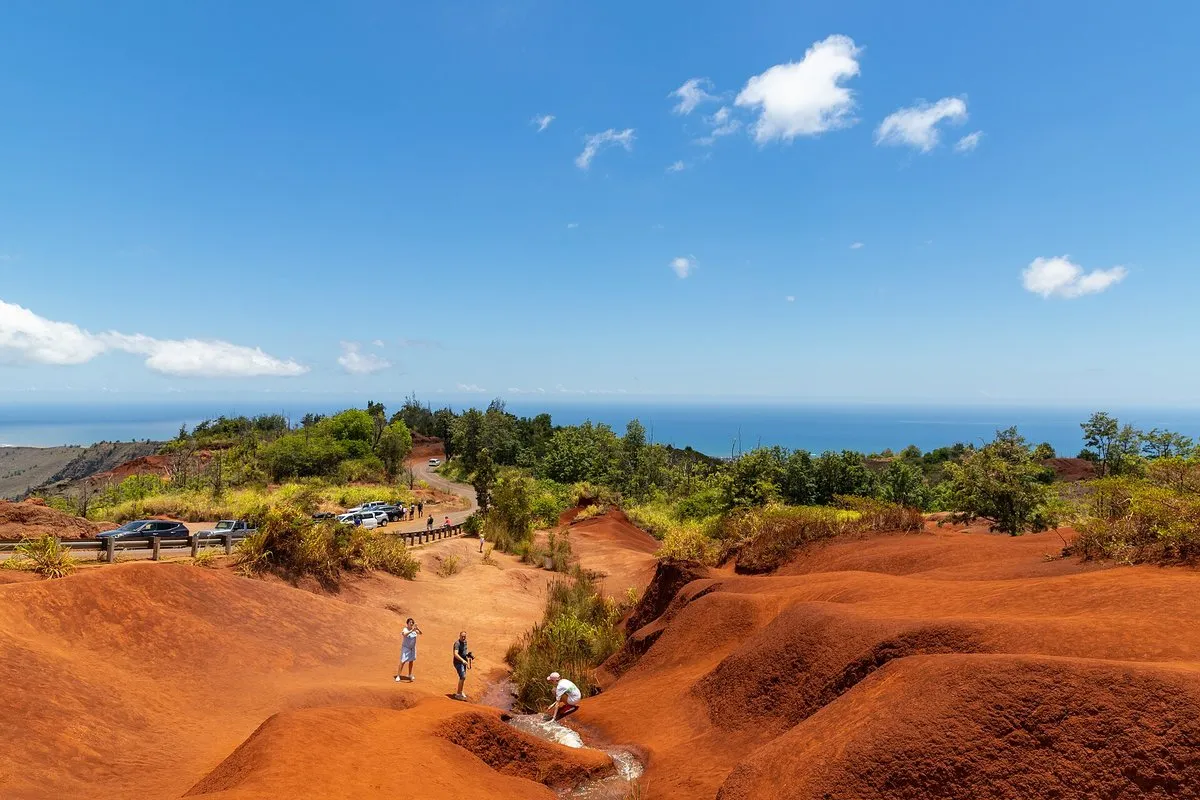
Waimea Canyon State Park stretches across the western interior of Kauai, preserving a gorge that drops roughly 3,600 feet and runs about ten miles long. Volcanic activity and millions of years of erosion carved this landscape into layered bands of red, brown, and green that shift color with the light and weather. The canyon draws comparisons to the Grand Canyon of Arizona, and while the scale differs, the visual impact is comparable. Few places in Hawaii offer this kind of dramatic, open geology, and the park remains a popular natural site on the island for good reason.
The Canyon Lookouts
The lookouts are what most visitors come for, and they deliver immediately. Puu Ka Pele Lookout and Puu Hinahina Lookout sit along Kokee Road and offer sweeping views down into the canyon without requiring any hiking. Note that Puu Hinahina parking lot is scheduled to close for road work May 25 to 29 and June 15 to 19, 2026. On clear days you can see Niihau and the Pacific from Puu Hinahina, while Na Pali Coast views are farther up the road in Kokee State Park. The light changes throughout the day, with morning often bringing the sharpest colors and afternoon clouds sometimes obscuring the rim. Rain is frequent here, so arriving early improves your odds of an unobstructed view. Even on overcast days, mist moving through the canyon creates its own kind of drama.
Trails Into and Along the Canyon
Hiking is the best way to move beyond the roadside experience and understand the canyon’s actual scale. The Canyon Trail is one of the most direct ways to move beyond the lookouts, following the canyon rim to the top of Waipoo Falls rather than descending to the canyon floor. The route is about 1.8 miles one way, or roughly 3.5 to 4 miles round trip, and involves uneven terrain and real elevation change, so hikers should be prepared for muddy footing, exposed sections, and a steady return. The Cliff Trail, a short spur from the Canyon Trail, reaches an exposed ridge with one of the best unguided views in the park.
For something less demanding, the Iliau Nature Loop near the canyon’s entrance is an easy, 0.3-mile loop lined with native plants, including the iliau, a rare plant found only on Kauai. It connects to the Kukui Trail, which descends all the way to the canyon bottom and Waimea River. The Kukui Trail is roughly 2.5 miles one way, or about five miles round trip, and drops about 2,000 feet, making it a serious commitment that most day hikers should assess honestly before starting.
Native Plants and Forest Character
The vegetation changes significantly as you gain elevation along the park road. Lower sections are dry and scrubby, dominated by introduced grasses and koa. Higher up, toward the boundary with Kokee State Park, native ohia lehua and ferns become more common. The iliau seen on the nature loop is a particular point of ecological interest, related to the silversword and found nowhere else on earth. The park’s interior forest supports a relatively intact native plant community by Hawaiian standards, though invasive species remain an ongoing management challenge.
Pet Policy
Leashed pets are allowed where not posted otherwise, including many outdoor areas of the park. Dogs must remain on a leash no longer than six feet at all times. Pets are not permitted in restaurants, pavilions, campgrounds, lodges, beaches, swimming areas, or wherever posted. Owners are responsible for cleaning up after their animals. Given the trail conditions and wildlife present, keeping dogs well controlled is especially important here.
Wildlife to Be Aware Of
Nene, the Hawaiian state bird, are commonly seen near the lookouts and along the road through the park. They appear comfortable around people and will approach vehicles and picnic areas. Do not feed them. Feeding nene disrupts their natural foraging behavior and can make them dependent on human handouts, which ultimately harms their survival. Keep a respectful distance and do not allow children or dogs to approach them.
Feral goats live on the canyon slopes and are visible from the lookouts and trails. They are generally not aggressive toward people, but their movement on steep terrain can dislodge rocks and send debris falling below. If you are hiking in the canyon bottom or along trails beneath exposed slopes, be alert to sound from above and move away from the base of cliff faces if you hear anything shifting. This risk increases after rain when the ground is loose.
Flash flooding is a serious and underappreciated hazard in the canyon. Kauai receives some of the highest rainfall totals on earth, and heavy rain in the upper watershed can send water surging down the canyon floor with little warning, even when skies at your location appear clear. Trails near Waimea River and the canyon bottom should be avoided when rain has been falling anywhere in the area. Check the forecast before descending, have an exit plan, and turn back if water levels begin to rise.
Practical Information
Waimea Canyon State Park is located on the western side of Kauai, roughly 15 miles northeast of the town of Waimea. The primary access route is Waimea Canyon Drive (Highway 550), which climbs from the town of Waimea up to the canyon rim and continues into Kokee State Park. The road is paved throughout and passable by standard vehicles, though it is narrow in places, road work can affect access, and fog can reduce visibility at higher elevations.
Parking at official Waimea Canyon and Kokee State Park lots costs $10 per vehicle for non-residents, and non-residents also pay a $5 per-person entrance fee. Children 3 and under are free. Hawaii residents with a valid Hawaii driver license or state ID do not pay entrance or parking fees. Parking tickets are valid for both Waimea Canyon and Kokee State Park lots. No annual state park pass currently covers this parking fee. No advance reservations are required for day use. The park is open year-round, though temporary parking closures and trail conditions can affect access, especially in wet weather. Restroom facilities are available at the main lookouts. Kokee State Park, which sits at the top of the same road, offers cabin rentals and a lodge with food service for those planning a longer stay in the area.
Frequently Asked Questions
What is the entry fee for Waimea Canyon State Park?
Non-resident visitors pay a $10 per vehicle parking fee, and no annual state park pass currently covers this cost. Hawaii residents pay reduced rates, and there is no separate admission charge beyond the parking fee.
Are dogs allowed at Waimea Canyon State Park?
Leashed pets are welcome on the trails and throughout the park, provided the leash is no longer than six feet at all times. Pets are not permitted inside any park facilities or buildings, and owners must clean up after their animals.
What is the best time of day to visit the canyon lookouts?
Morning typically offers the sharpest colors and the best chance of an unobstructed view, since afternoon clouds frequently roll in and can obscure the rim. Rain is common at this elevation, so arriving early improves your odds significantly.
Is it safe to hike the Canyon Trail to the canyon floor?
The Canyon Trail descends roughly 800 feet over about four miles round trip, and hikers should be prepared for a strenuous return climb. Flash flooding is also a real hazard at the canyon bottom and along stream trails after heavy rain, so checking weather conditions before descending is strongly recommended.