
Na Pali Coast State Wilderness Park
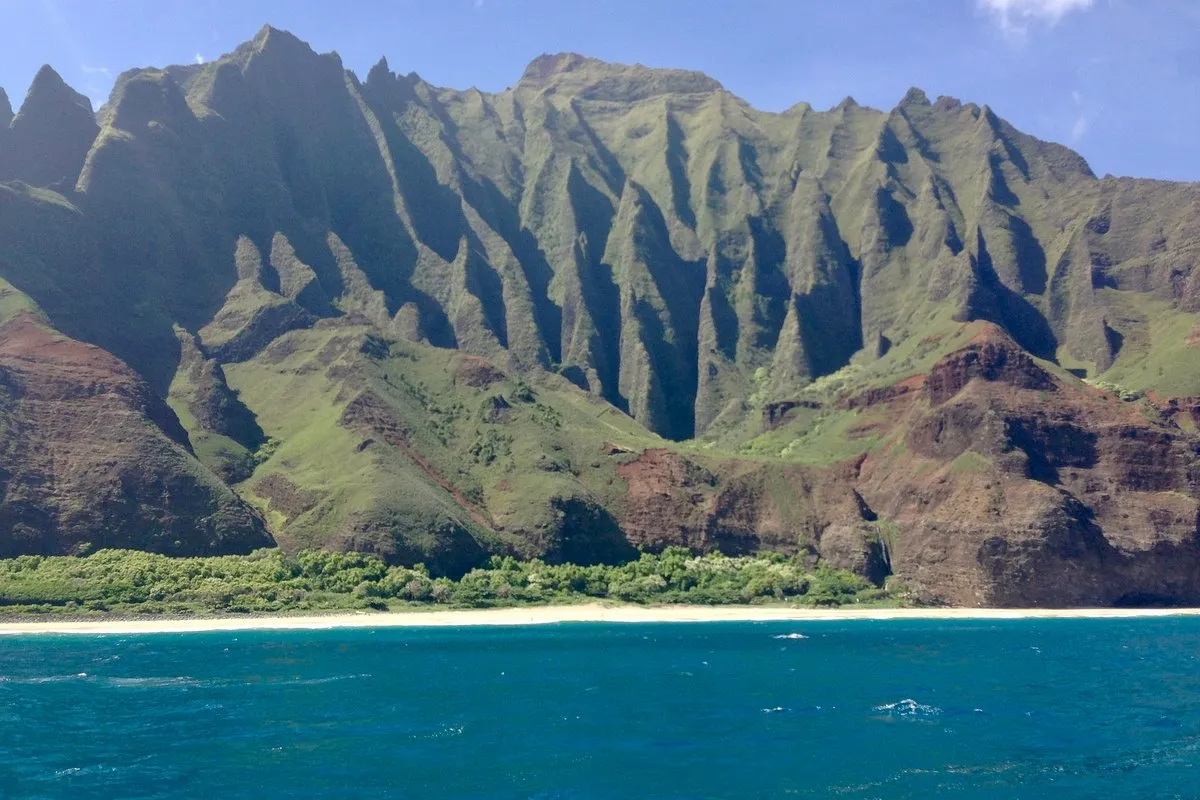
Along the northwest shore of Kauai, the Na Pali Coast stretches roughly 17 miles of sheer green sea cliffs rising thousands of feet directly from the Pacific. Carved over millions of years of erosion, the cliffs fold into narrow valleys once home to Native Hawaiian settlements, and the coastline remains one of the most visually dramatic and ecologically intact places in the Hawaiian Islands. There are no roads through this section of coast. Getting here requires commitment, whether that means hiking, paddling, or viewing from a boat or helicopter.
The Kalalau Trail
The 11-mile Kalalau Trail is the primary reason most visitors come to Na Pali Coast State Wilderness Park. Beginning at Ke’e Beach at the end of Highway 560, the trail follows the cliffs through five major valleys before reaching Kalalau Beach. The first two miles to Hanakapiai Beach are the most accessible; day users access this stretch with Haena State Park entry reservations, while Hawaii residents enter with valid Hawaii ID, making this stretch the busiest section of trail. Beyond Hanakapiai, a valid Na Pali Coast camping permit is required for all travel.
The full trail to Kalalau is strenuous. Elevation changes are significant, footing is often muddy, and several stream crossings can become dangerous or impassable during and after rain. Hikers should plan for two days minimum if camping at Kalalau. The trail passes through Hanakoa Valley at the midpoint, where a short side trail leads to a waterfall. Kalalau Valley at the trail’s end offers one of the most remote beach campsites in Hawaii, backed by towering ridgelines and accessible only on foot or by sea.
Sea Access: Kayaking and Boat Tours
From May 15 through September 7, when ocean swells calm enough to allow safe paddling, sea kayakers typically launch from Hāʻena and pull out at Polihale State Park, traveling with prevailing currents and trade winds. This is a serious undertaking suited to experienced paddlers only. Landing on Na Pali beaches in rough conditions is hazardous, and conditions can change quickly. Most paddlers who camp along the coast do so as part of a multi-day kayak trip.
Boat tours and zodiac raft tours operate out of Port Allen and Hanalei and offer a way to see the sea caves, waterfalls, and cliff faces without hiking. Some tours operate year-round, especially from west- and south-side ports, but departures, sea-cave access, and north-shore operations from Hanalei vary by season and conditions. Note that commercial operators are not permitted to provide drop-off or pick-up transport to Kalalau Beach or Mīloliʻi camping areas; legal shore access for campers is limited to hiking the Kalalau Trail and permitted kayak landings at authorized sites during the open season. Helicopter tours from Lihue provide aerial views of the entire coast, including interior valleys not visible from the trail or sea.
Camping at Kalalau and Milolii
The park has three authorized camping areas. Kalalau Beach, reached by the Kalalau Trail, is the larger and more well-known site. Camping is allowed in designated areas only, and sites fill quickly for peak season weekends. Hanakoa Valley, near the midpoint of the trail, is an authorized stopover covered by a valid Kalalau permit, though permits are not issued specifically for Hanakoa. Milolii, on the south end of the coast, is the park’s most remote camping area and is accessible only by sea. There is no trail to Milolii; reaching it requires a permitted kayak landing or water taxi. The site has a small beach and basic facilities. Sea access generally aligns with calmer summer swells, typically May through September. A Na Pali Coast camping permit is required and reserved through explore.ehawaii.gov.
All camping requires advance permits through the Hawaii State Parks reservation system. Permits can be purchased online or in person at State Parks district offices and are limited per night. Fires are not permitted. Water is available from streams but must be treated before drinking. Campers should pack out all waste and plan carefully, as facilities are primitive and limited and there is no quick exit if conditions change or emergencies arise.
Pet Policy
DLNR guidance for Na Pali Coast State Wilderness Park is to not bring pets into the park. State park rules prohibit pets on beaches and in campgrounds. Leave pets at home when visiting this area.
Wildlife to Be Aware Of
Flash flooding is a serious and recurring hazard on the Kalalau Trail. The stream crossings, including Hanakapiai Stream near the trailhead, can rise rapidly during rain and become life-threatening within minutes. Do not attempt crossings when water is moving fast or rising. Check weather forecasts before departing, and be prepared to wait out rain at a safe elevation.
Ocean conditions along the Na Pali Coast are unpredictable and regularly dangerous. Rip currents, shore break, and large swells affect all coastal access points, including Kalalau Beach. Swimmers and waders have been seriously injured and killed along this coast. Never turn your back on the water, and avoid entering the ocean unless conditions are clearly calm.
Feral goats and pigs are present throughout the wilderness area. Goats may approach campers looking for food or salt. Pigs are more reclusive but root up trail edges and vegetation. Neither animal is aggressive under normal circumstances, but feeding or approaching them is discouraged. Pigs in particular can cause falls if they bolt across a narrow trail section.
Kalalau had a documented norovirus outbreak in 2024. DOH advises treating all water, careful handwashing, and not visiting while ill. Treat all water with a method appropriate for backcountry pathogens before drinking or cooking, and avoid sharing surfaces or utensils. Symptoms of norovirus include vomiting and diarrhea and can dehydrate backpackers quickly in a remote setting with no medical support nearby.
Practical Information
Na Pali Coast State Wilderness Park is on the northwest shore of Kauai. The Kalalau Trailhead begins at Ke’e Beach at the end of Kuhio Highway (Highway 560) in Haena. The nearest town with services is Hanalei, roughly 9 miles east. Haena State Park controls trailhead access: Hawaii residents enter free with valid Hawaii ID, while non-residents need advance entry reservations and, if parking, parking fees as well. Camping permits are required for any overnight stay in the wilderness area and carry a per-night, per-person fee. Camping permits must be reserved in advance through the Hawaii State Parks system at explore.ehawaii.gov. Haena entry, parking, and shuttle reservations are handled through gohaena.com. Camping spots are limited and often book out weeks or months ahead for summer and holiday weekends. Winter months bring heavier rainfall and larger swells, which can make the trail and sea access more difficult but also reduce crowds.
Frequently Asked Questions
Is there an entry fee to visit Na Pali Coast State Wilderness Park?
There is no vehicle entry fee for the park itself. However, non-residents accessing the Kalalau Trailhead through Hāʻena State Park need paid entry and parking reservations through gohaena.com; Hawaiʻi residents enter and park free with a valid Hawaiʻi ID on a first-come, first-served basis. Camping permits for Nāpali are separate and are reserved through the Explore Outdoor Hawaiʻi system at explore.ehawaii.gov.
Are dogs allowed on the Kalalau Trail?
DLNR guidance for Na Pali Coast State Wilderness Park is to not bring pets into the park. State park rules prohibit pets on beaches and in campgrounds. Leave pets at home when visiting this area.
How do I reserve parking at the Kalalau Trailhead?
Non-residents parking at the Kalalau Trailhead must book both entry and parking in advance through gohaena.com, which manages access to Haena State Park where the trailhead begins. Hawaii residents park free with a valid Hawaii ID on a first-come, first-served basis, with no advance reservation needed.
How do I get a camping permit for Na Pali Coast?
Camping permits for Na Pali Coast State Wilderness Park, including Kalalau Beach and Milolii, are reserved online through the Explore Outdoor Hawaii system at explore.ehawaii.gov, with permits available up to 90 days in advance. A valid camping permit is required for any travel beyond Hanakapiai Beach.
Is the water safe to drink from streams along the Kalalau Trail?
Stream water is available at campsites and along the trail but must be treated before drinking. Kalalau had a documented norovirus outbreak in 2024; the Hawaiʻi DOH advises treating all water, practicing careful handwashing, and not visiting while ill.