
Iao Valley State Monument
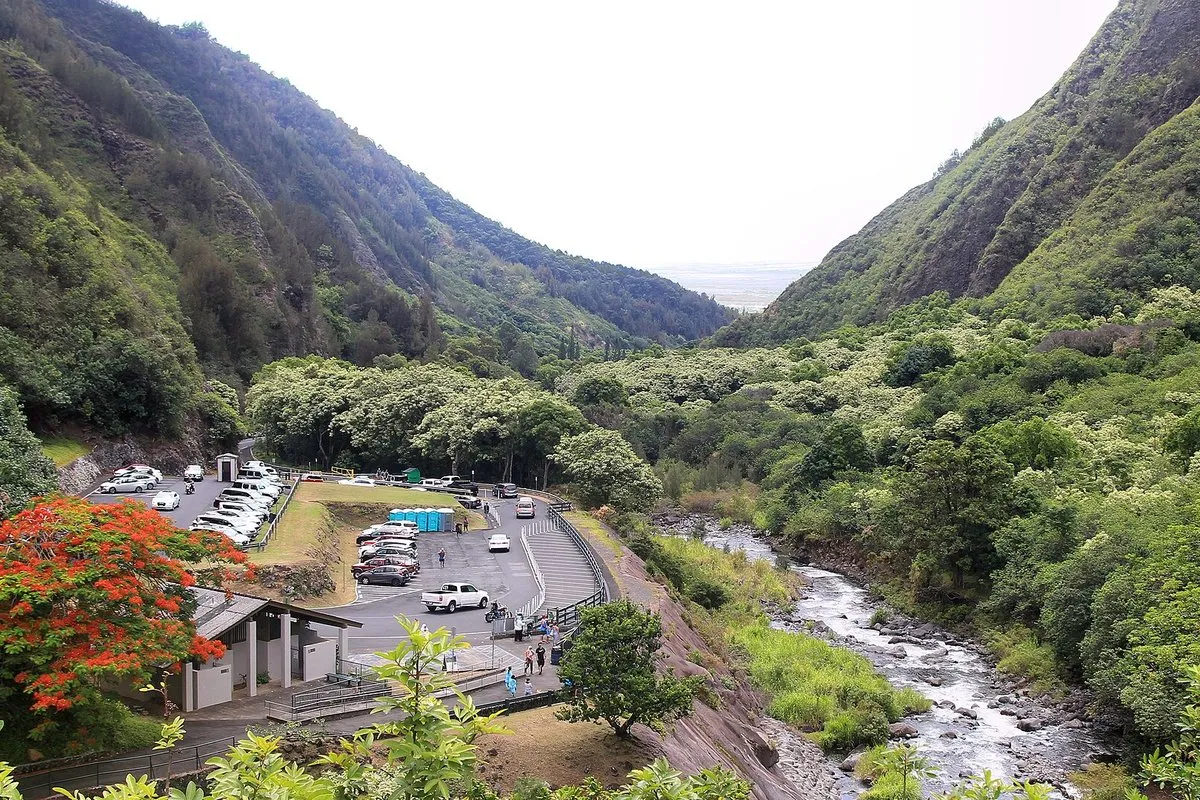
Iao Valley State Monument protects one of Maui’s most recognizable natural landmarks: the Iao Needle, a 1,200-foot verdant rock pinnacle rising sharply from the valley floor. Located in the West Maui Mountains just a few miles west of Wailuku, the valley receives some of the highest rainfall totals in the Hawaiian Islands, which keeps its forests dense and deeply green year-round. Beyond its visual drama, Iao Valley carries significant cultural and historical weight as a sacred site in Native Hawaiian tradition and the location of a pivotal 1790 battle that helped Kamehameha I unify the Hawaiian Islands.
The Iao Needle and What It Means
The Iao Needle is the undisputed reason most visitors come. Geologically, it is a resistant volcanic remnant left standing after centuries of erosion carved away the surrounding material. To Native Hawaiians, the needle is sacred, associated with Kanaloa, the Hawaiian god of the ocean, and considered a place deserving reverence. Interpretive signs throughout the park explain both the geological forces that shaped the formation and its cultural significance. The monument is not a place for casual scrambling or off-trail exploration. Staying on designated paths is both a safety requirement and a matter of respect for the site’s heritage.
Trails and Overlooks
The paved Iao Needle Lookout Trail and Ethnobotanical Loop is the primary route through the monument, running roughly 0.6 miles and accessible to most visitors, including those with strollers or limited mobility on the lower sections. The trail crosses a bridge over Iao Stream and climbs to a viewing platform that frames the needle directly. A short but steeper upper path connects to additional overlooks with broader views across the valley. The ethnobotanical loop near the park entrance features labeled native Hawaiian plants and provides quiet context for understanding how the valley’s resources supported generations of Hawaiian life. The trails are not long by hiking standards, but the surroundings, including the stream, the towering ridgelines, and the canopy overhead, make the experience feel substantial.
History and Cultural Significance
The Battle of Kepaniwai in 1790 took place in this valley when Kamehameha I, aided by Western cannons, defeated the Maui forces of Kalanikupule. The battle was so deadly that the stream reportedly ran red, and the name Kepaniwai translates roughly to “the damming of the waters.” A nearby county park, Kepaniwai Heritage Gardens, sits just down the road and commemorates that history alongside the contributions of Hawaii’s diverse immigrant communities, though it is currently closed for storm-related safety repairs. Within the state monument itself, the cultural weight of the valley is woven into the interpretive materials and the overall atmosphere. Visitors are encouraged to approach the site thoughtfully rather than treating it purely as a photo opportunity.
Pet Policy
Dogs are not allowed on the Iao Needle Lookout Trail and Ethnobotanical Loop, the monument’s main visitor route, and pets are generally not permitted within the monument. Leave animals at home or make arrangements before visiting. Service animals are exempt and follow standard accessibility rules.
Wildlife to Be Aware Of
Mosquitoes are abundant throughout the valley, particularly near Iao Stream and in the shadier sections of the trail. The dense, moist environment provides ideal conditions for them year-round. Bring and apply insect repellent before entering the valley, and consider long sleeves if you are sensitive to bites.
Flash flooding is a serious and legitimate hazard here. The valley is narrow, and Iao Stream can rise with frightening speed when rain falls on the upper slopes of the West Maui Mountains, even when the sky above the parking area looks clear. Pay attention to posted warning signs, do not enter the stream, and move to higher ground immediately if you hear water rising or see the stream level changing. Rangers and park staff take flooding risks seriously, and closures during heavy rain events are not uncommon.
Feral chickens and mongoose are a familiar sight along the trails and around the parking area. Both species are established throughout Maui and pose no direct threat to visitors, but feeding them is discouraged. Feeding wildlife disrupts natural behavior and creates habituation that causes problems for future visitors and for the animals themselves.
Practical Information
Iao Valley State Monument is located at the end of Iao Valley Road in Wailuku, on the island of Maui. From downtown Wailuku, follow Highway 32 west, which becomes Iao Valley Road and leads directly to the park. The drive from Kahului, the nearest major town, takes roughly 20 minutes.
The monument is currently closed for safety improvements and is scheduled to reopen June 26, 2026. When open, non-resident entry and parking require an advance timed-entry reservation through gostateparks.hawaii.gov. Non-residents without a reservation will be turned away, while Hawaii residents with a valid Hawaii ID or driver’s license do not need one. The entry fee is $5 per person for non-residents, with children 3 and under admitted free. Hawaii residents enter free with valid ID. Non-resident parking is $10 per vehicle and must be purchased online with the reservation; Hawaii residents park free with valid Hawaii ID or driver’s license.
Under normal operations, the monument is open daily from 7:00 a.m. to 6:00 p.m., though hours are subject to change and the park closes periodically due to flooding or maintenance. Check the Hawaii DLNR website before your visit, especially during the winter months when rainfall is heaviest. The site has restroom facilities near the parking area but no food vendors or overnight accommodations.
Frequently Asked Questions
How much does it cost to enter Iao Valley State Monument?
Entry is $5 per person for non-residents and $2 per person for Hawaii residents, with a separate parking fee also applying. Advance timed-entry reservations are required and must be made through gostateparks.hawaii.gov.
Are dogs or pets allowed at Iao Valley State Monument?
Pets of any size or temperament are not permitted at Iao Valley State Monument, so arrangements should be made before visiting. No exceptions are made at the gate.
How long is the trail at Iao Valley and is it easy to walk?
The primary route is the paved Iao Valley Loop Trail, which runs roughly half a mile and is accessible to most visitors, including those with strollers or limited mobility on the lower sections. A shorter but steeper upper path leads to additional overlooks with broader views across the valley.
Is flash flooding a danger at Iao Valley?
Flash flooding is a serious hazard at Iao Valley because the narrow valley channels can fill quickly during heavy rain, which is frequent given that the area receives some of the highest rainfall totals in the Hawaiian Islands. Visitors should heed all posted warnings and be prepared to exit the valley promptly if conditions change.