
Cape Henlopen State Park
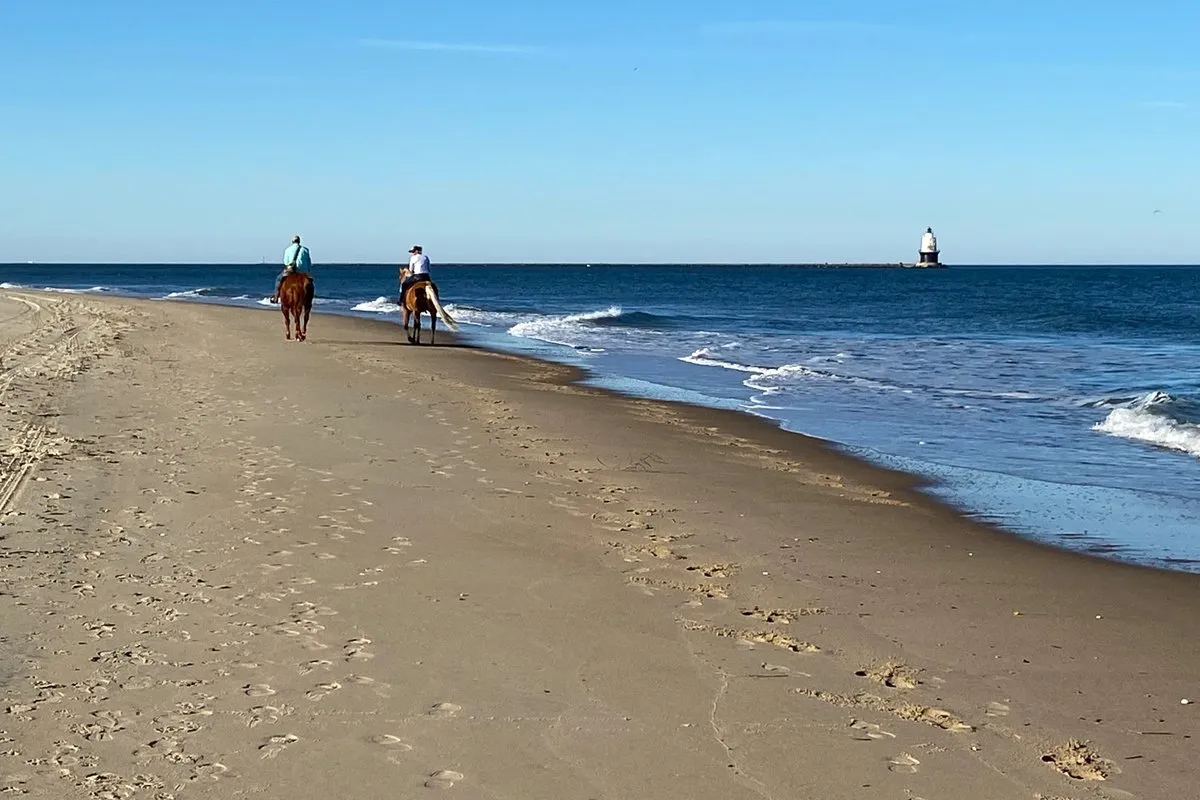
Where Delaware Bay meets the Atlantic Ocean, Cape Henlopen State Park occupies the tip of a peninsula that has shaped maritime history, sheltered migrating birds, and drawn swimmers and campers for generations. The park covers more than 5,000 acres of ocean beach, bay beach, maritime forest, freshwater wetlands, and some of the tallest sand dunes on the East Coast. Its position at a major migratory corridor makes it one of the premier birding destinations in the mid-Atlantic, and its mix of swimming, camping, fishing, and cycling gives it unusual range for a coastal park.
Ocean Beaches and Swimming
The ocean-side beach is the park’s biggest draw from Memorial Day through Labor Day. A guarded swimming area at the main beach offers lifeguard coverage during peak season, and the wide sandy strand gives plenty of room to spread out. Showers, changing facilities, and a snack bar support the summer crowd. The water is typically cooler than beaches further south, which many visitors consider a welcome relief in July and August. Outside of summer, the beach remains open and offers long, uncrowded walks along the surf line.
The Great Dune and Walking Dunes Area
The Great Dune rises roughly 80 feet above sea level and is one of the largest sand dunes on the Atlantic coast north of Cape Hatteras. A paved path leads to the top, where views extend across the bay, the ocean, and the rooftops of Lewes to the north. The Walking Dunes area nearby shows how active dune migration slowly overtakes vegetation, leaving ghost forests of buried trees poking out of the sand. These formations are striking and worth a stop even for visitors primarily interested in swimming or birding.
Birding at The Point and Along the Flyway
Cape Henlopen sits on the Atlantic Flyway, and the convergence of bay and ocean habitat concentrates species variety in a relatively small area. The Point, at the northern/eastern tip of Cape Henlopen where Delaware Bay meets the Atlantic Ocean, is a critical nesting area for beach-nesting shorebirds and also draws remarkable concentrations of migrating raptors, songbirds, and wading birds in spring and fall. The park’s mix of dune scrub, maritime forest, and open water means a single morning walk can turn up a wide range of species. Experienced birders and casual observers alike find the park productive across all seasons.
Camping and Fort Miles History
The campground offers more than 150 sites, including electric hookups and a dedicated area for tents. Sites are spread across a wooded setting that provides shade and some privacy, unusual for a coastal park where dune camping is often exposed. Reservations are strongly recommended from late spring through early fall.
Within the campground and nearby, the remnants of Fort Miles offer a different dimension to the park. Fort Miles was an active coastal defense installation during World War II, and several bunkers, a battery, and a fire control tower still stand. The Fort Miles Historical Area includes a museum with military artifacts, artillery displays, and interpretive exhibits, including exhibits related to the surrender of German U-boat U-858, about the fort’s role in protecting the Delaware Bay shipping lanes. It is an undervisited highlight that rewards anyone who takes time to explore beyond the beach.
Cycling and Paved Trails
A paved multi-use trail runs through the park and connects to the Junction and Breakwater Trail, which extends into Lewes. The flat terrain and traffic-free paths make cycling accessible to families and casual riders. Free bike loans are available through the park’s Borrow-a-Bike/Bike Barn program when it is operating; visitors should check current hours before relying on it. The trail system also works well for inline skating and walking.
Pet Policy
Pets are welcome in Cape Henlopen State Park but must be kept on a leash no longer than six feet at all times. Dogs are not permitted in designated state park swimming/sunbathing beach areas from May 1 through September 30. Pets are allowed only in permitted areas, such as designated surf-fishing beaches, and must stay out of swimming/sunbathing areas during the restricted season, dunes, bird-nesting closures, designated picnic areas, nature trails, public buildings, and other posted restricted areas. Pet owners are required to clean up after their animals throughout the park.
Wildlife to Be Aware Of
The Point is closed to public access from March through September to protect nesting piping plovers, least terns, and American oystercatchers. All three species are sensitive to human disturbance during nesting, and entering the closure area is prohibited and subject to fines. Check posted signage and stay well clear of any fencing marking protected zones.
During spring, horseshoe crabs emerge in large numbers along the bay beach to spawn, particularly around the full and new moons in May and June. This event draws thousands of migrating shorebirds that feed on the eggs. The crabs are harmless, but their shells and bodies can create an uneven, slippery surface near the waterline. Watch your footing and avoid stepping on or handling the crabs.
Sea nettles, a species of jellyfish, are a regular presence in Delaware Bay shallows during summer. Their sting causes a burning, itchy rash. If you plan to swim on the bay side, check current conditions with park staff, rinse any sting with saltwater, and avoid rubbing the affected area.
White-tailed deer move through the campground and along trail edges regularly, especially at dawn and dusk. While they appear calm and accustomed to people, feeding them is harmful and prohibited. Keep food secured in vehicles or bear boxes and watch for deer crossing the park roads, particularly in low-light conditions.
Practical Information
Cape Henlopen State Park is located at 15099 Cape Henlopen Drive, Lewes, Delaware. Lewes is the nearest town, roughly two miles from the park entrance. From the north, take Route 1 south to Lewes and follow signs to the park. The Cape May-Lewes Ferry terminal is nearby, making the park accessible from New Jersey without driving through the Baltimore-Washington corridor.
Daily entrance fees for Cape Henlopen in the 2026 fee season are $10 for Delaware-registered vehicles and $20 for out-of-state vehicles; fees are in effect March 1 through November 30. A Delaware State Parks annual pass covers entry. The park is open year-round, though some facilities and guarded beach areas operate seasonally. Campsite reservations can be made through the Delaware State Parks reservation system and are recommended well in advance for summer weekends.
Frequently Asked Questions
What is the entry fee for Cape Henlopen State Park?
Entry costs $10 per vehicle for Delaware residents and $20 per vehicle for out-of-state visitors during the March 1 through November 30 fee season. A Delaware State Parks annual pass covers entry for all participating state parks.
Are dogs allowed on the beach at Cape Henlopen State Park?
Dogs are not permitted on designated swimming and sunbathing beach areas from May 1 through September 30, but are welcome on unguarded beach areas and trails outside restricted zones. Leashes must be no longer than six feet at all times, and owners are required to clean up after their pets throughout the park.
Where can I find tide charts for Cape Henlopen State Park?
NOAA publishes tide predictions for the Lewes, Delaware station, which is the closest reference point for Cape Henlopen, and is a reliable source for planning beach walks, fishing, and bay swimming. Tide timing is especially worth checking during the May and June horseshoe crab spawning season, when large numbers of crabs and shorebirds concentrate along the bay beach around full and new moons.
Can you visit Fort Miles at Cape Henlopen State Park?
Fort Miles is open to visitors within Cape Henlopen State Park and includes walkable bunkers, a restored battery, a fire control tower, and a museum housed in Battery 519 with military artifacts and a restored submarine. The site documents the fort's World War II role in protecting Delaware Bay shipping lanes and is considered an undervisited highlight of the park.