
Trap Pond State Park
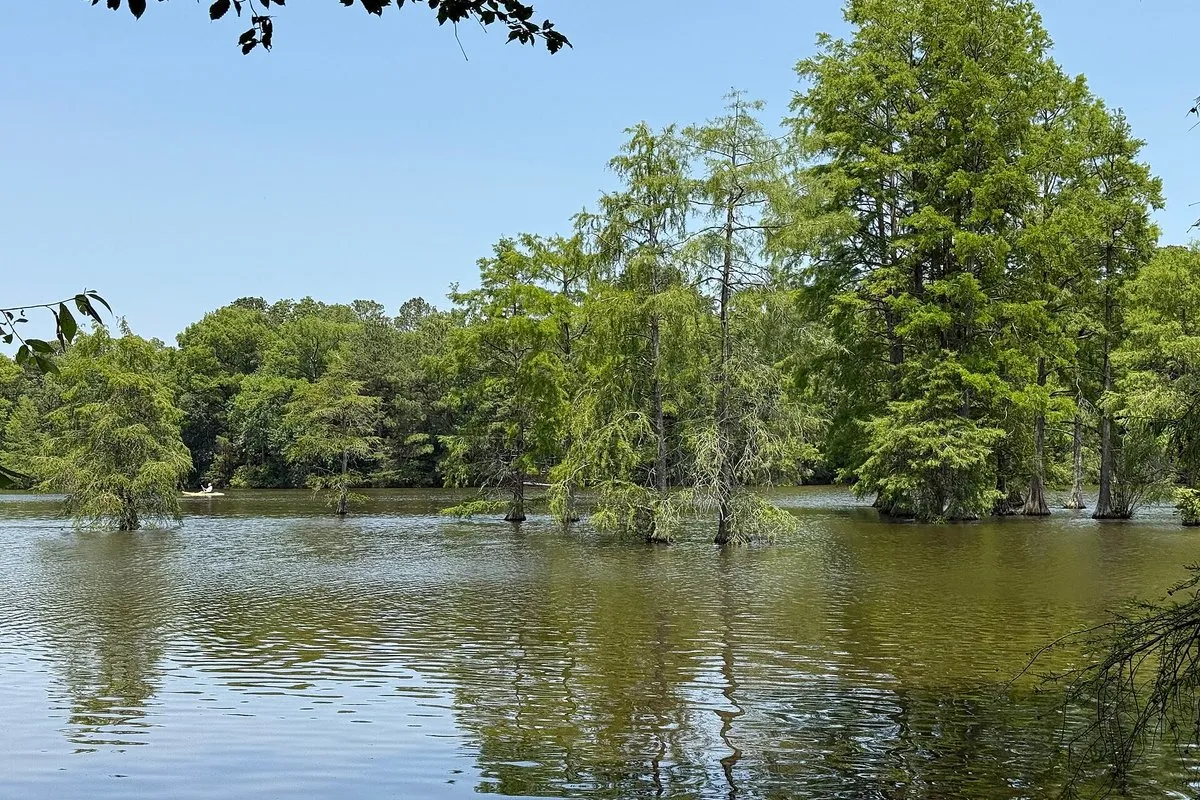
Trap Pond State Park protects roughly 4,000 acres of forested wetland in the heart of Sussex County, Delaware, anchored by a 90-acre pond and the northernmost natural baldcypress swamp in the United States. The park draws visitors who want to paddle through second-growth bald cypress stands, with some older trees, explore quiet trails through bottomland forest, and camp overnight in a setting that feels more like the Deep South than the mid-Atlantic. That botanical anomaly, cypress trees thriving at the northern edge of their range, gives the park a character unlike anything else in the region.
Paddling the Baldcypress Swamp
The water is the reason most people come. Renting a canoe, kayak, or pedal boat from the park concession, or launching your own, puts you directly among baldcypress trees that rise from the shallows on flared, buttressed bases. Their knobby root projections, called knees, push up through the water surface in clusters around each trunk. On calm mornings the reflections are nearly perfect, and the overall effect is quietly surreal.
The marked canoe trail runs approximately 8 miles through Trap Pond and into the connecting canal system. Paddlers can take shorter loops or push out into longer stretches depending on time and fitness. The swamp channels are narrow in places and require some basic maneuvering, but no whitewater skills are needed. Boat rentals are available seasonally. Fishing from a canoe or kayak is popular, with largemouth bass, crappie, chain pickerel, and bluegill all present in the pond.
Trails Through Bottomland Forest
More than 12 miles of trails wind through the park’s upland and wetland edges. The Cypress Point Trail is the most visited, a short loop that circles along the pond shore and takes walkers close to the largest cypress specimens without requiring a boat. The longer Boundary Trail and Island Trail extend further into the forested interior, passing through stands of Atlantic white cedar and mixed hardwoods.
Trail conditions vary seasonally. Portions of the lowland routes can be wet or muddy after rain, and boardwalk sections help in the soggiest spots. The terrain is flat throughout, making the trails accessible for most fitness levels.
Camping
Trap Pond has one of the more appealing campgrounds in the Delaware state park system. Sites are spread through a wooded area away from the main day-use crowds, with options ranging from basic tent sites to water-and-electric sites for RVs, with a dump station available. Cabin rentals are also available and tend to book up well in advance during summer months.
The campground is open year-round, though services and availability can vary seasonally. Reservations are strongly recommended from Memorial Day weekend through Labor Day, and many weekends in May and September fill quickly as well.
Pet Policy
Leashed pets are welcome on trails and in most outdoor areas of the park. The leash must be no longer than six feet. Pond swimming is prohibited at Trap Pond, and pets are not permitted in most cabins or yurts, except designated dog-friendly cabins; check the reservation details and pet fees. Owners are required to clean up after their animals. Given the proximity to swamp edges and brushy trail margins, checking pets for ticks after any outing is strongly advisable.
Wildlife to Be Aware Of
Ticks are present throughout the park from early spring through late fall and are especially common along trail margins and in brushy, low-growth areas near the water. Wearing long pants, treating clothing with permethrin, and doing a full-body tick check after time outdoors will reduce risk considerably. Lyme disease and other tick-borne illnesses are documented in this region.
Copperhead snakes live in the park, particularly along wetland edges and in wooded areas with leaf litter and downed logs. They are venomous and should not be approached or handled. Copperheads are generally not aggressive and will move away if given the chance, but watching where you step and avoiding reaching under logs or rocks is important precaution.
Snapping turtles are common along the pond and canal edges. Large individuals can move surprisingly fast on land and have a powerful bite. Do not attempt to pick them up or get close for photos. If you encounter one on a trail or boat launch, give it space and wait for it to move on its own.
Mosquitoes are a significant nuisance in the swamp areas, particularly at dawn and dusk. In summer, they can be heavy enough to make unprotected time near the water genuinely unpleasant. Bringing insect repellent and wearing light, long-sleeved clothing during early morning or evening paddling will make a real difference.
Practical Information
Trap Pond State Park is located at 33587 Baldcypress Lane, Laurel, Delaware 19956, near the coordinates 38.5368, -75.4663. The nearest town is Laurel, approximately 5 miles to the northwest. From U.S. Route 13 near Laurel, take Route 24 east to County Road 449/Trap Pond Road, which leads directly into the park. Signage along Route 24 is clear.
Entry fees apply from March 1 through November 30. Delaware-registered vehicles pay $5 per vehicle at inland parks; out-of-state vehicles pay $10 per vehicle. No fee is collected during the winter months, though some facilities are reduced or closed during that period.
Camping and cabin reservations can be made through the Delaware State Parks reservations system at destateparks.com. The park office can be reached at (302) 875-5153. Boat rentals and the camp store operate on a seasonal schedule, typically Memorial Day weekend through Labor Day, with limited availability in spring and fall.
Frequently Asked Questions
What is the entry fee at Trap Pond State Park?
Delaware-registered vehicles pay $4 per vehicle, and out-of-state vehicles pay $8 per vehicle, with fees collected from March 1 through November 30. No fee is charged during the winter months, though some facilities are reduced or closed during that period.
Are dogs allowed at Trap Pond State Park?
Leashed pets are welcome on trails and in most outdoor areas of the park, provided the leash is no longer than six feet. Pets are not permitted on designated swimming beaches or inside rental cabins, and owners are required to clean up after their animals.
Can you rent a canoe or kayak at Trap Pond?
Canoes, kayaks, and pedal boats are available to rent from the park concession on a seasonal schedule, typically operating from Memorial Day weekend through Labor Day with limited availability in spring and fall. Visitors can also launch their own watercraft to explore the approximately 8-mile marked canoe trail through the pond and connecting canal system.
Are there snakes at Trap Pond State Park?
Copperhead snakes live in the park, particularly along wetland edges and in wooded areas with leaf litter and downed logs, and they are venomous. They are generally not aggressive and will move away if given space, but visitors should watch where they step and avoid reaching under logs or rocks.