
Delaware Seashore State Park
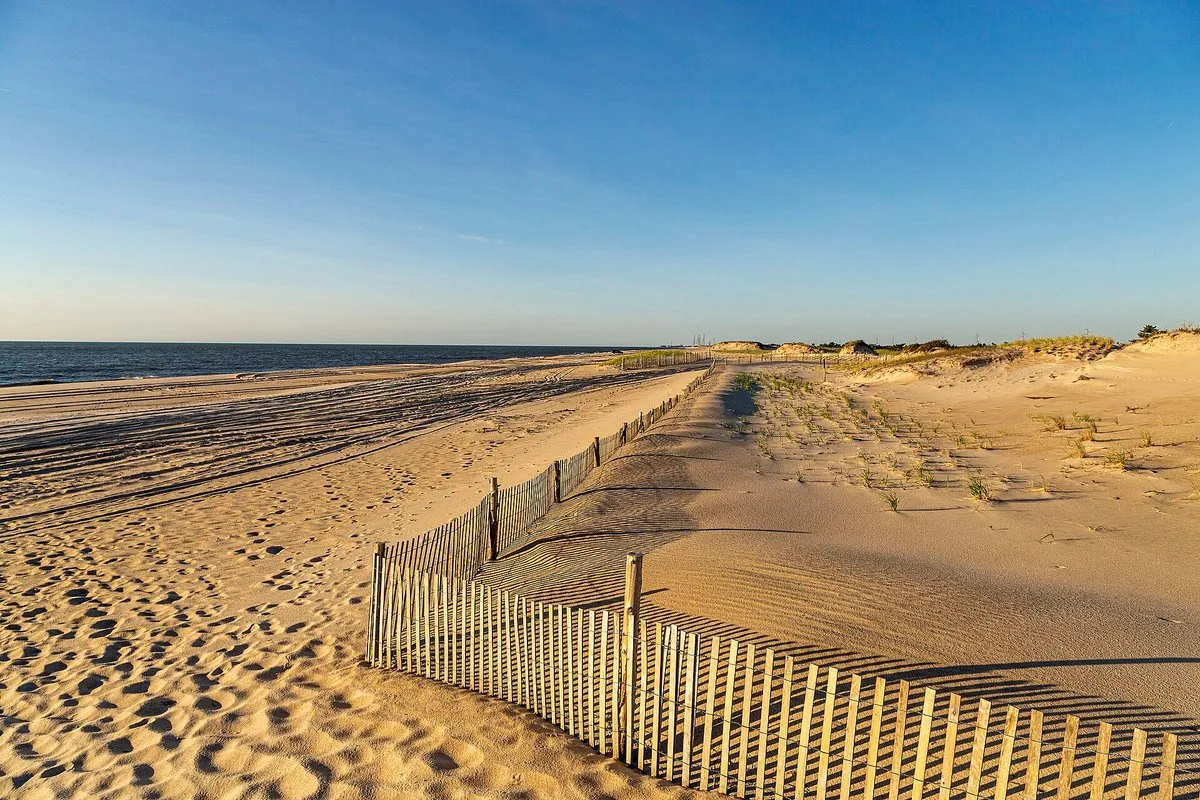
Delaware Seashore State Park stretches along a narrow barrier strip between the Atlantic Ocean and Rehoboth Bay and Indian River Bay, covering roughly six miles of coastline just south of Rehoboth Beach. The park protects one of the last undeveloped stretches of Delaware’s Atlantic shoreline, and that combination of open ocean beach on one side and calm bay waters on the other gives it a character that few Mid-Atlantic parks can match. Swimmers, anglers, campers, and birdwatchers all find reasons to come here, and the park draws visitors from across the region throughout the warmer months.
Atlantic Ocean Beaches and Swimming
The ocean beach is the primary reason most people visit, and it delivers a classic Delaware shore experience without the commercial development that lines much of the nearby coastline. The surf runs moderate to strong depending on conditions, and lifeguards patrol designated swimming areas during summer months. The beach is wide and sandy, backed by low dunes that the park actively works to protect. Visitors are asked to stay on marked paths through dune areas rather than cutting across vegetation, which holds the dunes together against storm erosion. Tower Road is one of the major ocean beach access points; South Inlet is another major beach access area. Both fill quickly on summer weekends, so arriving early on busy days makes a real difference.
Surf Fishing Along the Atlantic and Bay Shoreline
Surf fishing is deeply embedded in the culture of this park, and serious anglers come here specifically for access to both the ocean surf and the bay side. The ocean beach produces bluefish, striped bass, flounder, and kingfish depending on the season, while the bay side offers calmer water and different species including weakfish and croaker. Most anglers need a Delaware recreational fishing license and FIN number to fish saltwater from shore; limited exemptions apply, including for the operator of a vehicle with a valid Delaware surf-fishing vehicle permit in designated state park surf-fishing areas. Regulations on size and bag limits apply and are worth checking before you go. The park has designated fishing access areas, and some spots along the inlet see consistent action through fall when migrating fish move through.
Camping at the Park
Delaware Seashore offers two campgrounds, North Inlet and South Inlet, plus cottages at Indian River Marina, giving visitors the rare experience of sleeping close to both ocean and bay. Sites range from full hookup RV sites to more basic tent-friendly spots, and some locations put campers within easy walking distance of the beach. The campgrounds stay busy from late spring through Labor Day, and reservations through the Delaware state park reservation system are strongly recommended for any summer weekend. Showers and restroom facilities are available in the main camping areas. Camping here in the shoulder seasons, particularly September and October, tends to be quieter and the weather often remains warm enough for swimming while crowds thin considerably.
Coastal Trails and Bay Access
A few shorter trails and access paths wind through the park’s interior, connecting the ocean side to the bay shore and passing through sections of coastal wetland. These are not long hiking trails by any measure, but they offer a way to move through different habitat types and get away from the beach crowds for a stretch. The bay shoreline is calmer and shallower than the ocean side, popular for kayaking, paddleboarding, and wading. Some visitors launch kayaks from the bay side to explore the edges of the marsh or paddle toward the inlet. Wildlife viewing tends to be more productive on the bay side, where shorebirds and wading birds concentrate around the marsh edges.
Pet Policy
Pets are allowed only in designated and permitted areas and must be kept on a leash no longer than six feet and under control; pets are restricted from areas such as picnic areas, nature trails, public buildings, and posted and designated closures. Dogs are not permitted on the ocean swimming beaches during the summer season, generally from May 1 through September 30. Outside May 1 through September 30, leashed pets may access permitted ocean beach areas, subject to posted closures and restrictions; during the summer season, pets may still be allowed in some non-guarded or surf-fishing areas where permitted. Pets are permitted in campgrounds with the same leash requirement and must not be left unattended at campsites. Owners are responsible for cleaning up after their pets throughout the park.
Wildlife to Be Aware Of
Jellyfish are a routine presence in the ocean surf during summer, and stings are common enough that checking water conditions before swimming is a good habit. Most stings from the species found here are irritating rather than dangerous, but people with allergies should be cautious. On the bay side, horseshoe crabs come ashore in large numbers during May to spawn, particularly around new and full moons. Horseshoe crabs do not bite or sting; avoid stepping on them, and if helping one that is overturned, lift it by the sides of the shell rather than by the tail. Watch your footing along the bay shoreline in late spring all the same. Mosquitoes and biting flies are persistent in the salt marsh and bay areas from late spring through summer, and insect repellent is worth bringing if you plan to spend time on the bay side or in any vegetated areas away from the ocean breeze. The park also supports nesting osprey and various shorebirds that nest directly on beach and marsh areas. Marked nesting zones should be respected, as human disturbance during nesting season can cause birds to abandon eggs or chicks.
Practical Information
Delaware Seashore State Park is along Route 1 between Dewey Beach and Bethany Beach; the park office and main address at 39415 Inlet Road is about six miles south of Rehoboth Beach. The nearest town with full services is Rehoboth Beach. For 2026, daily entrance fees at Delaware beach and ocean state parks are $10 for Delaware-registered vehicles and $20 for out-of-state vehicles, charged from March 1 through November 30. Annual passes are available and can save money for frequent visitors. Entry is free during the off-season from December through the end of February. Campsite reservations can be made through the Delaware State Parks online reservation system, and summer bookings should be made well in advance. The park is open year-round, though services and facilities are reduced outside the main season.
Frequently Asked Questions
What is the entry fee for Delaware Seashore State Park?
Entry costs $5 per vehicle for Delaware-registered vehicles and $10 per vehicle for out-of-state vehicles, charged from March 1 through November 30. Annual passes are available, and entry is free for everyone from December through the end of February.
Are dogs allowed on the beach at Delaware Seashore State Park?
Dogs are not permitted on the ocean swimming beaches from May 1 through September 30, but leashed pets on a six-foot leash or shorter may access the ocean beach outside of that window. Pets are welcome in campgrounds as long as they are leashed and not left unattended at a campsite.
Where can I find tide charts for Delaware Seashore State Park?
NOAA's tide predictions tool at tidesandcurrents.noaa.gov is the most reliable source, using the Indian River Inlet station nearest to the park. Checking tides is especially useful for surf fishing the inlet and for timing bay-side walks during horseshoe crab spawning season in May.
Are jellyfish a problem at Delaware Seashore State Park?
Jellyfish are a routine presence in the ocean surf during summer, and stings are common enough that checking water conditions before you swim is a good habit. Most stings from species found here are irritating rather than dangerous, though visitors with allergies should take extra caution.