
Tonto Natural Bridge State Park
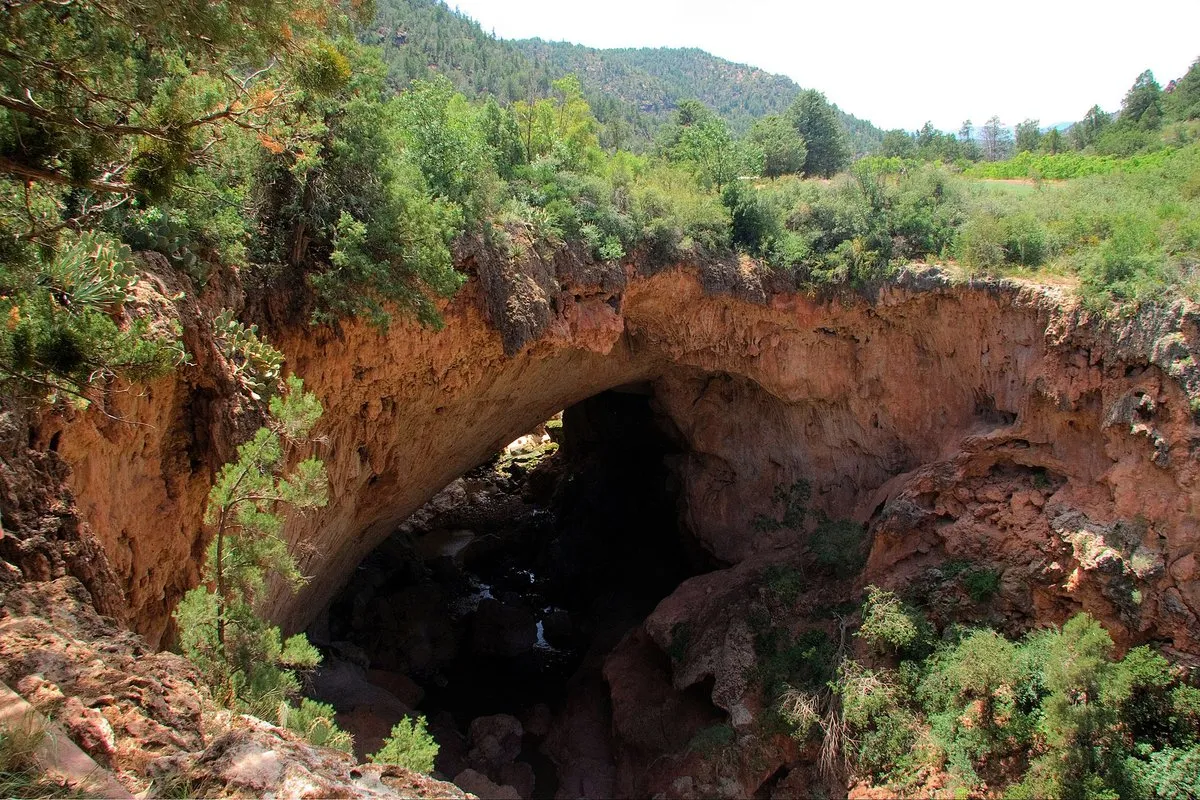
Tonto Natural Bridge State Park protects one of the most remarkable geological formations in the American Southwest. Located in the Mogollon Rim country of central Arizona, the park is home to what is believed to be the world’s largest natural travertine bridge, standing 183 feet high over a tunnel that measures about 150 feet at its widest point. The result of thousands of years of calcium carbonate deposits building up over a natural tunnel, the bridge is genuinely unlike anything else in the state park system.
The Travertine Bridge and Creek Area
The bridge is the reason people come here, and it delivers. Four short but steep trails and a paved walking path offer different perspectives on the formation. The paved walking path leads to rim-level viewpoints above the bridge. The Anna Mae, Gowan, and Pine Creek trails descend toward the canyon and bridge area, while the Waterfall Trail leads to a waterfall cave. Visitors can hike down to creek level and look up through the opening to the sky above, though swimming and wading are not permitted under the natural bridge itself. The sensation of standing inside a living geological structure is hard to describe.
Pine Creek stays cool even in summer, and swimming is allowed downstream in Pine Creek at your own risk, just not under the natural bridge. The bridge and the creek are the centerpiece of any visit, and most people spend the bulk of their time at water level rather than on the rim.
The Historic Lodge
A rustic historic lodge sits near the trailheads. Built in 1925-26 by the Goodfellow family, who originally homesteaded the land, the lodge is listed on the National Register of Historic Places. It is not available for overnight stays, but when tours are offered, visitors can explore the structure with a ranger or volunteer guide by reservation, and read interpretive materials about the family’s early settlement here. The lodge adds a layer of human history to the park that goes beyond geology, and it is worth a few minutes of your time before or after the canyon descent.
Picnicking on the Rim
The park has a pleasant picnic area on the rim near the parking lot. Ramadas, restrooms, and shade make it a comfortable place to eat before or after the hike down. The park store sells snacks and drinks, but there is no full food concession on site, so bring your own lunch and water. The picnic area, paved path, and viewpoints are the primary spaces where leashed pets are permitted, since dogs are not allowed on the canyon trails.
Pet Policy
Pets are welcome in the parking area, rim-level picnic areas, paved path, and viewpoints on a maximum six-foot leash. They are not permitted on any of the canyon trails that descend to the bridge and creek. The steep, uneven terrain makes this a firm rule worth planning around if you are traveling with a dog.
Wildlife to Be Aware Of
Rattlesnakes are present throughout the canyon, particularly on the rocky trail surfaces and along the creek banks. They are most active in warmer months and tend to rest in shaded crevices or on sun-warmed rocks. Watch where you step on every trail, avoid reaching into rock piles or brush, and give any snake you encounter a wide berth. The trails are short but the terrain is uneven, and moving carefully is the right approach regardless of snake concerns.
The travertine surfaces around the bridge and creek are slippery. The same mineral deposits that built the bridge create a surface that becomes extremely slick when wet, and the rocks around the creek require careful footing. Closed-toe shoes with good grip and ankle support are strongly recommended over bare feet or sandals. Take your time when moving around the creek, especially if you are bringing children down to the water.
Practical Information
Tonto Natural Bridge State Park is located off Arizona Highway 87, approximately 10 miles north of Payson. From Payson, head north on AZ-87 and watch for the signed turn onto Forest Road 583A, which descends into the canyon toward the park entrance. The road is paved but steep and winding, and it is not suitable for large RVs or vehicles towing trailers.
The nearest full-service town is Payson, which has grocery stores, gas stations, restaurants, and lodging. Payson is about a 90-minute drive from the Phoenix metro area via AZ-87.
Entry fees are $10 per adult (age 14 and older), $5 per youth (ages 7 through 13), and free for children age 6 and under. The park is a day-use facility only, with no overnight camping on site.
The park is generally open year-round, with regular hours of 9:00 a.m. to 5:00 p.m. and last entry at 4:00 p.m. Trails close one hour before the park closes. Hours can shift around holidays and trails occasionally close on short notice, so check the park’s current notices before you go. The bridge and creek area draws crowds on warm-weather weekends, and arriving early on those mornings is the best way to secure parking and avoid the heaviest foot traffic at the bridge. Parking can be limited on busy days, so an early start is genuinely worthwhile.
Frequently Asked Questions
Are dogs allowed at Tonto Natural Bridge State Park?
Leashed pets are welcome in the parking lot and picnic areas but are not permitted on the canyon trails, including the Anna Mae, Gowan, Pine Creek, and Waterfall Trails.
How much does it cost to enter Tonto Natural Bridge State Park?
Admission is $7 per adult (age 14 and older), $4 per youth (ages 7 to 13), and free for children age 6 and under.
Can you swim at Tonto Natural Bridge State Park?
Swimming and wading are not permitted under the natural bridge itself, but swimming is allowed at your own risk in Pine Creek downstream from the bridge.
Can you stay overnight at the Goodfellow Lodge?
The historic Goodfellow Lodge is available for group reservations and overnight stays, and also houses the park visitor center with interpretive exhibits about the bridge, travertine, and the history of the Goodfellow family homestead.