
Kartchner Caverns State Park
Kartchner Caverns State Park protects one of the most remarkable cave systems in the United States, located in the Whetstone Mountains of southern Arizona near the town of Benson. Discovered in 1974 by two cavers who kept the cave secret from the public for more than a decade to protect it, the cavern was eventually acquired by Arizona State Parks in 1988 and opened to the public in 1999. What makes it extraordinary is that it is a living cave, meaning its formations are still actively growing. The humidity inside hovers near 99 percent, the speleothems remain moist and vibrant, and the cave ecosystem remains carefully protected, with many formations that have been growing for tens of thousands of years. This is not a dusty relic. It is a working geological process that visitors can witness firsthand.
The Living Caverns and Cave Tours
The cave itself is the reason most people make the drive to Kartchner. Two standard tour routes take visitors through different sections of the cavern system. The Rotunda and Throne Room Tour passes through chambers containing some of the most dramatic formations in the cave, including Kubla Khan, the tallest and most massive cave column in Arizona. The Big Room Tour is the longer of the two and is seasonal, focusing on a section of the cave where a large bat colony roosts during warmer months. When bats are present, that tour closes to protect the colony.
Formations inside the cavern include soda straw stalactites, cave bacon, moonmilk deposits, and flowstone that coats walls and floors in rippling sheets. Guides explain the geology throughout the tour, and the lighting design was intentionally created to minimize impact on the cave environment while still allowing visitors to appreciate the scale and detail of what they are seeing. Photography and video are not permitted inside the cave on standard tours, though special Photo Tours are offered separately. The cave holds a steady average temperature of around 70 degrees Fahrenheit, so heavy clothing is not necessary regardless of the weather outside.
Tours are guided and timed, and the groups are kept small to limit disturbance to the cave. Advance reservations are strongly recommended, especially on weekends and during school breaks, as tours frequently sell out.
Desert Hiking Trails
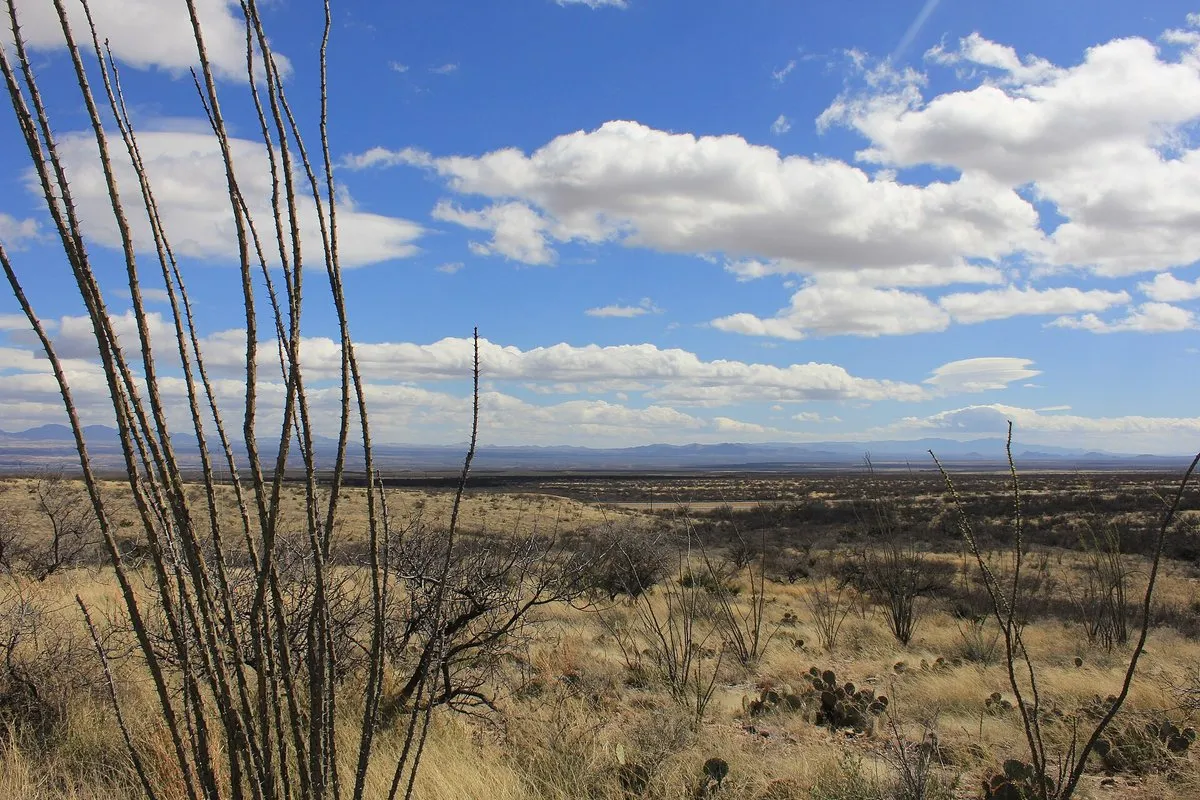
Outside the cave, several surface trails wind through the Sonoran and Chihuahuan Desert terrain surrounding the park. The trails offer views of the Whetstone Mountains and pass through typical desert landscape with ocotillo, prickly pear, cholla, barrel cactus, mesquite, and desert scrub. The Guindani Trail is the longest listed route at 4.2 miles, while the Foothills Loop covers about 2.5 miles and provides a good sense of the broader landscape. Shorter trails connect the main visitor areas and are suitable for casual walks.
These trails are best hiked in the cooler hours of morning, particularly from late spring through early fall when midday temperatures can be extreme. The terrain is rocky and uneven in places, and sun exposure is significant, so water and sun protection are essential.
Camping at Kartchner Caverns
The campground at Kartchner Caverns offers developed sites with electric hookups and water, making it one of the more developed camping options in the Arizona state park system. Sites include access to restrooms and shower facilities. The campground is a reasonable base for exploring the park over multiple days, and its location in the Whetstone Mountain foothills gives it a quieter and more remote feel than many frontcountry campgrounds.
Regular campsites are $50 per night. Cabin and group camping fees vary. Reservations can be made through the Arizona State Parks reservation system and are recommended, particularly on holiday weekends.
Pet Policy
Pets are welcome in outdoor areas of the park, including the hiking trails and campground, but must be kept on a leash no longer than six feet at all times. Pets are not permitted inside any buildings or on cave tours, except service animals. This restriction exists to protect the cave ecosystem from outside contaminants and to prevent stress to the resident bat colony. Water should be carried for pets on the hiking trails, especially during warm months.
Wildlife to Be Aware Of
The desert around Kartchner Caverns supports a variety of wildlife, and visitors should be aware of several species that require some caution. Rattlesnakes are present on the hiking trails and in rocky terrain throughout the park. They are most active from spring through fall and are typically encountered when moving through brush or stepping over rocks. Watch where you place your hands and feet, and give any snake you encounter plenty of space.
Scorpions are common in the desert and can be found under rocks, in wood piles, and around campsites. Check your shoes and shake out any clothing or gear that has been left on the ground overnight. A scorpion sting is rarely life-threatening for healthy adults but is painful and warrants attention.
Coatimundis and javelinas are social animals that may approach picnic areas and campsites, particularly if food is left out. Both species can become bold and occasionally aggressive when they associate humans with food. Store food securely and do not attempt to feed or approach either animal.
Inside the cave, a large colony of cave bats roosts seasonally. They are protected by state law and park rules. Visitors on tours should follow all guide instructions and avoid disturbing or handling any bat they observe.
Practical Information
Kartchner Caverns State Park is located off State Route 90, approximately nine miles south of Benson, Arizona. From Tucson, the drive is about 50 to 55 miles southeast via Interstate 10 to the Benson exit, then south on SR-90. The park address is 2980 AZ-90, Benson, AZ 85602.
The day use fee is $10 for a single-occupant vehicle, $20 for a vehicle with two to four people, and $5 for an individual on foot or bicycle. Cave tour tickets are separate, and standard tours cost $30 per adult. Specialty tours cost more. Children’s pricing is available. An Arizona State Parks annual pass covers the vehicle entry fee but not cave tour tickets, and the park entrance fee is waived with cave tour and campsite reservations.
The park is open year-round. Cave tours operate daily except Christmas Day. Reservations for tours and campsites can be made at azstateparks.com. The cave holds a steady average temperature of 70 degrees regardless of season, but surface trails are most comfortable from October through April.
Frequently Asked Questions
What is the entry fee at Kartchner Caverns State Park?
There is a $7 per vehicle day use fee to enter the park, and cave tour tickets are purchased separately and range from $23 to $25 per adult. An Arizona State Parks annual pass is also available for frequent visitors.
Are dogs allowed at Kartchner Caverns State Park?
Leashed pets are welcome on the hiking trails and in the campground, with a six-foot maximum leash length. Pets are not permitted inside any buildings or on cave tours, except service animals.
Is Kartchner Caverns a cold cave, and what should I wear on the tour?
Unlike many caves, Kartchner Caverns maintains a steady temperature of around 70 degrees Fahrenheit year-round, so heavy clothing is not necessary regardless of outside weather conditions. The humidity inside hovers near 99 percent, so the cave feels warm and moist rather than cold.
Do I need to book cave tour tickets in advance?
Advance reservations are strongly recommended, especially on weekends and during school breaks, as tours frequently sell out. Visitors should also note that the Big Room Tour is seasonal and closes when the bat colony is roosting, so it is worth confirming availability before planning your trip around that specific tour.