
Sinks Canyon State Park
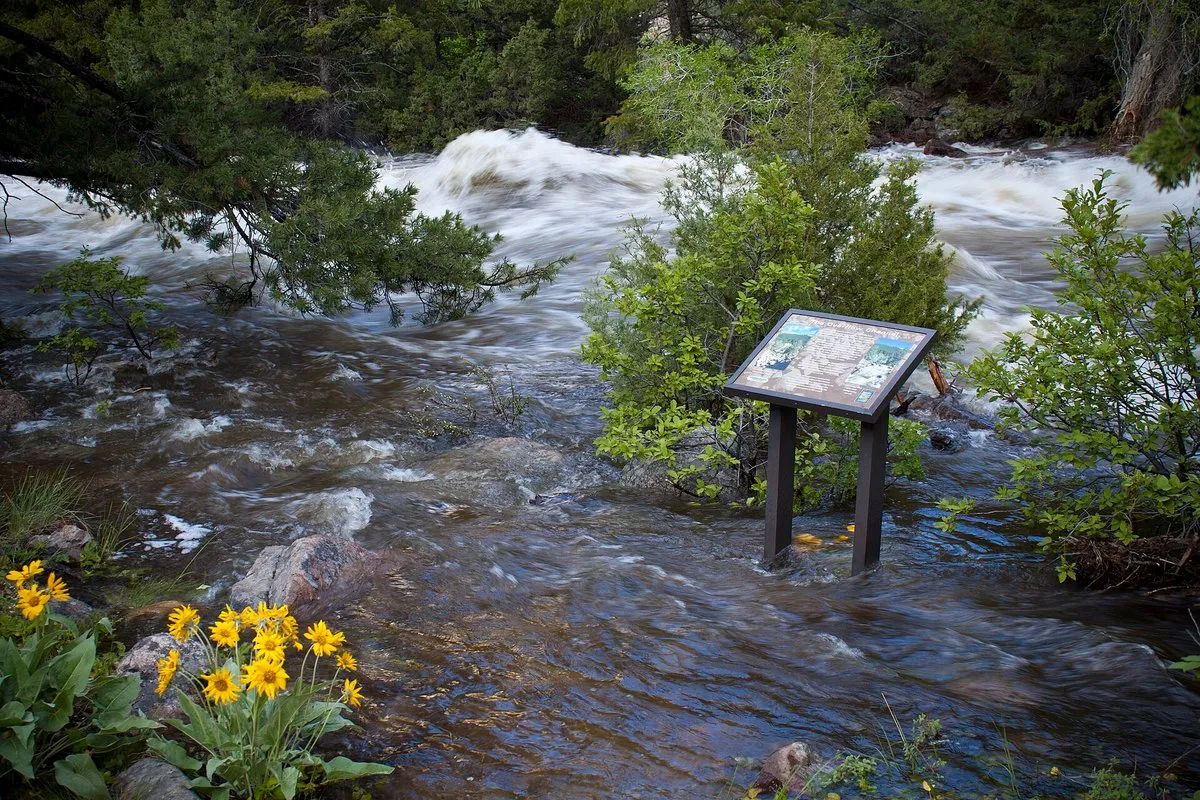
Sinks Canyon State Park sits about seven miles southwest of Lander, Wyoming, in a narrow limestone canyon carved by the Middle Fork of the Popo Agie River. What draws people here is something genuinely unusual: the river flows into a cave at the base of a cliff and disappears completely underground, only to resurface a quarter mile downstream in a large pool called the Rise. The water takes roughly two hours to make that journey, and scientists have never fully mapped the underground passage. That geologic mystery, combined with accessible trails, free day use, and dependable wildlife sightings, makes this one of the more interesting state parks in Wyoming for the effort it takes to reach.
The Sinks and the Rise: The Park’s Central Attraction
The main feature of the park is the point where the Popo Agie River vanishes into a cavern in the canyon wall, a formation simply called the Sinks. A short paved path leads to an overlook where you can watch the water pour into the opening. Downstream, the Rise is a calm, spring-fed pool where the water reappears, always warmer than expected and carrying more water than what went in, suggesting additional underground tributaries. The Rise pool is heavily populated with large brown and rainbow trout that have grown accustomed to being fed, making it one of the easier places in Wyoming to observe big trout at close range. Feeding the fish is permitted and popular with families. The geology here involves karst formations in Madison Limestone, a rock type riddled with soluble passages that took millions of years to develop.
Trails and Canyon Hiking
The canyon supports several hiking options ranging from short walks near the visitor center to longer routes into the surrounding Shoshone National Forest. The Sinks to Rise Trail is the short paved trail connecting the Sinks and the Rise. The Popo Agie Nature Trail is a separate one-mile loop near Popo Agie Campground, making it suitable for visitors of all ages. More committed hikers can explore verified area routes, such as the Canyon Trail, Falls Trail and Popo Agie Falls access, or national forest trailheads reached from the Loop Road near Frye Lake and Worthen Reservoir, where the terrain becomes significantly more rugged. Elevation in the developed canyon and park area is around 6,100 feet, and the rim trails gain considerable height, so visitors arriving from lower elevations should account for exertion. Most trails are well-marked and connect to the broader trail network managed by the adjacent national forest.
Camping in the Canyon
The park has two campgrounds, Popo Agie and Sawmill, both located along the river corridor within the canyon. Sites are shaded and set close to the water, which keeps temperatures moderate even on warm summer days. Standard campsite costs vary by residency and fees; current listings show about $11.20 for Wyoming residents and $20.16 for nonresidents before reservation and convenience fees, or $10 and $18 as the base state camping permit fees. Yurts are available at an additional cost and offer a more sheltered option for families or groups who want to avoid tent camping. The campgrounds stay busy from late June through August, and camping reservations are required and should be made through the Wyoming State Parks reservation system. The canyon setting is genuinely quiet at night, though the proximity to wildlife habitat means proper food storage is not optional. Bear boxes are provided at sites and should be used consistently.
Pet Policy
Pets are welcome throughout the park but must be in a vehicle or on a leash no longer than ten feet and physically controlled at all times. This applies to all trails, the campgrounds, and the day-use areas near the Sinks and Rise. Pets are not permitted in park buildings, including the visitor center. Given the active wildlife corridor that runs through the canyon, keeping dogs leashed and close is both a rule and a practical safety measure.
Wildlife to Be Aware Of
Black bears may occur in the Sinks Canyon area; visitors should follow bear-safe food storage practices. Store all food, coolers, and scented items in the bear boxes provided at campsites. Do not leave anything in your tent or vehicle that carries a food odor. If you encounter a bear on the trail, give it space and back away calmly without running.
Moose may be present, especially in riparian habitat and during wintering periods; give them plenty of space. They may look slow and indifferent but can move quickly and are genuinely dangerous if they feel cornered or approached. A moose that raises its hackles, pins its ears back, or stomps is preparing to charge. Keep a significant distance and give them a clear path to move away.
Bighorn sheep are frequently visible on the rocky canyon slopes, especially in the upper sections. They are accustomed to people but should not be approached or fed. Close contact stresses the animals and can disrupt their grazing patterns.
Rattlesnakes are present on rocky outcrops and along sunny stretches of trail, particularly at lower elevations in the canyon. Watch where you place your hands and feet, especially when stepping over logs or rocks. Most bites happen when snakes are accidentally stepped on or handled. Give any snake you encounter room to move off on its own.
Practical Information
Sinks Canyon State Park is located at 3079 Sinks Canyon Road, approximately seven miles southwest of Lander on Wyoming Highway 131. Lander is the nearest town and offers full services including fuel, groceries, and lodging. The road into the canyon is paved and accessible to standard passenger vehicles. There is no entry fee for day use. Standard campsite costs vary by residency and fees; current listings show about $11.20 for Wyoming residents and $20.16 for nonresidents before reservation and convenience fees, or $10 and $18 as the base state camping permit fees. Yurts are available at additional cost. Reservations are required for state park camping and can be made through the Wyoming State Parks reservation system. The visitor center is typically open from late May through early September. The canyon road continues beyond the park boundary into Shoshone National Forest and provides access to trailheads leading into the Wind River Range. Snow can close upper sections of the road outside of summer months.
Frequently Asked Questions
Is there an entry fee for Sinks Canyon State Park?
Day use at Sinks Canyon State Park is free, with no entry fee required. Camping costs $14 to $22 per night for standard sites, and yurts are available at an additional cost.
What is the Sinks Canyon phenomenon?
The Popo Agie River flows into a cave at the base of a limestone cliff and disappears completely underground, reappearing about a quarter mile downstream in a large pool called the Rise roughly two hours later. Scientists have never fully mapped the underground passage, and the Rise consistently produces more water than what enters the Sinks, suggesting additional underground tributaries.
Are dogs allowed at Sinks Canyon State Park?
Dogs are welcome throughout the park, including on trails and in campgrounds, but must be kept on a leash no longer than six feet at all times. Pets are not permitted inside park buildings, including the visitor center.
What wildlife might I encounter at Sinks Canyon?
Visitors commonly encounter black bears, moose, bighorn sheep, and rattlesnakes in the canyon. Black bears are most active near campsites and wooded trails, moose frequent the river corridor, bighorn sheep appear on the rocky canyon slopes, and rattlesnakes are found on rocky outcrops and sunny stretches of trail.