
Interstate State Park
Established in 1900, Interstate State Park holds the distinction of being Wisconsin’s oldest state park. It sits along the northwestern edge of the state, where the St. Croix River forms the border between Wisconsin and Minnesota. The park is defined by geology: a dramatic river gorge cut through ancient basalt lava flows, punctuated by some of the finest examples of glacial potholes found anywhere in the world. Visitors come for the scenery, the hiking, and a rare chance to walk directly beside a designated Wild and Scenic River.
The Glacial Potholes
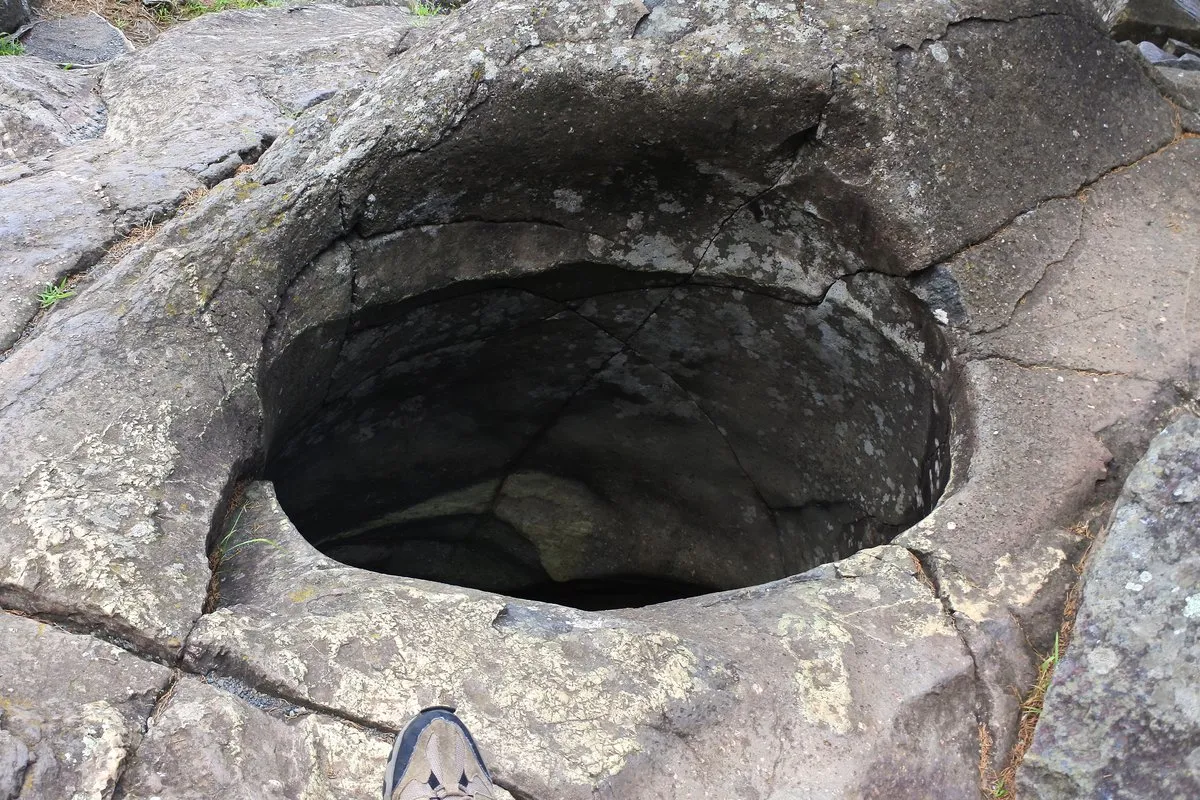
The potholes are the centerpiece of the park and the reason most people make the trip. During the last ice age, meltwater rushing through the St. Croix River gorge trapped rocks in depressions in the basalt bedrock. Those rocks spun in the current for thousands of years, grinding out cylindrical holes that range from a few inches wide to over 10 feet in diameter and depth. The Dalles area contains more glacial potholes in a smaller area than any other location in the world. Many are accessible along a short interpretive trail near the Pothole Trail area, and the on-site Ice Age Interpretive Center provides context for what you are seeing. This is a genuinely rare geological feature, and it is the right place to start any visit.
Ice Age Trail and River Gorge Hiking
The park connects to the Ice Age National Scenic Trail, which traces the outermost boundary of the last glacial advance across Wisconsin. At Interstate, that trail runs along the top of the basalt bluffs above the St. Croix, offering elevated views down into the gorge and across to Minnesota. The total trail mileage within the park is modest, more than 9 miles across several interconnected routes, but the terrain is rugged enough to make short hikes feel substantial. The Pothole Trail and Summit Rock Trail are the most popular choices, with Summit Rock delivering an open view of the river from a high basalt outcrop. Trails can be uneven and rocky, so sturdy footwear is worth the effort.
Paddling and River Access
The St. Croix River is the park’s western boundary and one of the original rivers protected under the federal Wild and Scenic Rivers Act. Canoe and kayak access is available within the park, and the calm stretch of river here is well-suited to flatwater paddling. The gorge walls rise steeply from the water in places, making a paddle through this section a different experience from the hiking trails above. Fishing is permitted along the river as well, though it plays a secondary role compared to paddling for most visitors.
Camping
The park offers drive-in campsites with electrical hookups as well as a primitive group camp area. Sites are located within a wooded setting reasonably close to the main trail network. Reservations are required before setting up on any site and are especially important during summer weekends and fall color season, when the park draws significant traffic. Facilities include vault and flush toilets depending on the loop, along with a shower building during the main season.
Pet Policy
Pets are welcome at Interstate State Park and must be kept on a leash no longer than 8 feet at all times. Leashed pets are permitted on trails, in the campground, and in many outdoor areas of the park. Pets are not allowed inside park buildings, on beaches, in playgrounds, in picnic areas, or in shelters unless an area is specifically posted open to pets. Clean up after your pet throughout the park.
Wildlife to Be Aware Of
Snakes may be present in the rocky bluff and cliff areas along the St. Croix River gorge. They are not aggressive but will defend themselves if surprised or cornered. Stay on designated trails, watch where you place your hands and feet on rocky terrain, and give any snake you encounter a wide berth. Sightings are possible here, particularly in warm months when snakes use sun-exposed rock outcrops.
White-tailed deer move through the park regularly, with activity peaking at dawn and dusk. They tend to appear near trailheads and campsites, especially in the evening. While deer are generally not dangerous, they can behave unpredictably during the fall rut. Keep food secured in camp and do not approach or feed them.
Bald eagles and red-shouldered hawks nest along the river corridor, and both species are sensitive to human disturbance near nesting sites. If you spot a nest or observe a bird behaving defensively, move away and observe from a distance. Binoculars are useful here and greatly improve the experience without disturbing the birds.
Practical Information
Interstate State Park is located at the north end of the city of St. Croix Falls, Wisconsin, approximately 55 miles northeast of Minneapolis and 270 miles northwest of Madison by road. From St. Croix Falls, take Highway 35 north directly to the park entrance. The park’s coordinates are 45.395413, -92.649259.
Daily vehicle entry requires a pass: $13 for vehicles with Wisconsin license plates and $16 for vehicles with out-of-state plates, with a $3 daily rate for Wisconsin residents age 65 and older. A 12-month pass is available if you plan multiple visits. Admission rates apply to motor vehicles, and state trail passes may apply to certain trail uses; check the Wisconsin DNR website for current rates before your visit.
The park is open 6 a.m. to 11 p.m. year-round. The Ice Age Interpretive Center is open daily May through October and on limited hours November through April, though availability can vary with volunteer staffing. Fall draws strong visitation for foliage color along the river gorge. Camping reservations can be made through the Wisconsin DNR reservation system and are required before setting up on any site.
Frequently Asked Questions
Are dogs allowed at Interstate State Park?
Leashed pets are welcome on trails, in the campground, and in most outdoor areas of the park, provided the leash is no longer than 8 feet. Pets are not permitted inside park buildings, and owners are required to clean up after their animals throughout the park.
How much does it cost to enter Interstate State Park?
A daily vehicle pass costs $8 for Wisconsin residents and $11 for nonresidents, with an annual 12-month pass also available. Walk-in and bicycle access fees may vary, so check the Wisconsin DNR website for current rates before your visit.
What are the glacial potholes at Interstate State Park?
The potholes were formed during the last ice age when meltwater rushing through the St. Croix River gorge trapped rocks in basalt bedrock depressions, and those rocks slowly ground out cylindrical holes over thousands of years. Interstate State Park contains the largest concentration of documented glacial potholes in the world, with many accessible along the Pothole Trail and an on-site geology center nearby.
Can you go camping at Interstate State Park, and do you need a reservation?
The park offers drive-in campsites with electrical hookups as well as a primitive group camp area, all within a wooded setting close to the main trail network. Reservations are strongly recommended during summer weekends and fall color season, when the park sees its heaviest visitor traffic.