
First Landing State Park
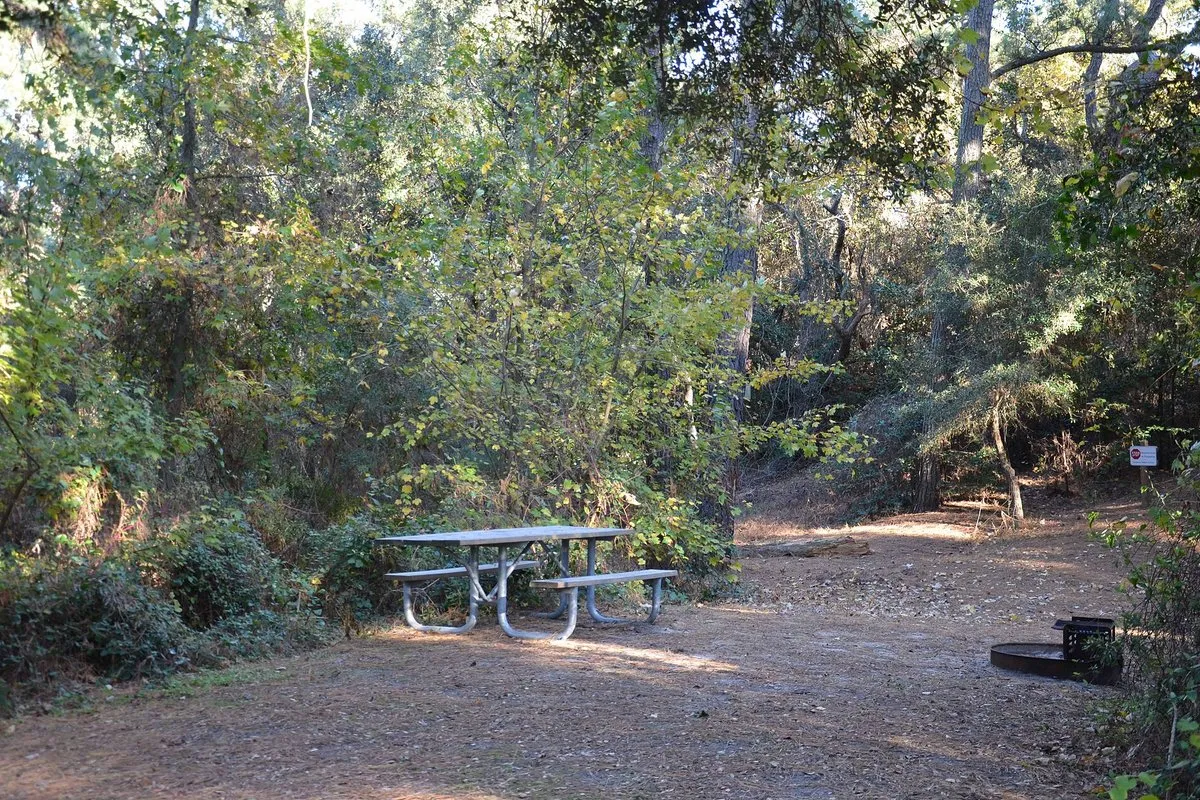
First Landing State Park sits at the northeastern tip of Virginia Beach, where the Chesapeake Bay meets the Atlantic coast. The park covers roughly 2,888 acres and preserves bald cypress swamps and other rare coastal habitats, creating a landscape that feels far removed from the resort city surrounding it. This is where members of the Virginia Company first landed in 1607 before going on to settle Jamestown, a historical fact that adds another layer of meaning to a park that already earns visits on its natural merits alone.
Cypress Swamps and Coastal Forest
The defining character of First Landing is its unusual ecology. Ancient bald cypress trees rise from dark, tannic water, their knobbed roots surfacing around them in the low ground between the sandy ridges. Spanish moss drapes from branches overhead. The landscape shifts between maritime forest, freshwater swamps, salt marsh, and coastal dune, sometimes within a short stretch of trail. This mix of ecosystems in a small coastal zone supports an extraordinary range of plant and animal life, and the cypress swamp sections in particular feel unlike anything else in Virginia. The park contains some species more typical of the Carolinas than of the mid-Atlantic, a product of its position at a biogeographic crossroads.
20 Miles of Trails Through Varied Terrain
Trails at First Landing range from flat, sandy paths through pine and live oak forest to boardwalk sections that carry hikers over open swamp water. The Cape Henry Trail runs the length of the park and is the primary route for longer walks, stretching about six miles one way. The Osmanthus Trail, the Bald Cypress Trail, and several connector paths allow hikers to build loops of varying length and character. The boardwalk segments on the Bald Cypress Trail put visitors directly over the swamp and offer some of the clearest views of the cypress knees and still, reflective water. Bicycles are permitted only on the Cape Henry and Live Oak trails, and the sandy terrain and flat to rolling grades make the park a popular destination for cyclists as well as hikers.
Chesapeake Bay Beach
The park’s bay-facing beach on the Chesapeake gives swimmers, sunbathers, and kayakers a protected shoreline away from the open ocean. The water here is calmer than Atlantic Beach conditions, making it accessible for families with young children and for paddlers launching from shore. A boat ramp provides access for small watercraft. The beach draws heavy use on warm-weather weekends, and the proximity to Virginia Beach proper means the park can feel busy in summer. Fishing from the shore for croaker, spot, and other bay species is common, particularly in the early morning and evening hours.
Camping in Season
First Landing offers over 200 campsites across several loops, with options ranging from basic tent sites to sites with water and electric hookups. The campground operates from the first Friday in March until the first Monday in December, and the mild coastal climate makes spring and fall stays genuinely comfortable. Reservations are strongly recommended from late spring through early fall, when the campground fills regularly. Cabins are also available for visitors who want an enclosed alternative to tent or RV camping, though they are closed for renovations until Oct. 31, 2026. The campground’s proximity to both the trails and the beach makes it a practical base for a multi-day visit.
Pet Policy
Leashed pets are welcome on the trails and throughout most of the park. The maximum leash length is six feet. Pets are allowed on the beach but must be kept on a leash no longer than six feet. They are allowed in the campground but must be kept leashed and under control at all times. Pet owners are expected to clean up after their animals.
Wildlife to Be Aware Of
The swampy, forested terrain at First Landing is habitat for both copperheads and cottonmouths. Copperheads are more commonly encountered on drier trails and in wooded areas, while cottonmouths favor the wetter ground around swamps and creek edges. Both are venomous and should be left alone entirely. Watch where you step, particularly when moving through vegetation or around logs and roots. Ticks are present throughout the forested trails from early spring through late fall, with peak activity in warmer months. Check yourself, children, and pets thoroughly after any time on the trails. Tick removal within the first day or two significantly reduces the risk of Lyme disease transmission.
Jellyfish, including sea nettles, appear in the Chesapeake Bay swimming areas during summer and can cause painful stings. Their presence varies by week and by water conditions, so ask staff about current conditions before entering the water. Raccoons and other wildlife regularly investigate campsites, particularly at night. Store all food, coolers, and scented items securely. Do not leave food unattended on picnic tables or outside your tent.
Practical Information
First Landing State Park is located at 2500 Shore Drive, Virginia Beach, Virginia. The park sits along U.S. Route 60, approximately four miles east of the Chesapeake Bay Bridge-Tunnel and easily accessible from Interstate 64. The nearest commercial areas are in Virginia Beach. Daily parking for a standard passenger vehicle is $7, or $10 on weekends from April through October. A separate $5 boat-launch fee applies for the ramp. Pedestrians and cyclists enter free. The Virginia State Parks Annual Parking Pass covers entry at this and other state parks. Reservations for camping and cabins can be made through the Virginia State Parks reservation system online or by phone.
Frequently Asked Questions
Are dogs allowed at First Landing State Park?
Leashed pets are welcome throughout the park.
How much does it cost to enter First Landing State Park?
Entry is $7 per vehicle on weekends and holidays and $5 per vehicle on weekdays, while pedestrians and cyclists enter free. A Virginia State Parks Annual Parking Pass is also available.
Can you swim at First Landing State Park?
The park has a Chesapeake Bay beach with calm, protected water well suited for swimming and kayaking, though jellyfish are present in the bay during summer months.
Are there dangerous animals or snakes on the trails at First Landing State Park?
Venomous snakes including copperheads and cottonmouths live in the wooded and swampy areas of the park, and ticks carrying Lyme disease are a risk on forested trails especially from spring through fall.
Do tides affect swimming or kayaking at First Landing State Park?
The Chesapeake Bay beach at First Landing is subject to tidal fluctuation, which affects water depth, shoreline width, and current strength in the bay. Low tide generally makes wading and shoreline exploration easier, and NOAA tide predictions for the Chesapeake Bay entrance area help with planning a swim or kayak launch.