
Good Earth State Park
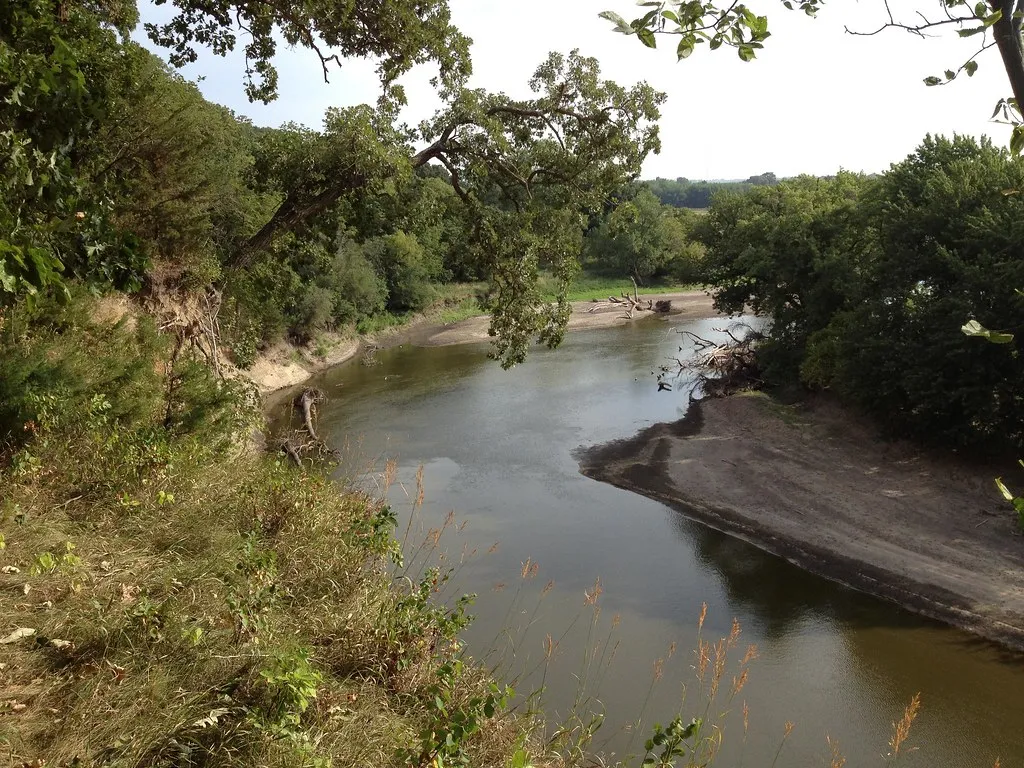
Good Earth State Park protects one of the most significant Indigenous cultural sites on the northern Great Plains. Located along the Big Sioux River just south of Sioux Falls, the park encompasses the Blood Run National Historic Landmark, where Oneota peoples established a major village and trade center that drew groups from across the region for centuries beginning around 1300 CE. Opened in 2016, it is South Dakota’s newest state park, and its mission is as much about cultural preservation and interpretation as it is about outdoor recreation.
Blood Run and the Oneota Presence
The heart of the park is the Blood Run site itself, a landscape dense with earthen mounds, middens, and the physical traces of long-term habitation. At its peak, Blood Run was one of the largest Indigenous settlements in the Great Plains, home to thousands of people who traded pipestone, bison products, and other goods across vast distances. The Oneota culture that flourished here eventually gave way to the historic Omaha, Ponca, and other nations who trace connections to this place.
The park’s visitor center anchors this story with exhibits covering the archaeology of Blood Run, the broader Oneota tradition, and the ongoing significance of the site to descendant communities. Rangers and interpretive staff provide context that helps visitors move through the landscape with a sense of what they are actually seeing, since the mounds and features visible on the ground can be subtle to an untrained eye. Plan to spend time inside before heading to the trails.
Trails Through a Cultural Landscape
The trail system at Good Earth is modest in length, but the routes pass through an active archaeological landscape. A network of paths winds through tallgrass prairie, wooded river bottomland, and upland terrain, passing near documented archaeological features. Interpretive signage along the routes explains the cultural and ecological history of specific areas.
The trails are generally easy to moderate, making the park accessible to most visitors. Footing can be uneven in places along the river corridor, and some sections become muddy after rain. The prairie sections offer open sky and seasonal wildflowers, while the wooded stretches along the Big Sioux provide shade and a different character entirely. Birding is worthwhile throughout, particularly during spring and fall migration.
Because this is an active archaeological landscape, visitors are asked to stay on designated trails and refrain from disturbing soil, rocks, or any features. The rules are strict and carry legal weight given the site’s landmark status.
Prairie Ecology and the River Corridor
The park works to restore and maintain native tallgrass prairie, a habitat type that once covered enormous stretches of the Midwest and is now rare. Walking through these sections in summer means moving through grasses taller than waist height alongside wildflowers that attract pollinators in impressive numbers. The Big Sioux River corridor adds another ecological layer, supporting cottonwood and other riparian species that shelter a different set of birds and mammals than the open prairie.
The combination of habitats in a relatively compact area makes Good Earth a productive spot for nature observation even if you have only a few hours. No fishing or boating access is developed within the park, so the river is appreciated here primarily as habitat and scenery rather than a recreation destination.
Pet Policy
Pets are welcome at Good Earth State Park and must be kept on a leash no longer than six feet at all times. This applies on all trails and throughout the park grounds. Given the proximity to wildlife and the sensitivity of the archaeological landscape, keeping pets close and under control is both a courtesy and a safety measure. Pets are not permitted inside the visitor center.
Wildlife to Be Aware Of
Ticks are common throughout the park from spring into fall, especially in the tall prairie grass and along wooded trail edges. Wear long pants tucked into socks, use insect repellent rated for ticks, and do a thorough full-body check after every outing. Ticks in this region can carry diseases, so prompt removal matters.
Coyotes are present across the park and are occasionally spotted at dawn and dusk. They are wild animals and must not be fed under any circumstances. Keep small dogs on a short leash and within arm’s reach, particularly in areas with dense vegetation where visibility is limited. Coyotes that associate humans with food can become bold and potentially dangerous.
Prairie rattlesnakes are occasionally encountered in the brushy and rocky sections of the river corridor. They are not aggressive but will defend themselves if surprised or cornered. Watch where you step and where you place your hands, especially around rocks and dense ground cover. If you encounter a rattlesnake, give it space and walk around it.
Practical Information
Good Earth State Park is located at 26072 480th Avenue, just south of Sioux Falls in Lincoln County. From downtown Sioux Falls, take Interstate 29 south to exit 71, then follow the signs west and south to the park entrance. The visitor center is the starting point for most visits and is open year-round, though hours vary by season.
Entry fees are $10 per vehicle per day for South Dakota residents and $15 per vehicle per day for nonresidents. Annual passes are available for $40 for residents and $60 for nonresidents. There is no overnight camping at Good Earth. The park is a day-use facility, and visitors should plan their time accordingly. Spring and fall offer the most comfortable trail conditions and the best wildlife activity. Summer visits are rewarding for prairie ecology but can be hot and humid.
Frequently Asked Questions
What is the entrance fee for Good Earth State Park?
Daily entry costs $10 per vehicle for South Dakota residents and $15 per vehicle for nonresidents, with annual passes available for $40 (residents) or $60 (nonresidents).
Are dogs allowed at Good Earth State Park?
Dogs are welcome at the park but must be kept leashed and close to their owners at all times, as coyotes are present throughout the park and pose a risk to small pets.
Is camping available at Good Earth State Park?
Good Earth State Park does not offer camping, as its mission focuses on cultural preservation and interpretation rather than overnight recreation.
What is the best time of year to visit Good Earth State Park?
The park is worth visiting in any season, though spring and fall migration make for especially rewarding birding, and summer brings the tallgrass prairie to full bloom with wildflowers and pollinators; visitors should check for ticks after any outing from spring through fall.